

Understanding the Manganese Prices: A Simple Look at Recent Market Movements
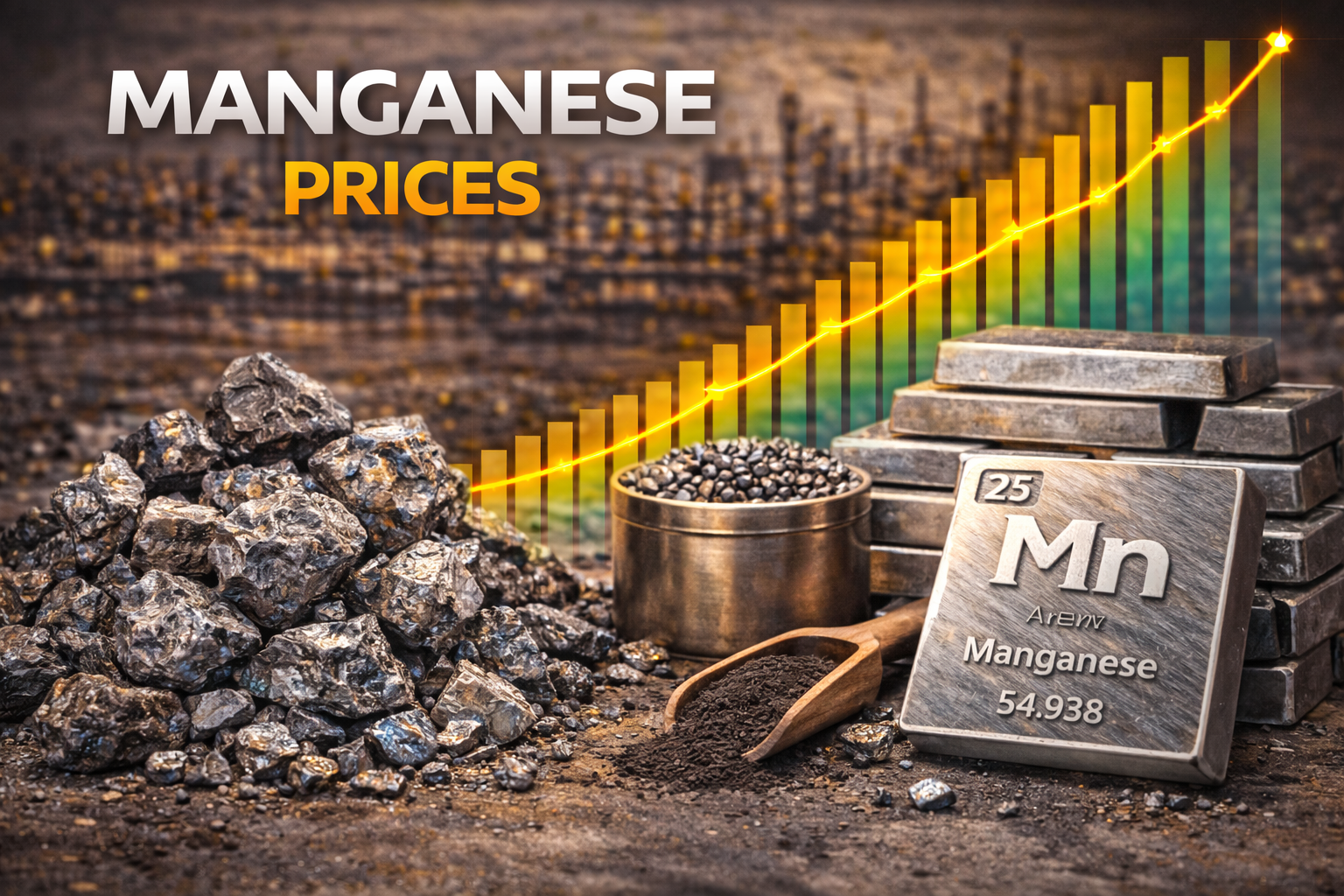
The Manganese Prices over the past year shows how closely this important metal is linked to global industry and economic activity. Manganese may not always be in the spotlight, but it plays a key role in steel production, alloy manufacturing, and even battery development. Because of this, its price often reflects broader changes in construction, manufacturing, and infrastructure projects around the world. By looking at recent quarters, we can better understand how demand, supply, and global conditions have shaped the Manganese prices.
Why Manganese Prices Matter
Manganese is mainly used in steelmaking. When steel production is strong, manganese demand usually rises. When steel slows down, manganese prices tend to soften. This simple relationship makes manganese prices a good indicator of industrial health.
👉 👉 👉 Please Submit Your Query for Manganese Prices, demand-supply, suppliers, market analysis: https://www.price-watch.ai/book-a-demo/
However, prices are not controlled by demand alone. Supply conditions in major producing countries such as Australia and South Africa also influence the market. If production is stable and inventories are high, prices may remain under pressure even when demand shows some improvement. On the other hand, supply disruptions or export limitations can push prices upward.
Over the past several quarters, the Manganese prices has reflected a balance between cautious demand and stable supply.
Q4 2024: A Moderate Increase
In the final quarter of 2024, manganese prices showed a modest increase. The rise was not dramatic, but it suggested steady demand from key industries like steel manufacturing and battery production. Infrastructure development projects and the gradual growth of electric vehicle production also supported this upward movement.
The increase was moderate, indicating that the market was balanced. Supply and demand were relatively aligned, preventing sharp price swings. This period gave producers some confidence heading into the new year, as prices remained stable and manageable.
Q1 2025: Prices Begin to Decline
The first quarter of 2025 saw a shift in the Manganese prices. Prices declined compared to the previous quarter. The drop was noticeable and reflected weaker global demand and higher inventory levels in key markets such as China.
When buyers hold sufficient stock, they tend to reduce new purchases. This can quickly slow price momentum. In addition, alloy producers were facing tighter profit margins, which made them more cautious in buying raw materials like manganese.
Despite the decline, prices remained above key production thresholds for major miners, especially in Australia. This meant that large-scale supply cuts were unlikely. Production levels remained steady, adding further pressure on prices.
Q2 2025: Continued Softness in the Market
The second quarter of 2025 continued the downward trend. Prices declined again, showing that the market was still adjusting to weak demand conditions. Global steel production did not show strong growth, and many buyers maintained a cautious approach.
Elevated inventories in important consuming countries continued to weigh on the market. When supply is readily available and buyers do not feel urgency, price increases are difficult to sustain.
Even though prices softened, the situation did not signal a crisis. The market remained functional, and production continued. Some analysts expected that infrastructure and construction activities later in the year could support recovery.
The Manganese Prices during this period reflected a cooling phase rather than a sharp downturn.
Q3 2025: A Mixed but Slightly Positive Shift
In the third quarter of 2025, the global Manganese Prices showed a slight improvement. Overall prices increased by around 0.14% compared to the previous quarter. While this rise was small, it indicated that the market might be stabilizing.
Demand from the steel and alloy sectors remained steady. There were signs that industrial activity was improving moderately in some regions. However, the recovery was not strong enough to create a major price rally.
Supply conditions also played a role. Production levels remained stable, and logistics constraints in certain areas caused localized fluctuations. These factors helped balance the market, preventing sharp declines or rapid increases.
The overall mood during Q3 was cautious optimism. The market appeared balanced, with both buyers and producers acting carefully.
Australia: A Closer Look
Australia is one of the leading exporters of manganese, and its pricing trends often influence the global market.
In Q3 2025, manganese export prices from Australia declined by around 1.37% compared to the previous quarter. This decrease reflected softer demand from steel and ferroalloy manufacturers. Downstream consumption was moderate, and domestic production remained steady.
In September 2025, prices declined further by about 1.83%. The main reason was slower industrial activity and adequate inventory levels. When supply remains strong and demand weakens slightly, prices naturally come under pressure.
Despite these declines, the Australian market remained relatively stable. Producers managed their output and inventories carefully to avoid sharp disruptions. Expectations for gradual stabilization in the final quarter of 2025 provided some hope for improvement.
The Manganese prices in Australia shows how local supply strength can influence pricing even when global conditions show minor recovery.
South Africa: A Different Direction
South Africa, another major manganese producer, experienced a somewhat different pattern in Q3 2025.
Export prices in South Africa increased by around 1.65% compared to the previous quarter. This rise was supported by steady demand from the steel industry and healthy export orders, especially from Asian markets.
However, the improvement was not entirely consistent. In September 2025, prices in South Africa declined by about 1.51%. Slower global industrial activity and stable domestic supply limited further upward movement.
Overall, South Africa’s Manganese prices during Q3 reflected initial strength followed by some correction. The market showed resilience but remained sensitive to global demand signals.
Key Factors Shaping the Manganese Prices
Several common factors have shaped the Manganese Prices over the past year:
- Steel Industry Demand
Steel production remains the primary driver. When construction and infrastructure projects are strong, manganese demand increases. - Inventory Levels
High inventories in major markets reduce the urgency to purchase more material, putting downward pressure on prices. - Production Stability
Steady output from large producers like Australia and South Africa ensures that supply remains available, limiting sharp price spikes. - Global Economic Conditions
Broader industrial activity, especially in Asia, strongly influences manganese consumption. - Logistics and Trade Conditions
Shipping costs, export volumes, and regional supply constraints can create temporary price fluctuations.
Looking Ahead
The recent Manganese Prices suggests a market that is balancing itself. After declines in early 2025, prices began to stabilize in Q3. While the recovery has been modest, the absence of extreme volatility indicates that supply and demand are gradually aligning.
Future price movements will likely depend on global steel production and infrastructure spending. If industrial activity strengthens, manganese demand could rise, supporting prices. On the other hand, if economic uncertainty continues, prices may remain under mild pressure.
The market does not currently show signs of dramatic change. Instead, it reflects steady adjustments based on real demand conditions.
Conclusion
The Manganese Prices over the past several quarters tells a story of balance, adjustment, and cautious recovery. After a moderate increase in late 2024, prices declined in early 2025 due to weaker demand and high inventory levels. By Q3 2025, the market showed slight improvement, with global prices stabilizing and modest regional variations appearing in Australia and South Africa.
Overall, manganese remains a critical industrial material, closely tied to steel production and infrastructure development. While short-term fluctuations are normal, the broader trend shows a market that is stable rather than volatile. As global industrial activity continues to evolve, the Manganese prices will remain an important indicator of economic momentum and industrial demand.
👉 👉 👉 Please Submit Your Query for Manganese Prices, demand-supply, suppliers, market analysis: https://www.price-watch.ai/book-a-demo/
About Price Watch™ AI
Price-Watch AI is an India-based, independent raw material price reporting agency that provides real-time price forecasts and data-driven insights into global raw material markets. Price-Watch AI specializes in tracking raw material prices, analyzing market trends, and delivering timely updates on plant shutdowns, supply disruptions, capacity expansions, and demand-supply dynamics. The Price-Watch AI platform empowers manufacturers, traders, and procurement professionals to make faster, smarter decisions. Leveraging AI-powered forecasting and over a decade of historical data, Price-Watch AI transforms market volatility into actionable opportunity.
Futura Tech Park,
C Block, 8th floor 334,
Old Mahabalipuram Road,
Sholinganallur, Chennai, Tamil Nadu, Pincode - 600119.
LinkedIn: https://www.linkedin.com/company/price-watch-ai/
Facebook: https://www.facebook.com/people/Price-Watch/61568490385598/
Twitter: https://x.com/pricewatchai
Website: https://www.price-watch.ai/

 English
 Arabic
 French
 Spanish
 Portuguese
 Deutsch
 Turkish
 Dutch
Dutch
 Italiano
 Romaian
 Portuguese (Brazil)
 Greek
Greek