

How Wholesale Leather Goods Help Businesses Grow Faster
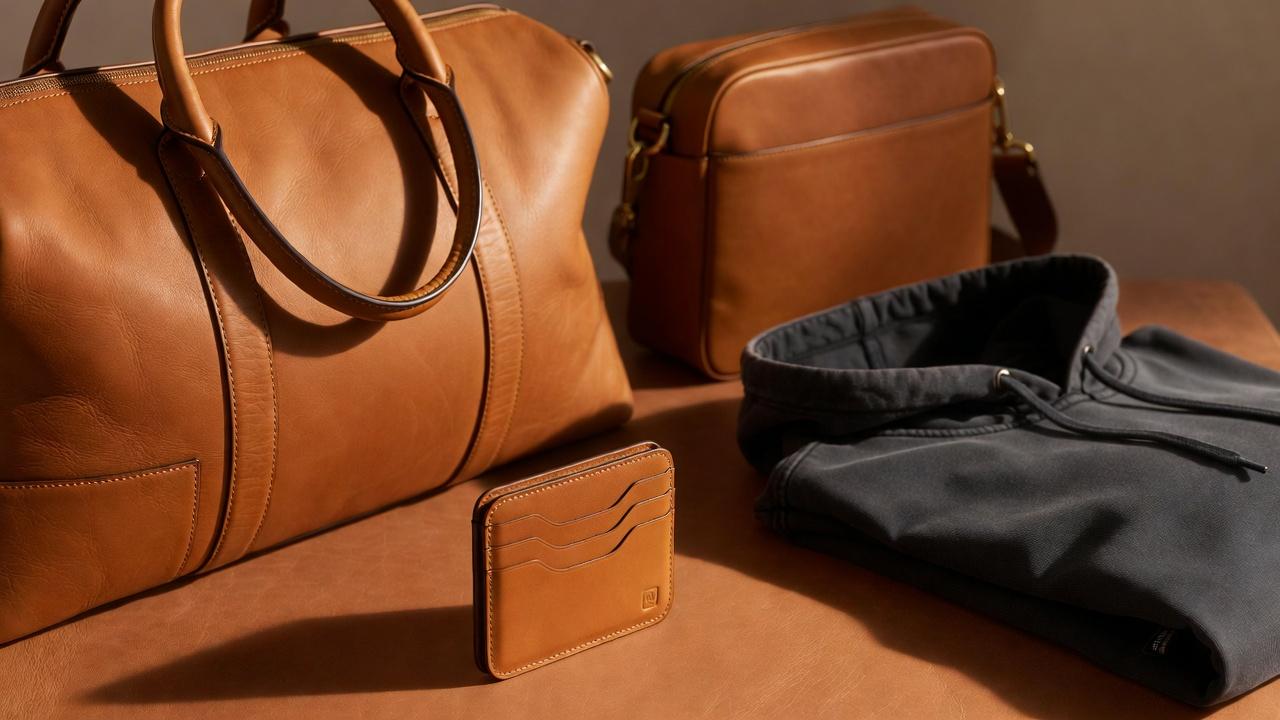
Every product business reaches a point where the sourcing decision either accelerates growth or quietly holds it back.
You're selling well. Customers like the product. Repeat purchases are coming in. And then you hit the ceiling — the one built by a supplier who can't scale with you, materials that aren't consistent enough to defend the quality story your brand is built on, or pricing that made sense at 50 units and stops making sense at 500.
That ceiling is exactly what the right wholesale leather goods manufacturing relationship removes.
When you source wholesale leather wallets, wholesale leather duffle bags, private label cross body bags in USA, or work with the right apparel clothing manufacturers — you're not just filling a purchase order. You're building the infrastructure that lets your brand grow without constantly rebuilding its foundation. Consistent materials. Consistent quality. Consistent pricing. A supplier who knows your spec as well as you do by the third order and delivers to it without you having to re-explain it every time.
That's what fast-growing product businesses are actually built on. Not just a great product. A great product with a manufacturing partner who can keep delivering it.
Why Leather Goods Specifically Accelerate Brand Growth
There's something about leather goods that functions differently in the market compared to most product categories.
Leather has inherent quality signaling. A well-made leather wallet, a structured leather duffle bag, a crossbody with real leather panels and solid hardware — these products communicate quality before your customer has read a single word of your product description. The material does the talking. That's a significant marketing advantage in a retail environment where most products have to work hard to justify their price point.
Leather goods also have exceptional customer retention characteristics. A leather product that holds up beautifully — that ages well, develops character, and stays functional years past when a synthetic alternative would have given out — creates the kind of customer relationship that drives organic referrals. Your customer doesn't just come back. They tell people. They show the wallet they've been carrying for three years with pride. That's word-of-mouth advertising your marketing budget can't buy.
The businesses that grow fastest in this space are the ones who combine that inherent product advantage with the operational discipline of sourcing it correctly. Right materials. Right construction standards. Right manufacturer. When those three things align, leather goods become one of the most powerful product categories a brand can build on.
How Wholesale Leather Wallets Drive Consistent Revenue
Wallets are one of the most consistent revenue generators in retail accessories. Everyone uses one. Replacement cycles are regular. The gift market is strong year-round. And a leather wallet at the right quality tier commands pricing that makes margin sense for brands at every growth stage.
The businesses that build sustainable revenue on wholesale leather wallets aren't just finding a good product — they're building a sourcing relationship that lets them reorder reliably, maintain quality consistency, and scale without rebuilding the supply chain every time demand grows.
Here's what that sourcing relationship actually requires:
Leather grade locked in with measurable specificity. The revenue story for a leather wallet brand depends entirely on the product holding up to the quality promise. That promise lives or dies with the leather grade. Full grain leather — the outermost layer of the hide with natural grain intact — is the grade that develops character with wear and gives customers the product experience that drives repurchase and referral. Top grain leather performs well for mid-range positioning. Genuine leather tends to crack over time and undercuts the quality story. Bonded leather deteriorates visibly. Get the grade documented in writing — not "premium leather" as a complete description, but the actual grade with thickness specified.
Card slot construction and reinforcement. The top of a card slot — where cards are inserted and removed multiple times daily — is the first stress point to fail on a cheaper wallet. Reinforced stitching at the slot opening isn't optional on a product positioned as quality. It's the detail that determines whether your customer's wallet looks good at six months or is already showing structural failure.
Edge finishing as a brand signal. Painted or burnished leather edges tell your customer that the product was finished carefully. Raw edges that are already fraying on a sample communicate the opposite — and that first impression is impossible to walk back once the product is in your customer's hands.
Closure hardware consistency across the production run. Snap closures, magnetic closures, and zipper pulls should be specified by brand and finish type — not left as a general component subject to substitution. Hardware that varies in finish tone between units in the same batch tells customers — and you — that quality control isn't being applied at the component level.
Reorder consistency as the baseline expectation. For a wallet brand building repeat revenue, the reorder is more important than the first order. Your manufacturer needs to store your approved sample, reference your spec documentation, and match quality on the second run without you having to re-establish every standard from scratch.
For private label leather wallet programs with documented leather grading and reorder quality matching, the wholesale leather wallets range at Rays Creations supports consistent bulk production with full spec management across every order cycle.
Growing a Brand With Wholesale Leather Duffle Bags
The leather duffle bag sits at the premium intersection of travel, sport, and lifestyle markets — which means consistent demand from multiple customer segments, strong gift market performance, and pricing that supports healthy margins at the quality tier where real leather goods live.
For brands building on wholesale leather duffle bags, the product category creates growth opportunities that more commoditized bag styles don't. A customer who buys a premium leather duffle and loves it becomes a loyal customer who explores the rest of your product line. A corporate gifting program that features your leather duffle builds brand visibility across professional networks. A travel influencer who falls in love with the bag generates organic reach that paid advertising rarely matches.
But that growth flywheel only spins if the product itself holds up to the promise. Here's what the sourcing process needs to lock down to make that happen:
Leather grade and hide selection for consistency. The panels that make up the bag body should be cut from hides with consistent grain pattern and color across the piece. Visible variation in color or grain texture between panels on the same bag is a hide selection problem that indicates insufficient quality control at the cutting stage — and it's immediately obvious to a customer who knows leather.
Base construction under real load. A leather duffle needs to hold its shape and structure with a weekend's worth of gear inside it. The base panel should be reinforced — through a structural internal panel, a thicker base leather layer, or a base plate — and this should be documented on the spec sheet, not assumed. Test the sample by loading it with weight and observing how the base and side panels respond under real conditions.
Handle and strap attachment at the highest stress points. The attachment points where handles and shoulder straps meet the bag body carry the full load of everything inside. These need reinforced stitching, riveting, or both — and the specific construction method should be documented in your production spec. A handle that starts separating from the bag body after regular use is a brand-damaging product failure that your customer will tell people about.
Hardware specification across every component. Zippers, D-rings, buckles, and any structural hardware should be specified by brand and finish type. YKK zippers are the benchmark for main compartment closures. Hardware finish should be consistent across every unit in the batch — not subject to whatever components the factory has available when your order goes into production.
Interior organization for the use case your customer has. A leather duffle that serves a travel customer needs different interior organization than one serving a gym customer. Card pockets, a dedicated shoe compartment, a zippered valuables pocket — these details affect daily usability in ways that drive satisfaction scores and repeat purchases. Specify the interior layout as specifically as the exterior construction.
Brands building a premium leather duffle line with reinforced base construction and private label options can explore the wholesale leather duffle bags collection at Rays Creations, where base construction specs and branded sample approval are standard before any bulk run begins.
Why Private Label Cross Body Bags in USA Build Brand Equity Faster
Of all the bag categories a brand can build on, the crossbody occupies a unique commercial position. It's hands-free practicality combined with a silhouette that photographs well, sells across demographics, and works across price points. The demand is consistent year-round. The repeat purchase potential is strong. And for brands positioned in the quality leather space, a well-sourced crossbody becomes one of those products customers identify with your brand specifically — the one they keep coming back to and the one they mention when they recommend your brand to someone else.
Building a private label cross body bags in USA program adds a layer to that commercial advantage. Domestic manufacturing means faster reorder lead times, more accessible quality oversight, easier dispute resolution, and the authentic "Made in USA" story that carries genuine market value with a specific customer segment willing to pay for it.
Here's what the private label crossbody sourcing process needs to nail:
Body structure that holds form without contents. This is the single quality detail that most distinguishes a premium crossbody from a mediocre one in the hands of a customer. Empty the sample completely and observe how the bag holds its form. A defined, structured silhouette reads as quality. A bag that collapses flat without contents reads as cheap — regardless of the material. Internal structure panels or stiffened lining are the construction elements that create this and they need to be specified in your production documentation.
Adjustable strap hardware grade and performance. The strap adjustment slider is the most-used functional element of a crossbody bag and one of the most common failure points on lower-quality options. It needs to move smoothly through the full adjustment range, hold firmly once set, and maintain its finish through daily handling without flaking or oxidizing. Specify hardware by supplier and finish grade — not just "gold-tone hardware" but the specific supplier and finish process.
Main compartment zipper and lining interaction. Test this specifically on every sample. The zipper should run the full opening cleanly without catching or pulling the interior lining fabric. A zipper that grabs lining material on every use generates customer complaints at a rate disproportionate to how simple the fix is at the production stage — because it's a daily frustration your customer experiences every time they open their bag.
Private label branding evaluated on a physical branded sample. For a private label crossbody program, your brand appears on the product every time your customer picks it up. Embossed logo placement, depth, and size need to be confirmed on a physical branded sample — not a digital mockup — before approving bulk production. The way a brand mark looks on screen is often materially different from how it looks and feels on the actual leather panel.
US-based accountability for quality and communication. Working with a domestic manufacturer for a crossbody program means quality questions get answered the same day, sample revisions happen in days rather than weeks, and any production issue is resolved between parties in the same business environment. That operational advantage compounds across every reorder cycle.
For brands building a private label crossbody program with US-based quality accountability and faster reorder turnaround, the private label cross body bags in usa options at Rays Creations combine domestic manufacturing advantages with full customization capability across hardware, lining, and branding.
How the Right Apparel Clothing Manufacturers Accelerate Brand Growth
Adding apparel to a leather goods brand is one of the most natural growth moves a product business can make. Your wallet customer, your bag customer, your accessories customer — they're already aligned with your aesthetic. Branded clothing extends that relationship into their wardrobe and deepens the brand connection in a way that creates more touchpoints, more repeat purchases, and more opportunities for organic visibility.
But apparel manufacturing done wrong costs more than it saves — in returns, in quality complaints, in the sourcing time spent finding a replacement manufacturer when the first one doesn't hold up across reorders.
Finding apparel clothing manufacturers who can support real brand growth means finding ones who manage the full production complexity of custom apparel without passing that complexity to you as a problem to solve after the order ships.
Here's the evaluation framework that separates growth-supporting manufacturers from ones who hold your brand back:
Category expertise over production breadth. A factory that produces every apparel category may not do any of them with particular depth. For brands building on quality, a manufacturer who specializes in your specific apparel categories — whether that's outerwear, knitwear, activewear, or casual basics — produces better results than a generalist. Ask what percentage of their production volume is in your category and how many seasons they've been producing it.
Pre-production samples as a non-negotiable production step. A pre-production sample made from your actual fabric, your trim, your label, and your hardware is the only confirmation that what you designed on paper is achievable in this factory's production environment. For a growing brand, skipping this step to save time is a decision that costs more time than it saves — because quality problems caught at the pre-production stage cost a sample. Quality problems caught at the bulk delivery stage cost an order.
Size set confirmation before any bulk approval. Sizing inconsistency between a small and a large in pre-production samples gets worse across a full production run. Request at minimum three sizes before approving any bulk apparel order. This single step prevents the most common and most costly apparel quality complaint — inconsistent sizing that drives a wave of exchanges and negative reviews.
Fabric sourcing stability for repeat orders. Custom colorways require sourcing beyond the factory's standard inventory. Ask where your fabric is sourced, whether it's available consistently year-round, and what the contingency looks like if the primary source has availability issues during your production window. A fabric sourcing problem at the start of production delays every deadline that follows.
Shrinkage management as a production standard. For cotton-dominant garments, pre-shrinking and wash testing should be documented production steps — not concerns your customer discovers after the first wash. Ask specifically about their pre-shrink process and request written confirmation of the process before any spec is finalized.
In-line quality control throughout production. End-of-line inspection catches problems after the full run is complete — every unit already affected. In-line quality control at multiple stages catches problems while there's still time to correct them. Ask specifically when quality checks happen during production and what the documented process is when an issue is identified mid-run.
Reorder quality matching built into the relationship from the start. For a growing brand, the reorder is more important than the first order. Ask specifically how approved samples are stored between orders, how colorways are referenced on reorders, and how material sourcing is maintained for consistency across production cycles. The manufacturer who answers these questions specifically has real production management systems. The one who answers vaguely is telling you that reorder consistency depends on something other than process.
Dedicated account management throughout production. A dedicated account manager who knows your order inside out is a fundamentally different experience from a rotating customer service team where context gets lost between conversations. For a growing brand managing multiple product categories, that consistent communication contact becomes increasingly valuable as complexity scales.
Growing brands building consistent private label apparel alongside a leather goods line can review the apparel clothing manufacturers services at Rays Creations, where pre-production sampling and dedicated account management are standard on every bulk order regardless of size.
The Operational Advantages of Getting Wholesale Leather Sourcing Right
Most discussions about wholesale leather goods sourcing focus on the product quality outcomes. Those matter enormously. But the operational advantages of a strong manufacturing relationship — the ones that directly affect how fast a business can grow — are just as significant and less often talked about.
Reorder reliability compounds over time. A manufacturer who delivers consistent quality on the third and fourth order isn't just saving you the headache of managing a quality dispute. They're giving you the operational confidence to run leaner inventory, plan product launches with predictable supply, and make growth decisions based on reliable input rather than uncertainty about whether the next order will match the last.
Spec documentation scales with your business. The detailed spec sheet you build for your first 100-unit wallet order becomes the quality standard your manufacturer references on your 1,000-unit order. That documentation doesn't have to be rebuilt from scratch as volumes grow — it just gets refined. The businesses that start with rigorous spec documentation early have a significant operational advantage over the ones who try to formalize quality standards after quality problems have already occurred.
Manufacturing relationships create pricing leverage over time. A brand that has placed multiple successful orders with a manufacturer, built a track record of reliable payment and clear communication, and demonstrated a genuine growth trajectory has real leverage in pricing conversations. That leverage isn't available to the brand that's always evaluating new suppliers. Consistency in manufacturing relationships creates compounding benefits that show up in per-unit pricing, priority scheduling, and flexibility on minimum order quantities as volumes grow.
Domestic sourcing simplifies compliance and accountability. For brands selling in the US market, working with domestic manufacturers simplifies labeling compliance, material certification requirements, and quality dispute resolution in ways that have real operational value as a brand scales. The conversation about what happens if an order doesn't meet spec is materially easier with a domestic manufacturer than an overseas one — and that ease of accountability has dollar value that doesn't always show up in the per-unit cost comparison.
Red Flags That Slow Business Growth in Leather Goods Sourcing
These apply whether you're sourcing wallets, duffle bags, crossbody bags, or apparel. They're consistent enough to keep active during every supplier evaluation regardless of how promising the initial contact looks.
Material specs aren't documented in measurable terms. "Premium leather," "high quality canvas," and "durable hardware" are descriptions that leave every meaningful quality decision undefined and unenforceable. A real manufacturer documents material grades, component brands, and construction standards in measurable terms. Vague documentation produces vague quality — and vague quality is inconsistent quality at scale.
Reorder quality drift is normalized. Any manufacturer who responds to a reorder quality concern with some version of "there's always natural variation between orders" without a specific process for managing that variation is a manufacturer whose quality will drift further from your standard as your relationship continues. Managed variation within documented tolerances is normal. Unmanaged drift is a growth problem.
Communication drops after the order is placed. A supplier who is responsive and thorough during the sales process and noticeably less so once the order is in production is showing you their actual service model. For a growing brand, communication quality during production is as important as product quality — because problems caught early cost less than problems caught at delivery.
They can't support your next order size, not just your current one. A manufacturer who can handle your current order but has no clear capacity for the order you'll be placing in 12 months is a manufacturer you'll outgrow — and outgrowing a manufacturer at a critical growth stage is one of the most disruptive supply chain events a product business can experience. Ask about production capacity and scaling capability before you're in the position of needing more than they can deliver.
No clear process for quality disputes. Before any bulk commitment, ask directly how quality disputes are handled when goods don't match the approved sample. A manufacturer with a documented, professional process has dealt with this before and has built a system around it. One who gets defensive at the question is showing you the dispute resolution approach in real time — and that approach won't improve when you actually need to use it.
How Rays Creations Supports Growing Leather Goods and Apparel Brands
Rays Creations is a leather and apparel manufacturing company based in Dix Hills, New York. They work with businesses at every stage of growth — from startups building their first product line to established brands running large-scale wholesale production across multiple leather goods and apparel categories simultaneously.
Their leather goods range covers wallets, crossbody bags, duffle bags, tote bags, laptop bags, and purses — all with full customization including private labeling, embossing, custom hardware selection, interior lining options, and screen printing. Their apparel range covers t-shirts, hoodies, jackets, activewear, and outerwear with the same customization depth available across every style.
What makes them a practical growth partner for leather goods brands specifically is the combination of material expertise, documented leather grading, formal spec management, and consistent reorder quality. The quality standard established on the first order carries through on the third and the fifth — not something reserved for the initial order to establish the relationship.
Reach the team directly at care@rayscreations.co or call 516 528-5820. Their office is at 2 Vanderbilt Parkway, Dix Hills, NY 11746.
Before Your Next Leather Goods or Apparel Order Goes In
Get a physical branded sample made from your actual specified materials before any bulk commitment. Confirm every material spec in measurable, documented terms — leather grade with thickness specified, hardware by brand and finish type, canvas by ounce weight. Lock in reorder pricing and quality matching documentation before the first order ships. Ask for references from brands who've placed multiple orders — not just first orders — and follow up on at least two of them directly. Build spec documentation with the rigor you'll need at five times your current order size, not just for the order you're placing today.
The leather goods and apparel brands that grow fastest aren't always the ones with the best product ideas or the biggest marketing budgets. They're the ones who built their sourcing foundation carefully enough that their manufacturing relationship grew with their business rather than holding it back.
That foundation is the investment most worth making at the beginning. Everything else builds on it.

 Arabic
 French
 Spanish
 Portuguese
 Deutsch
 Turkish
 Dutch
Dutch
 Italiano
 Russian
 Romaian
 Portuguese (Brazil)
 Greek
Greek