

How Pizza Delivery Apps Improve Sales?
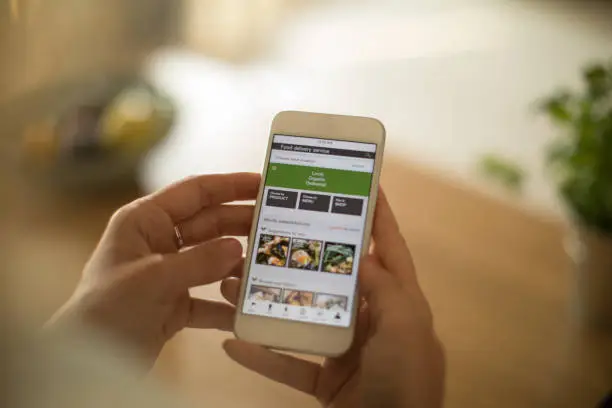
Pizza delivery app aren't just convenient. They're revenue machines that can boost your sales by 25% or more. Period.
If you're still debating whether to list your pizzeria on DoorDash or Uber Eats, you're already behind. The data doesn't lie, and the businesses winning right now are the ones that figured this out three years ago.
Let's break down exactly how these platforms turn downloads into dollars.
The Revenue Impact You Can't Ignore
Think delivery apps are just another sales channel? Wrong.
Instant Access to Millions of Hungry Customers
You get exposure to an entire customer base without opening a second location. When you partner with major platforms, you're suddenly visible to millions of active users searching for pizza right now.
Mario's Pizza Bar saw a 189% revenue increase in 12 months using Uber Eats. That's $190,000 in additional sales. By year's end, 65-70% of their total revenue came from the app.
Not an outlier. Over 46% of pizzerias using third-party delivery report that these platforms generate 11% or more of total sales.
The Reality:
|
Metric |
Impact |
|
Average sales increase |
25%+ |
|
Mario's Pizza Bar revenue boost |
189% ($190K) |
|
Operators seeing 11%+ sales from apps |
46% |
Your 20-square-foot shop now competes with full-service restaurants. Same reach. Same visibility. No extra rent.
Why Traditional Marketing Can't Compete
Here's what most owners miss: delivery app users are already committed. They've decided to order food. They're just picking where.
You're not spending money hoping someone sees your ad. You're appearing directly to people actively searching for pizza delivery in your area. High-intent customers. Ready to buy.
Over 75% of restaurant operators say third-party delivery reaches customers they'd never access otherwise. That's not marketing speak. That's new money.
Built-In Marketing Tools That Actually Work
Let's talk about tools you'd never build yourself.
Geofencing and Push Notifications
Delivery apps can trigger notifications when customers enter a 300-500 meter radius around your restaurant. Telepizza used this strategy and reached 2.3 million app users. The results?
-
0.8% click-through rate
-
4-7% conversion rate
-
300-450 orders per campaign
-
$2,400-$3,600 in revenue per notification
Try replicating that with Facebook ads. Good luck.
Promotions That Drive Visibility
Limited-time discounts and combo deals don't just attract customers. They boost your ranking in search results. The app promotes you more prominently when you run promotions.
Translation? You're competing directly for attention against nearby competitors. And if you master promotion strategy while they don't, you win their customers.
Platforms also offer streak-based loyalty programs and first-order discounts built into the system. DoorDash launched consecutive-day ordering rewards, and weekly order frequency jumped measurably.
Solving the Dead Hours Problem
Your dining room sits empty at 3 PM. Your kitchen staff stands around at 10 PM. Delivery apps fill those gaps.
Revenue Throughout Operating Hours
Delivery orders create consistent cash flow during slow periods. No dining room drama. No wasted labor costs.
Better yet? Delivery-only models slash overhead dramatically:
|
Cost Category |
Savings |
|
Dining room utilities |
Eliminated |
|
Server staffing |
Eliminated |
|
Front-of-house expenses |
Eliminated |
|
Profit margins |
10-25% vs. tighter full-service margins |
Smaller order volumes still contribute meaningfully to your bottom line because operational costs are lower.
Testing New Menu Items Without Risk
Want to know which specialty pizzas sell best? Delivery app analytics tell you exactly what customers customise most often. Data-driven insight without the waste of over-stocking inventory.
You can test market variations, optimise your menu, and maximise profitability based on real ordering patterns. Not guesswork.
Logistics Without the Headache
Running your own delivery fleet costs serious money. Vehicles. Drivers. Insurance. Fuel. Dispatching infrastructure.
Delivery apps eliminate all of it.
Focus on What You Do Best
Platforms manage driver networks, handle delivery complaints, and take responsibility for order accuracy. You focus exclusively on making great pizza.
Which is why you started this business, right?
Pizza quality suffers when you're distracted coordinating drivers or fielding delivery complaints. Third-party platforms create separation. Customer service issues don't undermine your product.
The Commission Trade-Off
Yes, apps charge 15-30% per order. Yes, that hits margins hard.
But let's be honest about what you're getting.
The Volume Advantage Justifies the Cost
Over 53% of pizzerias don't use third-party services because of fees. That's their choice. It's also why they're leaving money on the table.
Smart operators use a hybrid approach:
-
Manage nearby deliveries in-house (maintain margins on high-volume orders)
-
Use apps for extended zones and peak hours (leverage platform networks strategically)
The Real Strategy:
View delivery apps as customer acquisition channels, not profit maximisers on every order. If an app order brings a new customer who later orders directly through your website, that commission becomes an acceptable acquisition cost.
Repeat customers ordering outside the app generate full margins. That initial investment reverses itself fast.
Data You Can't Get Anywhere Else
Delivery platforms reveal which pizzas sell best, optimal pricing windows, customer preferences by location, and ordering frequency patterns.
This intelligence feeds directly into menu optimisation, promotional strategy, and pricing decisions. Operators who actually use these insights grow faster than those who ignore them.
Want to predict seasonal demand? Refine marketing for high-value customers? Create targeted promotions? The data's sitting there waiting for you to use it.
The Bottom Line
Pizza delivery apps improve sales through immediate customer access, sophisticated marketing tools, and logistics management without infrastructure investment. The sales uplift is proven. Consistent. Replicable.
Commission fees require financial management. Obviously. But the question isn't whether to use delivery apps anymore. It's how strategically you'll deploy them while competitors figure it out too late.

 English
 Arabic
 French
 Spanish
 Deutsch
 Turkish
 Dutch
Dutch
 Italiano
 Russian
 Romaian
 Portuguese (Brazil)
 Greek
Greek