

Global Low-Intensity Sweeteners Market by 2034: Key Drivers, Growth Factors, and Strategic Insights
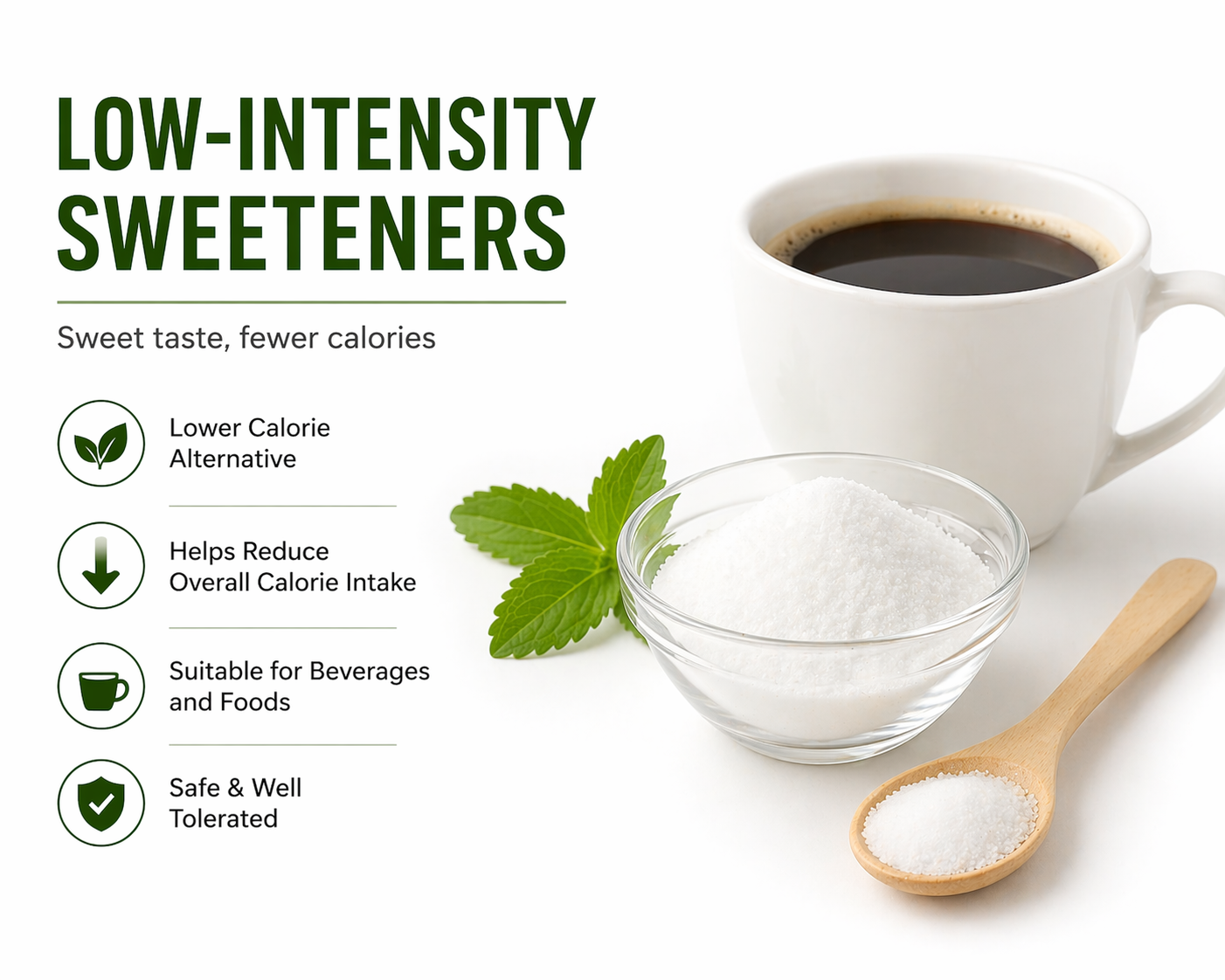
The global low-intensity sweeteners market is witnessing consistent growth as consumers and manufacturers increasingly prioritize healthier sugar alternatives. Low-intensity sweeteners—including xylitol, allulose, tagatose, and trehalose—offer moderate sweetness (30–70% of sugar) while maintaining essential functional properties such as bulk and texture. These characteristics make them highly suitable for applications in bakery, dairy, and beverage formulations, particularly in products aimed at calorie reduction and improved health profiles.
The global Low-Intensity Sweeteners Market size is projected to reach US$ 5.14 billion by 2034 from US$ 3.64 billion in 2025. The market is anticipated to register a CAGR of 4.40% during the forecast period 2026-2034.
Download Sample PDF: https://www.theinsightpartners.com/sample/TIPRE00004538
Market Overview
Low-intensity sweeteners are widely used in food & beverages, bakery and confectionery, and dairy and frozen desserts. Their ability to reduce sugar content without compromising product quality has made them a preferred choice for manufacturers responding to changing consumer preferences. The market is segmented by type, form, and application, offering diverse growth opportunities across industries.
With increasing demand for clean-label and functional food products, low-intensity sweeteners are gaining prominence as a critical ingredient in product reformulation strategies. Their low glycemic index and reduced caloric value further support their adoption among health-conscious consumers.
Key Market Drivers
1. Rising Health Awareness and Lifestyle Changes
One of the most significant drivers of the low-intensity sweeteners market is the growing awareness of the health risks associated with excessive sugar consumption. Consumers are increasingly seeking low-calorie and low-glycemic alternatives to manage conditions such as obesity, diabetes, and cardiovascular diseases.
This shift in consumer behavior is encouraging food manufacturers to incorporate low-intensity sweeteners into a wide range of products, including beverages, snacks, and dairy items. The growing emphasis on wellness and preventive healthcare is expected to continue driving market demand through 2034.
2. Increasing Demand for Low-Calorie Food and Beverages
The rising demand for low-calorie food and beverage products is another major factor fueling market growth. Consumers are actively reducing sugar intake while still seeking enjoyable taste experiences. Low-intensity sweeteners provide an effective solution by offering mild sweetness with fewer calories.
This trend is particularly prominent in developed markets, where consumers are more aware of nutritional labeling and calorie intake. As a result, manufacturers are reformulating products to meet these evolving preferences.
3. Growth of Clean-Label and Natural Ingredients
The clean-label movement is playing a crucial role in driving the adoption of low-intensity sweeteners. Consumers are increasingly demanding transparency in food ingredients and prefer natural, minimally processed products.
Natural low-intensity sweeteners such as honey, agave, and coconut sugar are gaining popularity due to their perceived health benefits and natural origin. This shift is encouraging manufacturers to develop clean-label formulations that align with consumer expectations.
4. Expansion of the Food Processing Industry
The rapid expansion of the global food processing industry is significantly contributing to the growth of the low-intensity sweeteners market. These sweeteners are widely used in processed foods, bakery products, confectionery, and beverages to achieve desired taste profiles while reducing sugar content.
The increasing consumption of ready-to-eat (RTE) and convenience foods is further boosting demand. As urbanization and busy lifestyles continue to rise, the need for healthier processed food options is expected to drive market growth.
5. Technological Advancements in Production
Advancements in food processing technologies, including fermentation and enzymatic processes, are improving the quality, taste, and scalability of low-intensity sweeteners. These innovations are enabling manufacturers to produce cost-effective sweeteners with enhanced functionality and stability.
Improved production techniques are also helping companies expand their product portfolios and meet the growing demand for diverse sweetener solutions across various applications.
6. Regulatory Support and Sugar Reduction Policies
Government initiatives aimed at reducing sugar consumption are playing a critical role in market growth. Policies such as sugar taxes, labeling requirements, and public health campaigns are encouraging manufacturers to adopt alternative sweeteners.
These regulatory measures are particularly prominent in regions such as North America and Europe, where authorities are actively promoting healthier dietary practices.
7. Rising Prevalence of Diabetes and Obesity
The increasing global prevalence of diabetes and obesity is a key driver of the low-intensity sweeteners market. These sweeteners offer a low glycemic index and reduced caloric content, making them suitable for diabetic-friendly and weight-management products.
As healthcare awareness continues to grow, the demand for functional and health-oriented food products is expected to further boost market expansion.
Competitive Landscape and Key Players
The global low-intensity sweeteners market is highly competitive, with key players focusing on innovation, strategic partnerships, and geographic expansion. Major companies operating in the market include:
- Cargill, Incorporated
- Ingredion Incorporated
- Roquette Frères
- Matsutani Chemical Industry Co., Ltd.
- Südzucker AG
- PureCircle
- Mitsui & Co., Ltd.
- Tate & Lyle PLC
- SweetLeaf
These companies are investing in research and development to introduce innovative sweetener solutions and strengthen their global market presence.
Future Outlook
The global low-intensity sweeteners market is expected to witness steady growth through 2034, supported by rising health awareness, technological advancements, and regulatory initiatives. The increasing demand for low-calorie and clean-label products will continue to create new opportunities for market players.
As innovation improves taste profiles and expands application areas, low-intensity sweeteners are likely to become a mainstream ingredient in the global food and beverage industry.
About Us
The Insight Partners is a leading global market research and consulting firm that provides actionable insights across various industries. The company specializes in delivering comprehensive reports that combine primary and secondary research methodologies, enabling businesses to make informed decisions and identify growth opportunities.
Contact Us
The Insight Partners
Email: sales@theinsightpartners.com
Phone: +1-646-491-9876
Website: https://www.theinsightpartners.com

 Arabic
 French
 Spanish
 Portuguese
 Deutsch
 Turkish
 Dutch
Dutch
 Italiano
 Russian
 Romaian
 Portuguese (Brazil)
 Greek
Greek