

Understanding the Isophthalic Acid Price Trend: A Simple and Practical Guide
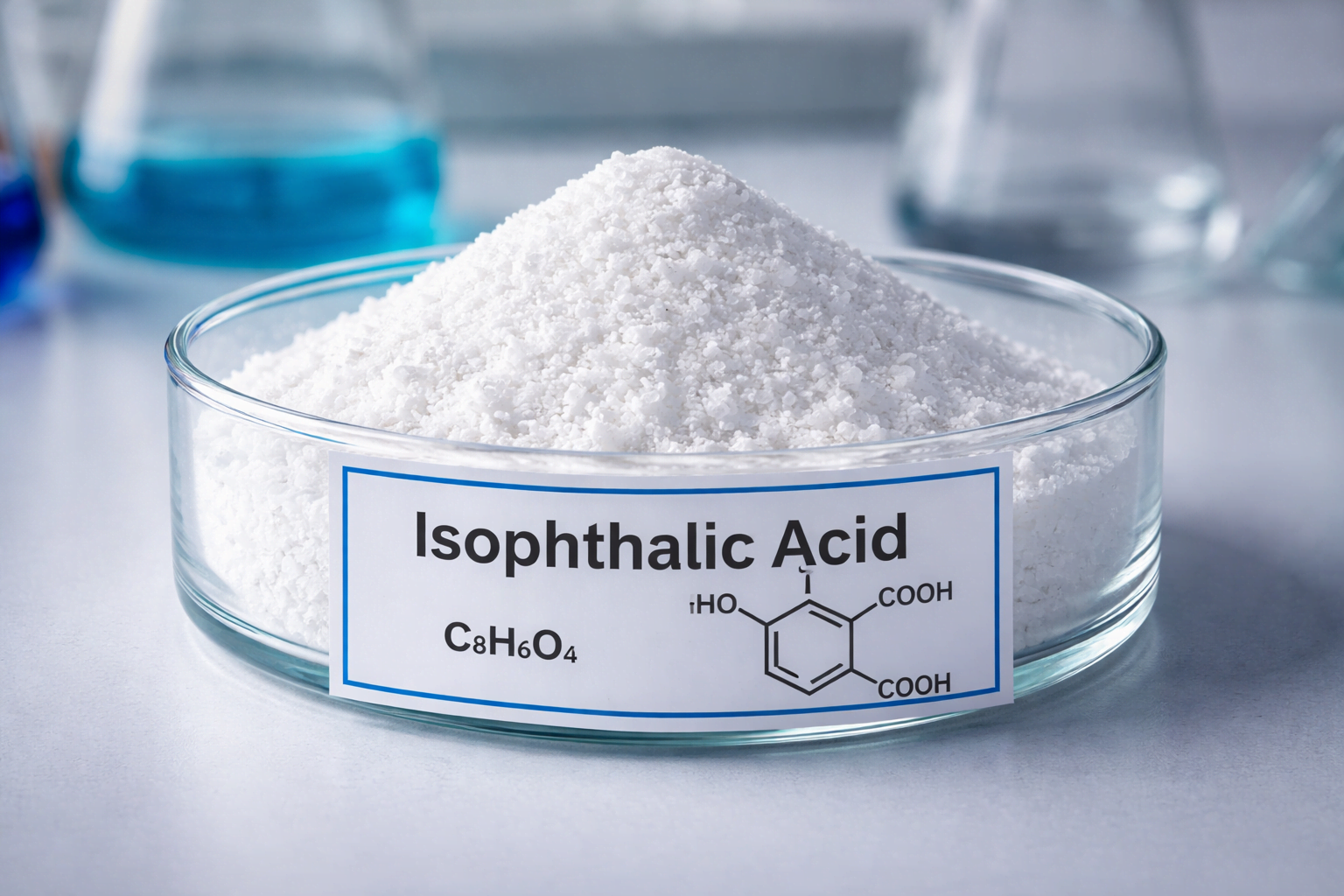
The Isophthalic Acid Price Trend has become an important topic for industries like plastics, packaging, coatings, and textiles. In recent years, Isophthalic Acid Prices have shown noticeable ups and downs due to changes in demand, raw material costs, and global economic conditions. In this article, we will understand this trend in a very simple and natural way, using general observations and real market behavior.
What is Isophthalic Acid and Why is it Important?
Isophthalic acid is a chemical compound mainly used in the production of polyester resins, PET bottles, coatings, and fibers. It is produced from meta-xylene, which is derived from crude oil.
Because of its wide use in daily-life products like plastic bottles, paints, and textiles, its price directly affects many industries. When its cost changes, it creates a ripple effect across multiple sectors.
👉👉👉Please Submit Your Query For Isophthalic Acid Price Trend, Market Analysis and Forecast: https://www.price-watch.ai/book-a-demo/
Basic Overview of the Isophthalic Acid Price Trend
If we look at the recent Isophthalic Acid Price Trend, it has not been stable. Instead, it has moved in cycles—sometimes going up and sometimes going down.
- In some regions, prices dropped due to weak demand and high supply.
- In other periods, prices increased slightly due to rising raw material costs.
- Overall, the trend has been moderately fluctuating, not extremely volatile.
For example, in 2025, many markets saw price declines due to slow demand from automotive and construction sectors.
But later, in early 2026, prices started rising slightly due to improved demand and higher feedstock costs.
This shows that the market is very sensitive to both supply and demand.
Key Factors Affecting Isophthalic Acid Prices
1. Raw Material Cost (Meta-Xylene)
The biggest factor behind the Isophthalic Acid Price Trend is the cost of raw materials.
- Isophthalic acid is made from meta-xylene.
- Meta-xylene comes from crude oil.
- So, when oil prices increase, production costs also increase.
This directly pushes Isophthalic Acid Prices higher.
2. Demand from End-Use Industries
Demand plays a very important role. Some key industries include:
- Packaging (PET bottles)
- Automotive parts
- Construction materials
- Coatings and paints
When these industries grow, demand increases, and prices go up. When they slow down, prices fall.
For example:
- In 2025, weaker demand from automotive and textile sectors caused prices to drop in several countries.
- Later, steady demand from resin and coating industries supported slight price increases.
3. Supply and Inventory Levels
Supply conditions also affect pricing:
- High production = oversupply = lower prices
- Limited supply = higher prices
In some regions, continuous production and high inventory levels created downward pressure on prices.
4. Energy and Logistics Costs
Transportation and energy costs also matter:
- Higher fuel and shipping costs increase overall product cost.
- Delays in logistics can disrupt supply and affect prices.
In global markets, even small changes in freight cost can impact final pricing.
5. Global Economic Conditions
The economy has a direct impact:
- During slow economic periods → demand decreases → prices fall
- During growth periods → demand increases → prices rise
Uncertainty in global markets often makes buyers cautious, reducing immediate purchases and affecting the Isophthalic Acid Price Trend.
Regional Price Trends
Asia
Asia is the largest market for isophthalic acid.
- Prices dropped in 2025 due to weak demand.
- Slight recovery was seen in 2026 with better industrial activity.
Countries like China, South Korea, and India play a major role in setting the trend.
Europe
In Europe:
- Prices showed a mild decline due to slow industrial activity.
- Oversupply and cautious buying behavior affected the market.
North America
In the U.S.:
- Prices declined due to reduced demand from automotive and textile sectors.
- Supply chain issues and logistics costs also played a role.
India
India also saw a downward trend in 2025:
- Weak demand from textile and automotive industries
- Falling import prices
- High logistics cost impact
However, future demand recovery can support price stability.
Recent Market Behavior
Looking at the latest updates:
- Prices in Northeast Asia reached around 1.06 USD/kg in early 2026.
- The increase was small, showing a slow recovery rather than a strong rise.
- Supply remained balanced, preventing sharp price increases.
This tells us that the market is currently stable but cautious.
Future Outlook of Isophthalic Acid Price Trend
The future of the Isophthalic Acid Price Trend looks balanced, with mild ups and downs expected.
Positive Factors
- Growing demand from packaging and PET industries
- Increasing use in coatings and specialty resins
- Industrial growth in developing countries
Negative Factors
- Fluctuating crude oil prices
- Economic uncertainty
- High production and inventory levels
Experts believe prices will not rise sharply but will show controlled and gradual movement unless there is a major disruption.
General Market Sentiment
The overall market sentiment can be described as:
- Stable but cautious
- Buyers are not rushing to purchase in bulk
- Suppliers are maintaining steady production
- Prices are moving in a limited range
This kind of market usually continues until demand becomes stronger or supply changes significantly.
Conclusion
The Isophthalic Acid Price Trend is influenced by many simple but important factors like raw material cost, demand, supply, and global economic conditions. Over the past year, Isophthalic Acid Prices have shown both decline and slight recovery, reflecting a balanced but uncertain market.
In simple terms, when industries like packaging and automotive grow, prices go up. When these industries slow down, prices fall. At the same time, changes in oil prices and supply levels also play a major role.
Looking ahead, the market is expected to remain stable with moderate fluctuations. There may not be any sharp increase or decrease unless there is a major change in demand or raw material costs.
For businesses and buyers, the best approach is to closely watch market signals and plan purchases wisely, as the Isophthalic Acid Price Trend will continue to shift based on global conditions.
About Price Watch™ AI
Price-Watch AI is an India-based, independent raw material price reporting agency that provides real-time price forecasts and data-driven insights into global raw material markets. Price-Watch AI specializes in tracking raw material prices, analyzing market trends, and delivering timely updates on plant shutdowns, supply disruptions, capacity expansions, and demand-supply dynamics. The Price-Watch AI platform empowers manufacturers, traders, and procurement professionals to make faster, smarter decisions. Leveraging AI-powered forecasting and over a decade of historical data, Price-Watch AI transforms market volatility into actionable opportunity.
Futura Tech Park,
C Block, 8th floor 334,
Old Mahabalipuram Road,
Sholinganallur, Chennai, Tamil Nadu, Pincode - 600119.
𝐋𝐢𝐧𝐤𝐞𝐝𝐈𝐧: https://www.linkedin.com/company/price-watch-ai/
𝐅𝐚𝐜𝐞𝐛𝐨𝐨𝐤: https://www.facebook.com/people//61568490385598/
𝐓𝐰𝐢𝐭𝐭𝐞𝐫: https://x.com/pricewatchai
𝐖𝐞𝐛𝐬𝐢𝐭𝐞: https://www.price-watch.ai/

 English
 Arabic
 French
 Spanish
 Portuguese
 Deutsch
 Turkish
 Dutch
Dutch
 Russian
 Romaian
 Portuguese (Brazil)
 Greek
Greek