

Conoscope Lens Guide: Working Principle & Uses
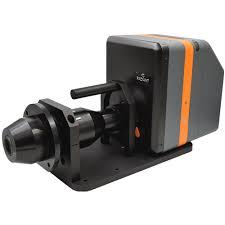
A conoscope lens is a specialized optical component used for analyzing light behavior, interference patterns, and angular light distribution in materials such as liquid crystals and optical films. It plays a key role in advanced optical testing systems. It is widely used in lab analysis and display technology research environments today.
Conoscope lenses are commonly used in LCD panel testing, polarization studies, and optical engineering applications where precise measurement of light angles and interference patterns is required. They help researchers understand how light behaves inside structured optical materials and display systems.
Conoscope lens systems are essential in display manufacturing, optical research labs, and material science industries where accurate light analysis, polarization control, and angular performance evaluation are required.
What is a Conoscope Lens?
A conoscope lens is an optical measurement tool designed to observe interference patterns created when polarized light passes through anisotropic materials. It is mainly used in scientific and industrial optical analysis.
This lens allows engineers and researchers to examine how light travels through materials like liquid crystals, helping them evaluate optical performance and alignment accuracy in display technologies.
How a Conoscope Lens Works
A conoscope lens works by capturing light that passes through a sample and projecting it into an interference pattern known as a conoscopic image.
When polarized light enters the sample, it interacts with the internal molecular structure, producing unique patterns based on optical anisotropy. The lens collects this light and focuses it for analysis.
The resulting image helps determine optical axis orientation, refractive index variations, and light propagation behavior inside the material.
Key Components of a Conoscope System
A conoscope system typically includes several optical components that work together for accurate measurement.
Objective Lens – Captures light passing through the sample with high precision.
Conoscopic Lens Assembly – Focuses and projects the interference pattern for observation.
Polarizer and Analyzer – Control the polarization state of light for accurate measurement.
CCD Camera or Sensor – Records and analyzes the optical pattern digitally.
Each component ensures high-resolution optical analysis and accurate data interpretation.
Applications of Conoscope Lens
Conoscope lenses are widely used in scientific and industrial fields.
In LCD manufacturing, they are used to test liquid crystal alignment and display quality.
In optical research, they help analyze birefringence and polarization effects in advanced materials.
In material science, conoscope systems are used to study crystal orientation and molecular structure.
They are also used in quality control systems for display panels and optical film testing.
Advantages of Conoscope Lens Technology
One major advantage is high precision optical measurement, allowing accurate analysis of light behavior in complex materials.
It provides non-destructive testing, meaning samples remain intact during analysis.
Conoscope systems also deliver real-time visualization of optical patterns, improving research efficiency.
They are highly reliable for industrial quality control and laboratory research applications.
Limitations of Conoscope Lenses
Despite their accuracy, conoscope lenses have some limitations.
They require precise alignment for accurate measurements, which can increase setup complexity.
The equipment can be expensive due to advanced optical components and sensors.
They are also limited to specific types of materials, mainly birefringent and anisotropic samples.
However, advancements in digital imaging are improving usability and accuracy.
Importance in Display Technology
Conoscope lenses play a critical role in modern display development.
They help manufacturers analyze LCD and OLED panel performance by studying light distribution and polarization effects.
This ensures better image quality, color accuracy, and viewing angle optimization in consumer electronics.
They are essential tools in developing high-performance screens for TVs, monitors, and mobile devices.
Future of Conoscope Lens Technology
The future of conoscope lens systems is evolving with digital optics and AI-based analysis tools.
Automated pattern recognition systems are improving speed and accuracy in optical testing.
Integration with high-resolution imaging sensors is enhancing measurement precision.
As display technologies advance, conoscope systems will remain vital in research and quality control processes.
Conclusion
A conoscope lens is a powerful optical tool used for analyzing light behavior, interference patterns, and material properties. It plays an essential role in display testing, optical research, and material science applications.
With growing demand for high-quality displays and advanced optical systems, conoscope lens technology will continue to support innovation in imaging, manufacturing, and scientific research fields.

 Arabic
 French
 Spanish
 Portuguese
 Deutsch
 Turkish
 Dutch
Dutch
 Italiano
 Russian
 Romaian
 Portuguese (Brazil)
 Greek
Greek