

Coal Price Trend: Understanding the Movement of a Core Energy Resource
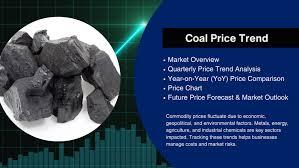
The Coal Price Trend reflects the changing role of one of the world’s oldest and most widely used energy resources. Coal has powered industries, homes, and economies for generations, and even today it remains an important fuel in many parts of the world. The price of coal is shaped by energy demand, industrial growth, government policies, and everyday electricity needs. Because coal is closely linked to basic energy consumption, its price trend often mirrors real-life economic activity.
👉 👉 👉 Please Submit Your Query for Alumina Premium Price Trend, demand-supply, suppliers, market analysis: https://www.price-watch.ai/book-a-demo/
Importance of Coal in Everyday Life
Coal may feel like a distant or traditional fuel, but it still supports daily life in many ways. It is widely used for electricity generation, steel production, cement manufacturing, and other heavy industries. Many homes, offices, and factories indirectly depend on coal-generated power, especially in developing economies.
This strong connection to essential services keeps coal demand active. As long as electricity, infrastructure, and industrial production are needed, coal continues to play a role, shaping the coal price trend over time.
Key Factors Influencing the Coal Price Trend
One of the main drivers of coal prices is energy demand. When electricity consumption rises due to population growth, weather conditions, or industrial expansion, coal demand often increases. Higher demand can support stronger prices, especially during peak usage periods.
Government policies also influence the coal price trend. Environmental regulations, mining permissions, export controls, and energy transition plans all affect how much coal is produced and consumed. Policy changes can slowly shift supply and demand balance, influencing prices.
Supply Conditions and Mining Activity
Coal supply depends heavily on mining activity. Production levels are affected by labor availability, safety regulations, weather conditions, and operational costs. Floods, strikes, or stricter mining rules can reduce output, leading to tighter supply and higher prices.
Transportation infrastructure also matters. Coal must be moved from mines to power plants or ports, and any disruption in railways, ports, or logistics can influence regional coal prices. These factors together shape the coal price trend in both local and global markets.
Coal Price Trend in the Global Market
In the global market, coal prices are influenced by international trade and demand from major importing countries. Thermal coal used for power generation and metallurgical coal used for steelmaking often follow different price patterns based on industrial needs.
Currency exchange rates and shipping costs also play a role. Since coal is traded across borders, changes in fuel costs or freight availability can affect landed prices. Even when demand remains steady, these external factors can impact the coal price trend.
Impact of Industrial Growth and Steel Production
Steel manufacturing is a major consumer of coal, especially coking coal. When construction and infrastructure projects increase, steel demand rises, leading to higher coal consumption. This link between construction activity and coal demand directly influences coal prices.
During economic slowdowns, industrial output may decline, reducing coal demand. These cycles of growth and slowdown are reflected clearly in the coal price trend over time.
Energy Transition and Environmental Influence
The global shift toward cleaner energy sources has influenced coal markets. Renewable energy expansion, emission targets, and climate commitments have created long-term pressure on coal demand in some regions. However, coal still remains essential where alternatives are not yet fully developed.
This transition creates a mixed effect on prices. While long-term demand may face challenges, short-term supply constraints and energy security concerns can still support coal prices. As a result, the coal price trend often shows both stability and periods of sharp movement.
Regional Demand and Seasonal Effects
Coal prices are also affected by seasonal demand. During extreme winters or hot summers, electricity consumption increases, leading to higher coal usage. Seasonal weather patterns can cause temporary price increases, especially in regions heavily dependent on coal power.
Regional demand differences matter as well. Countries with growing populations and industrial bases often maintain strong coal consumption, supporting the coal price trend even when global demand growth slows.
Long-Term Outlook of the Coal Price Trend
The long-term coal price trend is expected to remain influenced by a balance between energy demand and environmental change. While some regions reduce coal usage, others continue to rely on it for affordable and reliable power.
Technological improvements in cleaner coal usage and efficiency may help stabilize demand in the future. Overall, coal prices are likely to move gradually, responding to real-world energy needs rather than sudden speculation.
Conclusion
The Coal Price Trend reflects the ongoing role of coal as a foundational energy resource. Its price movements are shaped by electricity demand, industrial growth, mining activity, global trade, and environmental policies. While the energy landscape is changing, coal continues to support daily life and economic activity in many regions. Understanding coal price trends helps explain broader patterns in energy use, industrial development, and global economic behavior.
About Price Watch™ AI
Price-Watch AI is an India-based, independent raw material price reporting agency that provides real-time price forecasts and data-driven insights into global raw material markets. Price-Watch AI specializes in tracking raw material prices, analyzing market trends, and delivering timely updates on plant shutdowns, supply disruptions, capacity expansions, and demand-supply dynamics. The Price-Watch AI platform empowers manufacturers, traders, and procurement professionals to make faster, smarter decisions. Leveraging AI-powered forecasting and over a decade of historical data, Price-Watch AI transforms market volatility into actionable opportunity.
Futura Tech Park,
C Block, 8th floor 334,
Old Mahabalipuram Road,
Sholinganallur, Chennai, Tamil Nadu, Pincode - 600119.
LinkedIn: https://www.linkedin.com/company/price-watch-ai/
Facebook: https://www.facebook.com/people/Price-Watch/61568490385598/
Twitter: https://x.com/pricewatchai
Website: https://www.price-watch.ai/

 English
 Arabic
 French
 Spanish
 Portuguese
 Deutsch
 Turkish
 Dutch
Dutch
 Russian
 Romaian
 Portuguese (Brazil)
 Greek
Greek