

Step-by-Step Guide to Building an AI Powered Uber Clone for Taxi Businesses
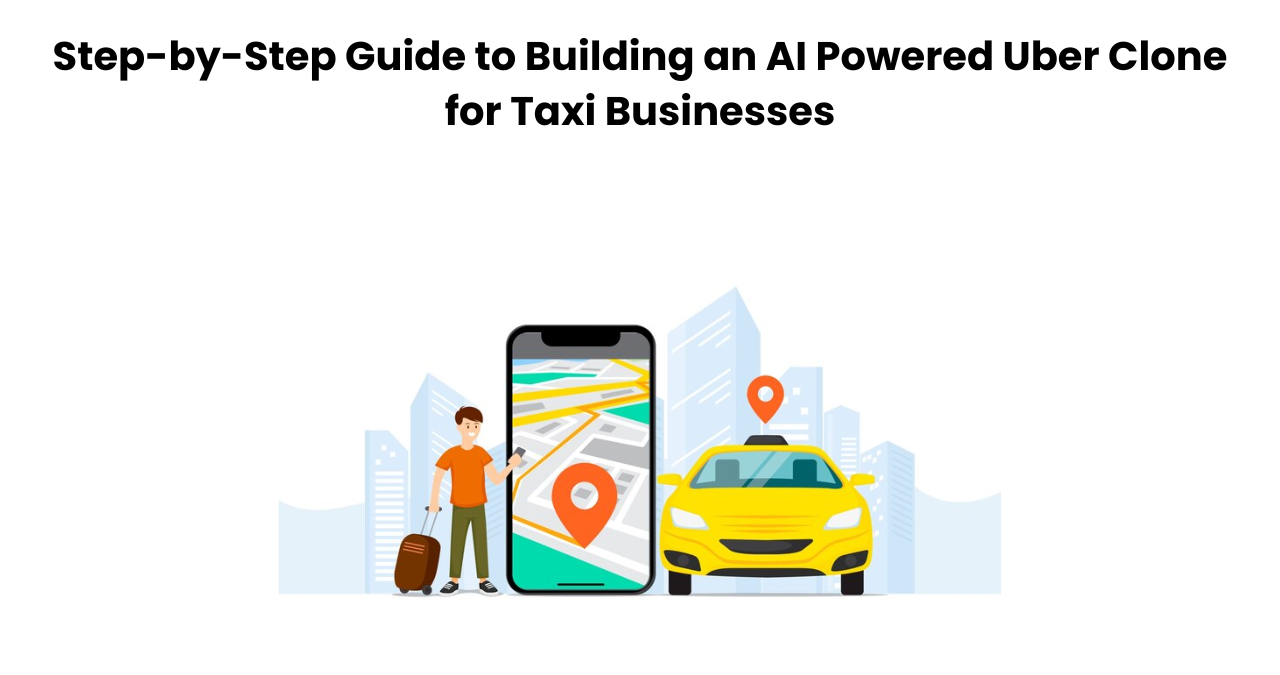
The taxi industry is no longer limited to traditional street pickups or phone-based bookings. Customers today expect quick ride confirmation, real-time driver tracking, accurate arrival times, digital payments, and a smooth app experience. Building an AI powered Uber clone allows taxi businesses to compete with modern mobility platforms while maintaining efficiency and profitability. This step-by-step guide explains how taxi businesses can build an AI powered Uber clone using clear language and a practical approach.
Understanding What an AI Powered Uber Clone Is
An AI powered Uber clone is a ride-hailing platform inspired by the Uber business model and enhanced with artificial intelligence. Like a standard uber like app, it allows riders to book taxis, get matched with nearby drivers, track rides in real time, make digital payments, and provide ratings.
What makes it different from a basic taxi app clone is intelligence. AI analyzes real-time and historical data from riders, drivers, traffic systems, and platform operations. Based on this data, it optimizes ride matching, route planning, demand forecasting, pricing logic, and customer support automatically. Over time, the system becomes smarter and more efficient without constant manual control.
Why Taxi Businesses Need an AI Powered Uber Clone
Traditional taxi booking systems and basic ride-hailing apps struggle as demand grows. Problems such as long waiting times, idle drivers, inaccurate ETAs, frequent cancellations, and high operational costs become common.
An AI powered Uber clone solves these challenges by shifting taxi operations from reactive to proactive. AI predicts demand, balances supply, improves routing, and automates decisions. This helps taxi businesses deliver better service, reduce waste, and scale smoothly.
Step 1: Define Business Goals and Target Market
The first step in building an AI powered Uber clone is understanding what you want to achieve.
Clarifying Business Objectives
Decide whether your goal is to increase daily rides, reduce operational costs, improve customer experience, or expand to new locations. AI features should be aligned with these goals.
Identifying Target Users
Determine whether you are serving local commuters, airport travelers, corporate clients, or a mix of audiences. User behavior patterns influence AI model design.
Planning Long-Term Growth
AI architecture should support future expansion. Even if you start small, the system should be ready to scale across cities or regions.
Step 2: Choose the Right Development Approach
How you build the app impacts speed and flexibility.
Taxi App Clone vs Uber Like App
A taxi app clone offers basic booking features, while an uber like app provides a proven ride-hailing workflow. An AI powered Uber clone builds on this foundation and adds intelligence.
Using an Uber Script as a Base
An uber script can speed up development by providing core ride-hailing functionality. It must be flexible enough to support AI integration and real-time data processing.
Ensuring AI-Ready Architecture
The chosen solution should allow AI modules to be added, updated, and scaled without rewriting the entire system.
Step 3: Design the Core App Components
An AI powered Uber clone consists of several interconnected applications.
Rider Application
The rider app allows users to book rides, view nearby drivers, track taxis, make payments, and rate trips. AI enhances this by suggesting accurate pickup points, showing reliable ETAs, and remembering frequent destinations.
Driver Application
The driver app lets drivers accept rides, navigate optimized routes, view earnings, and communicate with riders. AI helps by assigning better ride requests and reducing idle time.
Admin Panel
The admin dashboard allows taxi business owners to manage drivers, monitor rides, control pricing, and view reports. AI-powered analytics provide insights into demand trends, performance issues, and growth opportunities.
Backend and AI Engine
The backend connects all apps and processes real-time data. The AI engine runs machine learning models for prediction, optimization, fraud detection, and automation.
Step 4: Plan AI Features That Improve Efficiency
AI features define how smart the platform will be.
Intelligent Ride Matching
AI matches riders with drivers using distance, traffic conditions, driver availability, and acceptance history. This reduces waiting time and cancellations.
Demand Prediction
AI analyzes past booking data, time patterns, weather, and local events to predict demand. This helps position drivers before demand spikes.
Route Optimization
AI selects the best routes using live traffic data and updates routes dynamically during trips.
Dynamic Pricing Logic
AI adjusts fares based on real-time demand and supply to balance the marketplace.
Fraud Detection
AI identifies suspicious booking and payment behavior early, protecting the platform.
Step 5: Focus on User Experience Design
User experience determines app adoption.
Simple Booking Flow
Reduce booking steps and keep the interface intuitive. AI can auto-fill frequent locations.
Accurate Information Display
Show clear ETAs, fare estimates, and real-time ride status.
Performance Consistency
Ensure the app works smoothly during peak hours to maintain user trust.
Read more: Is Uber Available in Italy? 10 Best Ride-Sharing Apps in Italy
Step 6: Optimize Driver Experience With AI
Drivers are the backbone of taxi businesses.
Reducing Idle Time
AI guides drivers to high-demand areas, minimizing waiting time.
Fair Ride Distribution
Balanced allocation prevents frustration and improves driver satisfaction.
Performance Insights
AI provides feedback to drivers on acceptance rates and ratings.
Step 7: Build a Scalable Backend Infrastructure
Scalability is essential.
Cloud-Based Infrastructure
Cloud services allow flexible scaling based on demand.
Real-Time Data Handling
The system must process location updates, bookings, and payments instantly.
Modular AI Integration
AI models should be easy to update as data grows.
Step 8: Ensure Security and Compliance
Trust is critical in ride-hailing.
Data Protection
Secure user and payment data using encryption.
Driver Verification
AI assists in document verification and behavior monitoring.
Fraud Prevention
Real-time detection protects revenue and platform reputation.
Step 9: Test the App Thoroughly
Testing ensures reliability.
Functional Testing
Check booking, payments, tracking, and notifications.
AI Model Testing
Validate prediction accuracy and matching logic.
Load Testing
Ensure performance under peak demand.
Step 10: Launch the App in Phases
A phased launch reduces risk.
Pilot Launch
Start in a limited area to collect data and refine AI models.
Monitor User Behavior
Track performance, cancellations, and feedback.
Gradual Expansion
Scale to new areas once stability is achieved.
Step 11: Use AI for Continuous Optimization
AI improves with time.
Learning From Data
Each ride in your taxi app clone improves predictions and efficiency.
Proactive Issue Detection
AI flags potential issues before they affect users.
Feature Expansion
New AI features can be added as the business grows.
Step 12: Scale the Taxi Business Using AI
AI makes scaling manageable.
Predictive Scaling
AI forecasts demand and adjusts infrastructure automatically.
Data-Driven Expansion
Insights help decide where to expand next.
Operational Stability
Service quality remains consistent as the user base grows.
Challenges Taxi Businesses Should Prepare For
AI development requires quality data, strong infrastructure, and ongoing monitoring.
Privacy and security must be prioritized. AI models need regular updates as markets change. These challenges can be managed with experienced technical teams and long-term planning.
Why AI Powered Uber Clones Are the Future
Customer expectations and competition will continue to increase.
AI powered Uber clones provide automation, intelligence, and adaptability that traditional taxi app clones cannot match. They allow taxi businesses to remain competitive and future-ready.
Conclusion
Building an AI Powered Uber Clone is a strategic move for taxi businesses that want to modernize operations, improve customer experience, and scale sustainably. By following a step-by-step approach, taxi operators can integrate AI into ride matching, demand prediction, route optimization, pricing, and support to create a smart and efficient uber like app. AI transforms a basic taxi app clone into a powerful business platform that grows smarter with every ride. To build and scale such a solution successfully, partnering with the right clone app development company ensures the technology, scalability, and long-term vision needed for lasting success.
FAQs
What is an AI Powered Uber Clone?
It is a ride-hailing platform enhanced with artificial intelligence to automate and optimize taxi operations.
How does AI improve taxi business performance?
AI optimizes ride matching, routing, demand prediction, and driver utilization in real time.
Can small taxi businesses use an AI powered Uber clone?
Yes, AI helps businesses of all sizes operate efficiently and scale gradually.
Is an uber script suitable for building an AI powered platform?
Yes, if the uber script supports AI integration and scalable architecture.
Can existing taxi apps be upgraded with AI features?
Yes, AI modules can be integrated into existing platforms with the right technical foundation.

 English
 Arabic
 French
 Spanish
 Portuguese
 Deutsch
 Turkish
 Dutch
Dutch
 Italiano
 Romaian
 Portuguese (Brazil)
 Greek
Greek