

Heavy Duty Quick Release Latch: Types, Uses, and Selection Guide
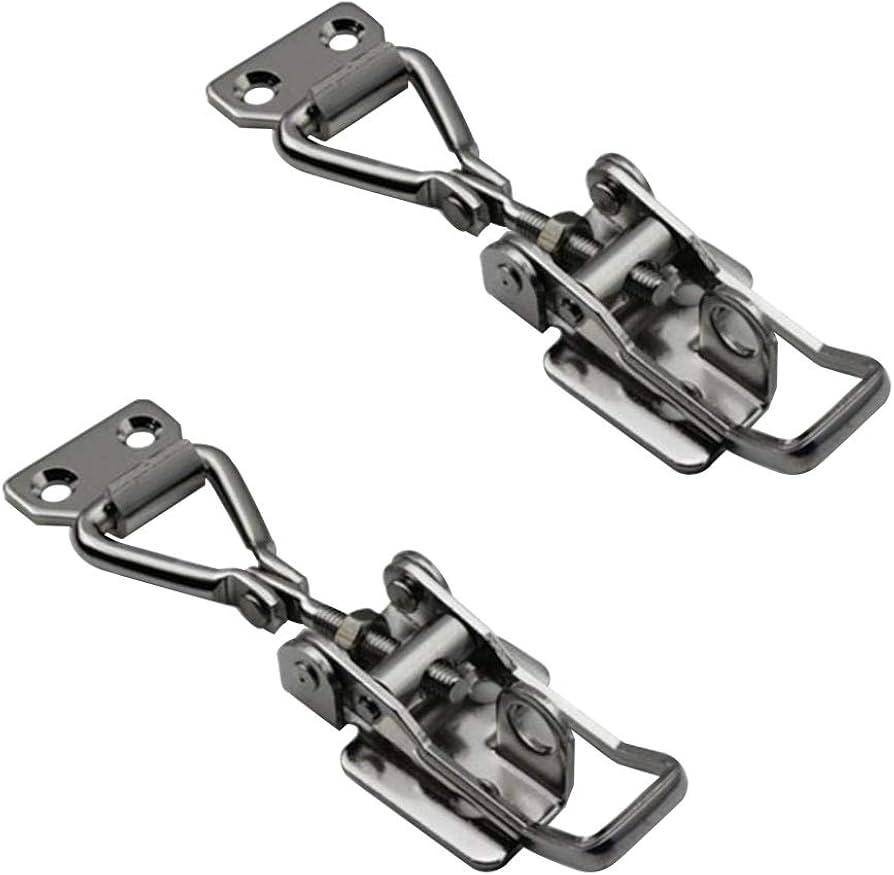
Industrial and commercial equipment often requires secure yet accessible fastening mechanisms, and a heavy duty quick release latch serves this purpose by providing strong closure with easy operation. These latches are commonly used in machinery, transportation, and construction applications where rapid access is essential without compromising safety or structural integrity.
What Is a Heavy Duty Quick Release Latch?
A heavy duty quick release latch is a mechanical fastener designed to hold panels, doors, or equipment components securely while allowing fast and convenient opening. Unlike standard latches, heavy duty variants are engineered to withstand higher loads, vibration, and environmental stress. Their quick-release feature enables operators to open closures without tools, which is critical in industrial and maintenance settings.
Common Types of Heavy Duty Quick Release Latches
Depending on the application and operating environment, several latch types are available:
1. Cam Latches
Cam latches use a rotating cam to engage and secure a hook or strike plate. When turned, the cam pulls the panel tight, providing firm closure. These latches are favored for high-strength applications and can resist significant vibration or external force.
2. Over-Center Latches
Over-center latches operate on a lever mechanism that locks when pushed past the center point. This design ensures continuous pressure on the panel and prevents accidental release under vibration or movement.
3. Paddle Latches
Paddle latches integrate a lever or handle that can be pressed or pulled to open the latch. They are suitable for applications requiring frequent access, such as machinery enclosures or access panels.
4. Draw Latches
Draw latches work by pulling a closure tightly against its mating surface. Heavy duty versions provide uniform clamping force across the panel, maintaining alignment and minimizing wear.
5. T-Handle Latches
T-handle latches combine a rotating handle with a locking mechanism, often used on transport containers, toolboxes, and industrial enclosures. Their ergonomic design supports rapid engagement and release.
Applications of Heavy Duty Quick Release Latches
These latches are widely used across industries where secure fastening and rapid access are critical. Common applications include:
-
Industrial machinery: Engine covers, maintenance panels, and access doors.
-
Transportation: Truck beds, cargo compartments, and utility enclosures.
-
Construction equipment: Heavy machinery panels and removable guards.
-
Aerospace and automotive: Panels requiring repeated access while maintaining vibration resistance.
-
Electronics and enclosures: Protecting sensitive equipment while allowing maintenance access.
Their combination of strength and quick-release convenience makes them essential for operations where downtime must be minimized.
Key Selection Considerations
Choosing the appropriate latch depends on several factors:
-
Load Capacity: Heavy duty latches must withstand panel weight, vibration, and external forces.
-
Environmental Resistance: Materials should resist corrosion, moisture, and temperature extremes. Stainless steel and zinc-plated options are common.
-
Ease of Use: Quick release functionality should allow fast opening without tools.
-
Safety Requirements: Some applications may require locking or tamper-resistant features.
-
Mounting Compatibility: Latches must match panel thickness, hole patterns, and strike plates.
Evaluating these factors ensures that the selected latch maintains safety, functionality, and durability.
Maintenance and Inspection
Regular inspection is essential to ensure continued performance. Recommended practices include:
-
Checking for wear, deformation, or corrosion.
-
Testing quick-release mechanisms to ensure smooth operation.
-
Lubricating moving components with suitable industrial lubricants.
-
Ensuring mounting hardware remains tight and secure.
-
Replacing damaged latches immediately to prevent operational hazards.
Proactive maintenance enhances longevity and reduces risk of equipment downtime.
Advantages of Heavy Duty Quick Release Latches
Heavy duty quick release latches offer several benefits:
-
Secure panel closure under high stress.
-
Rapid access for maintenance and inspections.
-
Vibration resistance in demanding industrial environments.
-
Compatibility with a wide range of panel designs.
-
Reduced need for tools, saving time and labor costs.
Conclusion
Equipment safety and accessibility are vital in industrial, construction, and transportation applications, and the right fastening solution plays a central role. Properly chosen and maintained heavy duty quick release latches provide strong, reliable closure while enabling rapid access when needed, supporting operational efficiency, safety, and equipment longevity.

 English
 Arabic
 French
 Spanish
 Portuguese
 Deutsch
 Turkish
 Dutch
Dutch
 Italiano
 Russian
 Portuguese (Brazil)
 Greek
Greek