

Disabled Assistive Devices Market Grows as Aging Population and Accessibility Awareness Drive Innovation
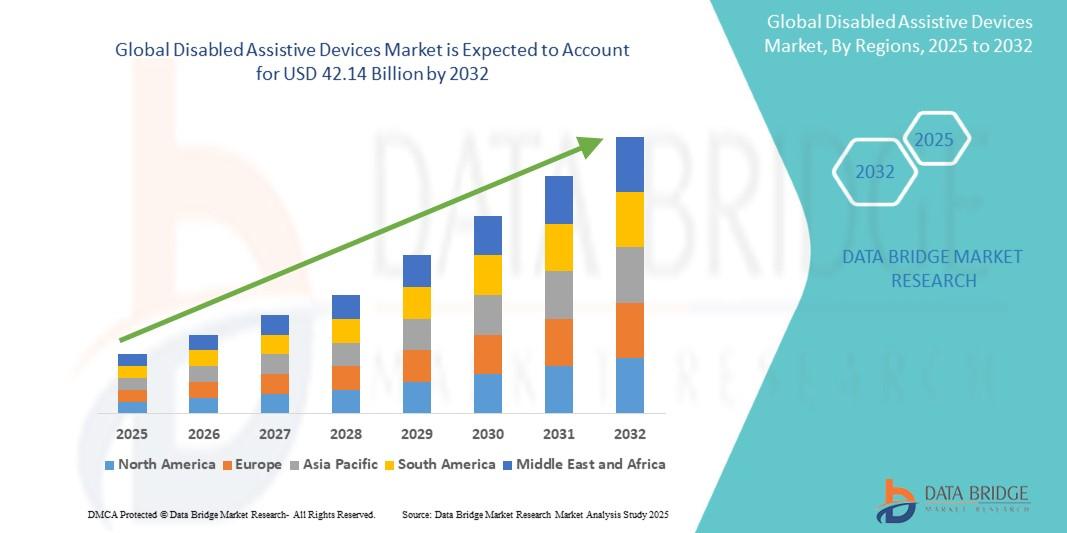
The Disabled Assistive Devices Market is experiencing robust expansion as healthcare systems, governments, and technology innovators increasingly prioritize accessibility, mobility enhancement, and independent living solutions for individuals with disabilities. With the rising prevalence of chronic diseases, aging populations, and growing awareness regarding inclusive infrastructure, the demand for advanced assistive devices continues to surge globally.
This in-depth market analysis explores the key growth drivers, product segments, technological advancements, regional outlook, competitive landscape, and future opportunities shaping the global disabled assistive devices industry.
Stay informed with our latest Disabled Assistive Devices Market research covering strategies, innovations, and forecasts. Download full report:
https://www.databridgemarketresearch.com/reports/global-disabled-assistive-devices-market
What Are Disabled Assistive Devices?
Disabled assistive devices are specialized tools, equipment, and technologies designed to improve mobility, communication, hearing, vision, and daily living activities for individuals with physical, sensory, cognitive, or neurological impairments. These devices enhance independence, safety, productivity, and quality of life.
Assistive devices range from basic mobility aids such as wheelchairs and walkers to advanced solutions like smart prosthetics, AI-powered hearing aids, and digital communication devices.
Market Overview and Growth Dynamics
The global Disabled Assistive Devices Market is witnessing sustained growth due to several macroeconomic and healthcare trends:
-
Rising global geriatric population
-
Increasing incidence of disabilities due to chronic diseases and accidents
-
Expanding rehabilitation infrastructure
-
Growing government reimbursement policies
-
Rapid technological advancements in wearable and smart devices
-
Rising awareness regarding accessibility rights
The integration of artificial intelligence (AI), robotics, IoT-enabled devices, and lightweight materials has significantly transformed the assistive technology landscape, making products more user-friendly, customizable, and efficient.
Key Market Drivers
1. Growing Aging Population
The aging demographic worldwide is one of the most influential growth drivers. Older adults are more susceptible to mobility issues, hearing impairment, vision loss, and neurological disorders. This demographic shift has dramatically increased the demand for mobility aids, hearing aids, and homecare assistive devices.
2. Increasing Prevalence of Disabilities
Rising cases of spinal cord injuries, strokes, cerebral palsy, multiple sclerosis, Parkinson’s disease, and traumatic injuries are accelerating the need for advanced assistive equipment. The increasing survival rate of premature infants and accident victims further contributes to long-term assistive care requirements.
3. Government Support and Reimbursement Programs
Many governments have introduced disability support programs, insurance coverage policies, and reimbursement schemes for assistive devices. These initiatives improve affordability and accessibility, encouraging market growth.
4. Technological Advancements
The evolution of smart wheelchairs, robotic prosthetics, voice-controlled communication devices, and sensor-based mobility aids has revolutionized the industry. AI-driven predictive analytics and remote monitoring features are enhancing usability and patient outcomes.
Market Segmentation Analysis
The Disabled Assistive Devices Market can be segmented based on product type, end-user, and distribution channel.
By Product Type
Mobility Aids
-
Manual and electric wheelchairs
-
Walkers and rollators
-
Crutches and canes
-
Scooters
Mobility aids represent a dominant share due to increasing mobility impairments and rising demand for lightweight, foldable, and powered solutions.
Hearing Aids and Listening Devices
-
Behind-the-ear (BTE)
-
In-the-ear (ITE)
-
Cochlear implants
-
Bone-anchored hearing systems
Technological innovations such as noise-cancellation features and Bluetooth connectivity are driving strong growth in this segment.
Vision Assistive Devices
-
Magnifiers
-
Braille displays
-
Screen readers
-
Smart glasses
Digital assistive technologies for visually impaired individuals are gaining significant traction.
Communication Devices
-
Speech-generating devices
-
Augmentative and alternative communication (AAC) devices
-
Text-to-speech systems
Increasing adoption among individuals with autism spectrum disorder and speech impairments supports market expansion.
Prosthetics and Orthotics
-
Lower limb prosthetics
-
Upper limb prosthetics
-
Braces and supports
Advanced robotic prosthetics and 3D-printed orthotic solutions are accelerating innovation in this category.
By End User
-
Hospitals and Rehabilitation Centers
-
Homecare Settings
-
Specialty Clinics
-
Long-Term Care Facilities
Homecare settings are witnessing rapid growth as patients prefer independent living supported by portable and easy-to-use devices.
By Distribution Channel
-
Hospital Pharmacies
-
Retail Medical Stores
-
Online Platforms
-
Direct Sales
E-commerce platforms are becoming increasingly significant due to convenience, product variety, and competitive pricing.
Regional Insights
North America
North America holds a substantial share of the Disabled Assistive Devices Market due to:
-
Advanced healthcare infrastructure
-
High awareness levels
-
Strong reimbursement frameworks
-
Rapid adoption of smart technologies
The United States leads the regional market, supported by favorable disability rights policies and technological innovation.
Europe
Europe shows consistent growth driven by aging populations, government-funded healthcare systems, and supportive disability inclusion policies.
Asia-Pacific
The Asia-Pacific region is emerging as a high-growth market due to:
-
Expanding healthcare investments
-
Rising disposable incomes
-
Increasing disability awareness
-
Large geriatric population base
Countries such as China, India, and Japan are key contributors to regional expansion.
Latin America and Middle East & Africa
These regions are witnessing gradual growth as healthcare accessibility improves and government initiatives expand disability support programs.
Competitive Landscape
The Disabled Assistive Devices Market is moderately fragmented with the presence of global and regional players focusing on:
-
Product innovation
-
Strategic partnerships
-
Mergers and acquisitions
-
Expansion into emerging markets
Companies are investing heavily in R&D to develop lightweight materials, AI-powered functionalities, and ergonomic designs. Customization and user-centric product development are key competitive strategies.
Emerging Trends Shaping the Market
Smart and Connected Devices
IoT-enabled assistive devices allow remote monitoring, data tracking, and predictive maintenance, improving user safety and performance.
3D Printing Technology
3D printing enables customized prosthetics and orthotics at lower costs, enhancing accessibility in developing regions.
Robotics and Exoskeletons
Robotic exoskeletons are transforming mobility solutions for spinal cord injury patients and stroke survivors.
Artificial Intelligence Integration
AI-powered speech recognition, adaptive hearing aids, and machine-learning-driven mobility devices are revolutionizing assistive technology.
Market Challenges
Despite strong growth, the industry faces certain obstacles:
-
High cost of advanced devices
-
Limited reimbursement coverage in developing countries
-
Lack of awareness in rural areas
-
Social stigma associated with disabilities
-
Supply chain disruptions
Addressing affordability and accessibility gaps remains critical for sustained market expansion.
Future Outlook and Growth Opportunities
The future of the Disabled Assistive Devices Market looks promising, driven by:
-
Integration of wearable technology
-
Expansion of telehealth and remote rehabilitation
-
Government mandates for accessible infrastructure
-
Growth in personalized medicine
-
Increasing private sector investments
As healthcare shifts toward patient-centric models and independent living solutions, demand for innovative assistive technologies will continue to accelerate.
Manufacturers focusing on affordability, customization, and smart connectivity will gain competitive advantage in the evolving landscape.
Conclusion
The Disabled Assistive Devices Market is positioned for significant long-term growth, supported by demographic trends, technological innovation, and expanding government support. The convergence of AI, robotics, and digital healthcare solutions is reshaping the industry, offering enhanced mobility, communication, and independence to millions of individuals worldwide.
Browse More Reports:
Global Water Treatment Chemicals Market
Global Mobile Money Market
Global Sauces Market
Global Smart Fleet Management Market
Global Artificial Intelligence (AI) in Insurance Market
Global Scented Candle Market
Global Tote Bags Market
Global Tuna Market
Europe Japanese Restaurant Market
Global Dietary Supplements Market
Global Ceramics Market
Global Gemstones Market
Global Hepatocellular Carcinoma Drugs Market
Global Japanese Restaurant Market
Global Party Supplies Market
About Data Bridge Market Research:
An absolute way to forecast what the future holds is to comprehend the trend today!
Data Bridge Market Research set forth itself as an unconventional and neoteric market research and consulting firm with an unparalleled level of resilience and integrated approaches. We are determined to unearth the best market opportunities and foster efficient information for your business to thrive in the market. Data Bridge endeavors to provide appropriate solutions to the complex business challenges and initiates an effortless decision-making process. Data Bridge is an aftermath of sheer wisdom and experience which was formulated and framed in the year 2015 in Pune.
Contact Us:
Data Bridge Market Research
US: +1 614 591 3140
UK: +44 845 154 9652
APAC : +653 1251 975
Email:- corporatesales@databridgemarketresearch.com

 English
 Arabic
 French
 Spanish
 Deutsch
 Turkish
 Dutch
Dutch
 Italiano
 Russian
 Romaian
 Portuguese (Brazil)
 Greek
Greek