

Diammonium Phosphate Prices: Market Trends and Strategic Procurement Planning
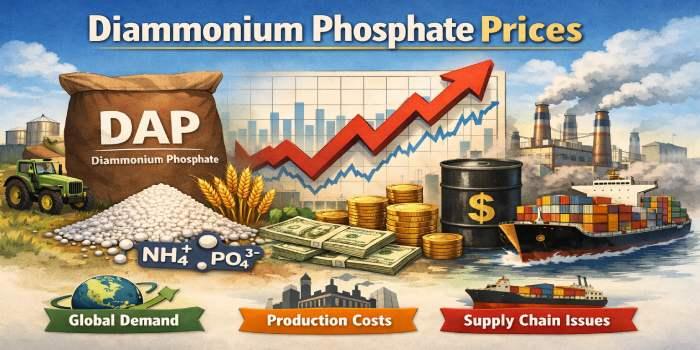
Diammonium phosphate (DAP) is one of the most widely used phosphate fertilizers in the global agricultural industry. It provides essential nutrients—nitrogen and phosphorus—that support strong crop growth and soil productivity. Because of its importance in farming and fertilizer production, tracking Diammonium Phosphate Prices is critical for manufacturers, distributors, procurement managers, and supply chain professionals.
DAP pricing is closely connected to agricultural demand cycles, raw material costs, and international trade activity. As a result, understanding the factors behind price movements can help businesses make better purchasing decisions and avoid sudden cost increases.
👉 👉 👉 Please Submit Your Query For Diammonium Phosphate Prices, Forecast And Market Analysis: https://www.price-watch.ai/book-a-demo/
Why Diammonium Phosphate Prices Matter
Diammonium phosphate is primarily used in fertilizer blends, but its role in global agriculture makes it a key commodity in supply chains worldwide. It is widely applied to crops such as wheat, rice, corn, and oilseeds. Since food production depends heavily on fertilizers, any movement in Diammonium Phosphate Prices can influence agricultural input costs and, indirectly, food supply chains.
For procurement teams, price monitoring is essential for:
-
Budget forecasting
-
Inventory management
-
Supplier negotiations
-
Risk management planning
Because DAP is traded globally, price fluctuations can quickly affect multiple markets at once.
Key Factors Influencing Diammonium Phosphate Prices
Several interconnected drivers impact Diammonium Phosphate Prices. Understanding these elements helps supply chain professionals anticipate changes and reduce risk exposure.
Raw Material Costs: DAP production requires ammonia and phosphoric acid. Therefore, fluctuations in ammonia prices and phosphate rock costs directly influence manufacturing expenses. When feedstock prices increase, finished product prices often follow.
Agricultural Demand: Fertilizer demand typically rises before planting seasons. Strong crop prices encourage farmers to invest more in fertilizers, which can support higher pricing levels. On the other hand, lower crop profitability may reduce demand.
Global Trade Activity: DAP is widely exported and imported across continents. Trade restrictions, export duties, and shipping constraints can affect availability in certain regions. Changes in global trade patterns often create short-term price volatility.
Energy Prices: Energy plays a major role in fertilizer production. Natural gas is particularly important for ammonia production, which is a key input for DAP. Rising energy costs can increase overall production expenses.
Government Policies and Subsidies: Many governments provide fertilizer subsidies or regulate pricing to support agriculture. Policy adjustments can influence domestic demand and market pricing trends.
By monitoring these drivers, companies can better understand potential movements in Diammonium Phosphate Prices and prepare accordingly.
Regional Market Insights
The DAP market behaves differently depending on regional supply and demand conditions.
-
North America: Strong agricultural base with seasonal demand peaks.
-
Asia-Pacific: High consumption due to large farming sectors.
-
Middle East: Significant production and export capacity.
-
Africa and Latin America: Growing fertilizer demand linked to expanding agricultural activities.
Procurement teams operating across multiple regions should consider diversifying suppliers to manage price risk effectively.
Market Challenges
Despite steady demand, the DAP market faces ongoing challenges:
-
Volatile raw material and energy costs
-
Logistics disruptions and freight rate changes
-
Currency exchange fluctuations
-
Environmental regulations affecting mining and production
-
Geopolitical tensions impacting trade routes
These factors can lead to sudden changes in Diammonium Phosphate Prices, making proactive planning essential.
Practical Procurement Strategies
To manage volatility and ensure supply continuity, manufacturers and procurement professionals can apply the following strategies:
-
Long-Term Supply Contracts: Lock in pricing during balanced market conditions.
-
Supplier Diversification: Reduce reliance on a single exporting country.
-
Seasonal Planning: Align procurement with agricultural cycles.
-
Market Monitoring: Track ammonia, phosphate rock, and energy price trends.
-
Cost Forecasting Tools: Use historical data and market indicators for better budgeting.
These practical steps help businesses protect margins and maintain stable operations even during uncertain market conditions.
Future Outlook for Diammonium Phosphate Prices
Looking ahead, Diammonium Phosphate Prices will continue to be influenced by agricultural demand, raw material costs, and global energy markets. With increasing global population and food demand, fertilizer consumption is expected to remain steady over the long term.
However, environmental regulations and sustainability initiatives may shape future production methods and cost structures. Technological advancements in fertilizer efficiency could also impact demand patterns over time.
Companies that stay informed and flexible will be better positioned to adapt to these evolving market dynamics.
Conclusion
Diammonium phosphate remains a vital component of modern agriculture. Its pricing reflects a complex combination of feedstock costs, global trade flows, energy markets, and seasonal demand patterns. For manufacturers, procurement managers, and supply chain professionals, understanding the drivers behind Diammonium Phosphate Prices is essential for maintaining cost control and supply stability. Stay ahead of changing Diammonium Phosphate Prices with reliable market insights and timely updates. Strengthen your procurement strategy, enhance forecasting accuracy, and secure stable supply partnerships.
About Price Watch™
Price Watch™ AI is an India-based, independent price reporting agency (PRA) that provides real-time price forecasts and data-driven insights into global raw material markets. It specializes in tracking prices, analyzing market trends, and delivering timely updates on plant shutdowns, supply disruptions, capacity expansions, and demand–supply dynamics. Price Watch™ AI reporting goes beyond prices to include grade-level insights, applications, and country-level demand intelligence you can trust. Powered by AI forecasting and over a decade of historical data, the Price Watch™ AI platform empowers manufacturers, traders, and procurement professionals to make faster, smarter decisions and turn market volatility into actionable opportunity.
Futura Tech Park,
C Block, 8th floor 334,
Old Mahabalipuram Road,
Sholinganallur, Chennai, Tamil Nadu, Pincode - 600119.
LinkedIn: https://www.linkedin.com/company/price-watch-ai/
Facebook: https://www.facebook.com/people/Price-Watch/61568490385598/
Twitter: https://x.com/pricewatchai
Website: https://www.price-watch.ai/

 English
 Arabic
 French
 Spanish
 Portuguese
 Deutsch
 Turkish
 Italiano
 Russian
 Romaian
 Portuguese (Brazil)
 Greek
Greek