

Muriate of Potash Prices: Market Trends and Strategic Sourcing Insights
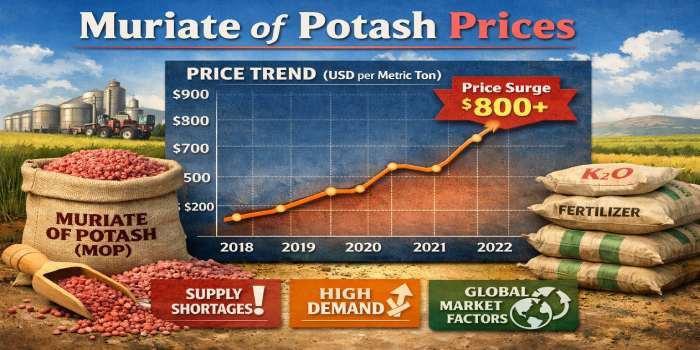
Muriate of Potash (MOP), also known as potassium chloride, is one of the most widely used potassium fertilizers in global agriculture. It plays a vital role in improving crop yield, strengthening plant roots, and enhancing resistance to disease and drought. Because of its importance in food production, monitoring Muriate of Potash Prices is essential for manufacturers, distributors, procurement managers, and supply chain professionals.
Potash markets are highly globalized. Production is concentrated in a few major exporting countries, while demand is spread across key agricultural regions. As a result, price trends are often influenced by international trade flows, seasonal demand, and geopolitical developments. For businesses operating in fertilizer production or large-scale farming supply chains, understanding these price movements helps ensure better planning and cost control.
👉 👉 👉 Please Submit Your Query For Muriate of Potash Prices, Forecast And Market Analysis: https://www.price-watch.ai/book-a-demo/
Why Muriate of Potash Prices Matter for B2B Buyers
Potassium is one of the three primary nutrients required for crop growth, alongside nitrogen and phosphorus. MOP is widely used in crops such as corn, soybeans, wheat, rice, sugarcane, and oilseeds. Because food demand continues to grow globally, fertilizer consumption remains steady over the long term.
Changes in Muriate of Potash Prices directly impact:
-
Fertilizer blending costs
-
Agricultural input budgets
-
Contract negotiations with distributors
-
Inventory management decisions
-
Overall supply chain profitability
Even moderate price shifts can significantly influence operating margins for manufacturers handling large volumes.
Key Factors Influencing Muriate of Potash Prices
Several interconnected factors drive price fluctuations in the global potash market. Understanding these drivers enables procurement teams to anticipate potential cost changes.
Global Supply Concentration: Potash production is concentrated in a limited number of countries. When supply disruptions occur—whether due to sanctions, trade restrictions, or operational issues—global availability tightens, supporting higher pricing levels.
Agricultural Demand Cycles: Fertilizer demand follows planting seasons. Pre-planting periods typically see increased purchasing activity. Strong crop prices often encourage higher fertilizer application, which can strengthen Muriate of Potash Prices.
Logistics and Freight Costs: Since MOP is transported in bulk across continents, freight rates and shipping conditions play a major role in delivered costs. Port congestion or rising ocean freight rates can influence regional pricing.
Currency Exchange Movements: Because potash is globally traded, currency fluctuations can impact import costs. A weaker local currency may increase the effective price for importing countries.
Energy and Production Costs: Mining, processing, and transportation require energy. Rising fuel and electricity costs can affect overall production economics and contribute to price volatility.
By closely monitoring these factors, supply chain professionals can better understand potential changes in Muriate of Potash Prices and adjust procurement strategies accordingly.
Regional Market Overview
The potash market behaves differently across regions, depending on agricultural intensity and local supply conditions.
-
North America: Strong domestic production and large agricultural consumption.
-
Latin America: High demand driven by soybean and corn cultivation.
-
Asia-Pacific: Large import dependency with growing agricultural demand.
-
Europe: Sensitive to geopolitical developments and trade policies.
Regional supply-demand imbalances can create short-term price variations, especially during peak farming seasons.
Market Challenges and Risks
The MOP market faces several ongoing challenges that influence pricing stability:
-
Geopolitical tensions affecting exports
-
Trade sanctions and export controls
-
Weather conditions impacting crop cycles
-
Inventory imbalances in key importing regions
-
Sudden shifts in global commodity markets
These risks can lead to sharp fluctuations in Muriate of Potash Prices, making proactive sourcing strategies essential.
Practical Procurement Strategies for Stability
To manage volatility and protect profit margins, procurement managers can apply structured and flexible sourcing approaches.
Effective strategies include:
-
Long-Term Contracts: Secure pricing agreements during stable market conditions.
-
Supplier Diversification: Reduce dependency on a single exporting region.
-
Market Intelligence Monitoring: Track crop prices, freight costs, and global production updates.
-
Inventory Buffer Planning: Maintain strategic stock during high-demand periods.
-
Collaborative Forecasting: Work closely with suppliers and distributors for better demand visibility.
These practical steps help businesses reduce exposure to sudden price spikes and maintain supply continuity.
Future Outlook for Muriate of Potash Prices
Looking ahead, global food demand and agricultural expansion are expected to support long-term fertilizer consumption. However, the market will likely remain sensitive to geopolitical developments and trade policies.
Technological improvements in mining efficiency and logistics optimization may help stabilize supply over time. At the same time, sustainability discussions and environmental considerations could influence future production standards.
Overall, Muriate of Potash Prices are expected to remain cyclical, with seasonal demand patterns and global supply conditions continuing to shape short-term movements.
Conclusion
Muriate of Potash is a critical input for modern agriculture, and its pricing reflects a complex mix of global supply concentration, agricultural demand cycles, logistics costs, and geopolitical factors. For manufacturers, procurement managers, and supply chain professionals, closely monitoring Muriate of Potash Prices is essential for maintaining cost efficiency and operational stability. Stay informed about evolving Muriate of Potash Prices with reliable market insights and timely updates. Strengthen your procurement planning, optimize supplier partnerships, and protect your margins in a competitive global market.
About Price Watch™
Price Watch™ AI is an India-based, independent price reporting agency (PRA) that provides real-time price forecasts and data-driven insights into global raw material markets. It specializes in tracking prices, analyzing market trends, and delivering timely updates on plant shutdowns, supply disruptions, capacity expansions, and demand–supply dynamics. Price Watch™ AI reporting goes beyond prices to include grade-level insights, applications, and country-level demand intelligence you can trust. Powered by AI forecasting and over a decade of historical data, the Price Watch™ AI platform empowers manufacturers, traders, and procurement professionals to make faster, smarter decisions and turn market volatility into actionable opportunity.
Futura Tech Park,
C Block, 8th floor 334,
Old Mahabalipuram Road,
Sholinganallur, Chennai, Tamil Nadu, Pincode - 600119.
LinkedIn: https://www.linkedin.com/company/price-watch-ai/
Facebook: https://www.facebook.com/people/Price-Watch/61568490385598/
Twitter: https://x.com/pricewatchai
Website: https://www.price-watch.ai/

 English
 Arabic
 French
 Spanish
 Portuguese
 Deutsch
 Turkish
 Dutch
Dutch
 Italiano
 Russian
 Romaian
 Portuguese (Brazil)