

Monoethylene Glycol Price Trend in Q3 2025
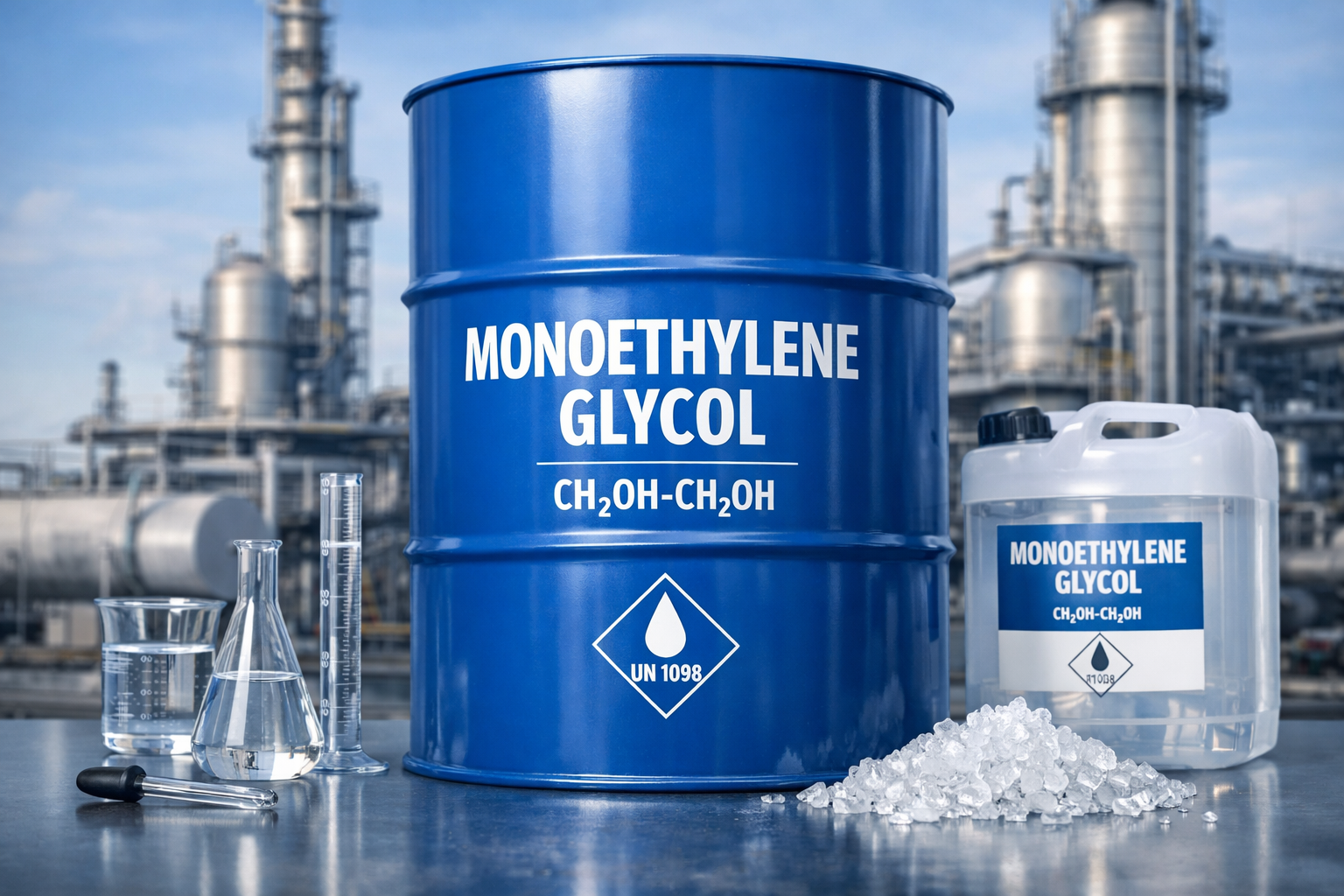
The Monoethylene Glycol Price Trend during the third quarter of 2025 showed a mixed pattern across different parts of the world. In simple terms, this means prices did not move in the same direction everywhere. Some countries saw prices rising slightly, while others experienced declines due to changes in demand, supply, and production costs. Monoethylene Glycol, often called MEG, is a widely used industrial chemical, especially in the production of polyester fibers, PET resins, and antifreeze products. Because it is closely tied to many everyday industries such as textiles, packaging, and plastics, its price trend often reflects the overall health of manufacturing and trade activity.
In general, one of the biggest factors influencing the Monoethylene Glycol Price Trend in Q3 2025 was demand from downstream industries. When textile and packaging industries run at full capacity, MEG consumption usually increases, which supports higher prices. However, when these industries slow down, demand weakens, and prices tend to fall. This basic demand-and-supply balance played an important role in shaping the market during the quarter.
Asia-Pacific Market Overview
In the Asia-Pacific region, the Monoethylene Glycol Prices showed mixed movements. China, which is one of the largest consumers and producers of MEG, experienced a moderate increase in domestic prices during the quarter. This rise was mainly supported by stable production levels and consistent demand from polyester manufacturers. Since China has a strong textile and synthetic fiber industry, steady consumption helped keep prices firm.
Another important factor supporting prices in China was balanced supply. Production rates remained steady, meaning there was no oversupply in the market. Buyers continued purchasing regularly, which kept the market stable. In general, the Chinese market showed a positive but controlled trend rather than any sharp price spikes.
Please Submit Your Query For Monoethylene Glycol Price Trend, Market Analysis and Forecast: https://www.price-watch.ai/book-a-demo/
On the other hand, Thailand witnessed a weaker price trend during the same period. Prices declined due to softer regional demand and lower freight costs. When freight rates decrease, imported goods become cheaper, which can put downward pressure on domestic prices. Additionally, weaker demand from polyester producers in Southeast Asia reduced buying activity, which further contributed to the declining trend.
Overall, the Asia-Pacific region displayed a combination of stability and slight price pressure, depending on local demand conditions.
Middle East Market Trends
The Middle East, a major exporter of Monoethylene Glycol, saw a generally downward price trend in Q3 2025. Countries such as Kuwait and Saudi Arabia recorded small declines, usually within the range of 1 to 2 percent. This decline was mainly due to balanced supply conditions and stable feedstock costs.
MEG is produced from ethylene, and fluctuations in ethylene prices directly affect MEG production costs. During the quarter, ethylene prices showed only minor changes, which kept production costs relatively stable. However, demand from global buyers remained moderate, and procurement activity slowed slightly. As a result, export prices in the Middle East softened.
In Kuwait, the market experienced steady production and consistent export supply. Buyers reduced their purchasing volumes during the quarter, which added downward pressure on prices. However, by September 2025, there were signs of slight improvement as downstream demand began to recover gradually.
Similarly, Saudi Arabia witnessed a mild price decline during the quarter. Export prices remained stable within a narrow range, reflecting balanced supply and moderate demand. By the end of the quarter, there were small price increases, mainly due to improving demand from polyester and packaging industries.
Overall, the Middle East market maintained a stable and controlled environment, with only minor price fluctuations.
United States Market Performance
In the United States, the Monoethylene Glycol Price Trend also moved downward during Q3 2025. Export prices declined by around 2.3 percent during the quarter. The main reason for this drop was weaker demand from polyester fiber and PET resin manufacturers.
In addition to lower demand, sufficient inventory levels in the market also contributed to the decline. When stock levels are high, buyers usually delay purchases, which can reduce price momentum. This situation was observed in the U.S. market, where buyers adopted a cautious procurement approach.
Another factor affecting prices was fluctuating ethylene feedstock costs. While these changes were not extreme, they still added pressure to the MEG market.
However, toward the end of the quarter, there was a slight recovery. Prices in September increased marginally compared to August due to improved demand from downstream sectors. This recovery indicated that the market remained stable overall, with controlled price adjustments.
European Market Conditions
Unlike some other regions, Europe experienced a slightly firmer Monoethylene Glycol Price Trend during Q3 2025. Countries such as Belgium and Germany recorded moderate price improvements.
The main reason for this positive trend was steady trade sentiment and consistent consumption from the packaging and textile sectors. European industries maintained stable production levels, which supported MEG demand.
Additionally, regional supply conditions remained balanced, preventing any major price drops. The European market showed a more optimistic tone compared to other regions, although price increases remained moderate rather than sharp.
Key Factors Influencing MEG Prices
Several important factors influenced the Monoethylene Glycol Price Trend during the quarter:
1. Demand from Polyester Industry
The polyester sector remains the largest consumer of MEG. Changes in textile production directly affect demand and price movements.
2. Feedstock Ethylene Prices
Since MEG is derived from ethylene, fluctuations in ethylene costs play a major role in determining production expenses.
3. Supply and Inventory Levels
Balanced supply and high inventories often lead to stable or declining prices.
4. Freight and Logistics Costs
Transportation costs influence global trade competitiveness and pricing.
5. Buyer Procurement Behavior
When buyers reduce purchases or adopt cautious strategies, prices often soften.
Overall Market Outlook
Looking at the broader picture, the Monoethylene Glycol Price Trend in Q3 2025 can be described as stable with mild regional variations. No major supply disruptions occurred during the quarter, and feedstock availability remained steady. Most price changes were driven by demand conditions rather than supply shortages.
In general, the market showed a controlled and balanced trend. While some regions experienced small declines, others recorded slight improvements, reflecting local market conditions.
Conclusion
In summary, the Monoethylene Glycol Price Trend during Q3 2025 showed mixed but stable performance across global markets. Asia experienced both rising and falling prices depending on demand conditions, while the Middle East and the United States saw mild declines due to moderate demand and stable supply. Europe remained relatively firm due to steady consumption.
Overall, the quarter highlighted how closely MEG prices are linked to downstream industries, feedstock costs, and global trade activity. As long as supply remains balanced and demand continues steadily, the market is likely to maintain a controlled trend with gradual adjustments rather than sudden price swings.
Top of Form
Bottom of Form
About Price Watch™ AI
Price-Watch AI is an India-based, independent raw material price reporting agency that provides real-time price forecasts and data-driven insights into global raw material markets. Price-Watch AI specializes in tracking raw material prices, analyzing market trends, and delivering timely updates on plant shutdowns, supply disruptions, capacity expansions, and demand-supply dynamics. The Price-Watch AI platform empowers manufacturers, traders, and procurement professionals to make faster, smarter decisions. Leveraging AI-powered forecasting and over a decade of historical data, Price-Watch AI transforms market volatility into actionable opportunity.
Futura Tech Park,
C Block, 8th floor 334,
Old Mahabalipuram Road,
Sholinganallur, Chennai, Tamil Nadu, Pincode - 600119.
𝐋𝐢𝐧𝐤𝐞𝐝𝐈𝐧: https://www.linkedin.com/company/price-watch-ai/
𝐅𝐚𝐜𝐞𝐛𝐨𝐨𝐤: https://www.facebook.com/people//61568490385598/
𝐓𝐰𝐢𝐭𝐭𝐞𝐫: https://x.com/pricewatchai
𝐖𝐞𝐛𝐬𝐢𝐭𝐞: https://www.price-watch.ai/

 English
 Arabic
 French
 Spanish
 Portuguese
 Turkish
 Dutch
Dutch
 Italiano
 Russian
 Romaian
 Portuguese (Brazil)
 Greek
Greek