

Is the Heritage Tourism Market Revitalizing Global Cultural Travel Experiences?
"Detailed Analysis of Executive Summary Heritage Tourism Market Size and Share
CAGR Value
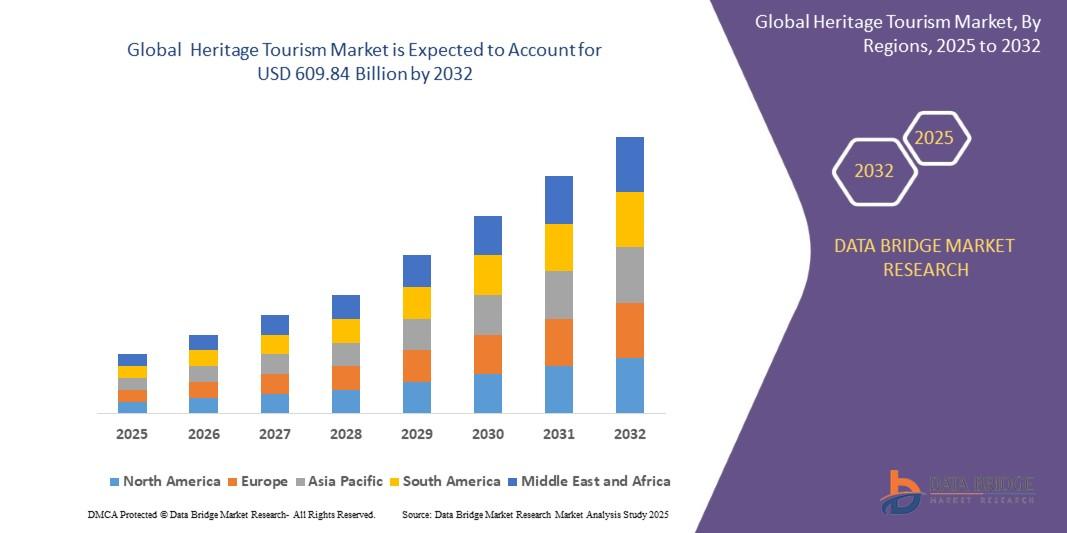
Global Heritage tourism market size was valued at USD 419.11 Billion in 2024 and is projected to reach USD 609.84 Billion by 2032, with a CAGR of 4.80% during the forecast period of 2024 to 2032.
The Heritage Tourism report makes available the current and forthcoming technical and financial details of the industry. Few of the chief insights of the Heritage Tourism report include; distinct analysis of the market drivers and restraints, major market players involved like Heritage Tourism Market industry, a detailed analysis of the market segmentation and competitive analysis. It estimates CAGR values in percentages which help to know the rise or fall occurring in the market for particular product for the specific forecast period. Heritage Tourism report also encompasses strategic profiling of key players in the market, systematic analysis of their core competencies, and drawing a competitive landscape for the market.
The Heritage Tourism report can be better employed by both traditional and new players in the industry for complete know-how of the market. The Heritage Tourism report brings into focus important industry trends, market size, market share estimates, and sales volume that assist Heritage Tourism Market industry in speculating the strategies to increase return on investment (ROI). Moreover, the Heritage Tourism report holds substantial importance when it is about explaining market definition, classifications, applications, and engagements. With the study of competitor analysis conducted in this Heritage Tourism report, the Heritage Tourism Market industry can get fluency of the strategies of key players in the market that includes new product launches, expansions, agreements, joint ventures, partnerships, and acquisitions
Take a deep dive into the current and future state of the Heritage Tourism Market. Access the report:
https://www.databridgemarketresearch.com/reports/global-heritage-tourism-market
Heritage Tourism Market Data Summary
Segments
- Based on type, the global heritage tourism market can be segmented into cultural heritage tourism, natural heritage tourism, and others. Cultural heritage tourism includes visiting historical sites, museums, and cultural events to learn about a destination's traditions and history. Natural heritage tourism involves exploring natural landscapes, national parks, and wildlife reserves. Other segments may include heritage villages, archaeological sites, and intangible heritage experiences such as traditional music or dance performances.
- Geographically, the market can be divided into regions such as North America, Europe, Asia Pacific, Latin America, and Middle East & Africa. Each region offers unique heritage tourism opportunities, from ancient historical sites in Europe to natural wonders in Asia Pacific and cultural experiences in Latin America.
- By age group, heritage tourism can target different demographics such as baby boomers, millennials, and Generation Z. Baby boomers may prefer historical tours and cultural sightseeing, while millennials might seek more adventurous heritage experiences like hiking to ancient ruins or participating in traditional craft workshops. Generation Z travelers could be interested in interactive heritage attractions that offer immersive learning experiences.
Market Players
- Some of the key players in the global heritage tourism market include Expedia Group, Booking Holdings, Airbnb, TripAdvisor, TUI Group, American Express Global Business Travel, Cox & Kings Ltd., and G Adventures. These companies offer a range of heritage travel services such as curated tours, accommodation bookings, transportation, and cultural experiences to cater to the growing demand for heritage tourism worldwide.
- Furthermore, government tourism boards, heritage conservation organizations, and local tour operators also play a significant role in promoting and preserving heritage destinations. Collaborations between public and private sector entities help in sustaining heritage tourism initiatives, safeguarding historical sites, and creating authentic experiences for travelers seeking cultural enrichment.
The global heritage tourism market is poised for continued growth as travelers increasingly seek meaningful and authentic experiences that connect them to the rich history and cultural heritage of destinations worldwide. With the rise of experiential tourism trends and the growing awareness of sustainability and responsible travel practices, heritage tourism is expected to remain a significant contributor to the overall tourism industry.
DDDDDThe global heritage tourism market is evolving as travelers today are placing a higher value on experiences that offer them connections to the cultural and historical significance of destinations. One emerging trend in heritage tourism is the focus on sustainable and responsible travel practices. Travelers are increasingly conscious of their impact on local communities and environments, driving the demand for heritage experiences that prioritize authenticity, preservation, and respect for cultural traditions. This shift towards sustainability is reshaping the way companies and organizations operate within the heritage tourism sector, with an emphasis on promoting eco-friendly practices, supporting local initiatives, and engaging in responsible tourism efforts.
Moreover, technological advancements are playing a crucial role in shaping the landscape of heritage tourism. The integration of digital tools and platforms has enhanced the accessibility and visibility of heritage destinations, allowing travelers to engage with historical sites and cultural experiences in new and innovative ways. Virtual reality tours, interactive museum exhibits, and augmented reality applications are transforming the way visitors interact with heritage attractions, providing immersive and educational experiences that cater to a diverse range of interests and preferences. By leveraging technology, heritage tourism stakeholders can reach wider audiences, preserve cultural heritage digitally, and create engaging narratives that captivate modern travelers.
Furthermore, the socioeconomic impact of heritage tourism cannot be overlooked. As a driver of economic growth and community development, heritage tourism has the potential to generate revenue, create job opportunities, and stimulate local businesses. By attracting visitors to heritage sites and engaging in sustainable tourism practices, destinations can enhance their cultural identity, promote heritage conservation efforts, and foster a sense of pride and ownership among local residents. Collaborative efforts between government entities, private sector organizations, and community stakeholders are essential in leveraging the economic benefits of heritage tourism while safeguarding the integrity and authenticity of cultural heritage assets.
In conclusion, the global heritage tourism market is entering a new era characterized by a shift towards sustainability, technological innovation, and socioeconomic development. As travelers seek meaningful and authentic cultural experiences, the heritage tourism sector is poised to expand and diversify, offering opportunities for growth, collaboration, and transformation. By embracing the evolving trends and practices within the heritage tourism industry, stakeholders can ensure the preservation, promotion, and celebration of the world's diverse cultural heritage for future generations to explore and appreciate.The global heritage tourism market is undergoing a transformative phase driven by evolving consumer preferences, technological advancements, and a growing emphasis on sustainability and responsible travel practices. Travelers are increasingly seeking immersive and authentic experiences that offer connections to the cultural and historical significance of destinations. This shift has led to a rise in demand for heritage tourism offerings that prioritize authenticity, preservation, and respect for local traditions.
One notable trend shaping the heritage tourism market is the integration of sustainable practices. Travelers are more conscious of their impact on local communities and environments, leading to a greater demand for heritage experiences that adhere to eco-friendly standards. Companies and organizations within the heritage tourism sector are adapting to this trend by promoting sustainability, supporting local initiatives, and engaging in responsible tourism efforts. This focus on sustainability not only resonates with modern travelers but also contributes to the preservation of cultural heritage.
Technological innovations are also playing a pivotal role in redefining the heritage tourism landscape. Digital tools and platforms have enhanced the accessibility and visibility of heritage destinations, ushering in new ways for travelers to interact with historical sites and cultural experiences. Virtual reality tours, interactive museum exhibits, and augmented reality applications are revolutionizing the visitor experience, providing engaging and educational opportunities for a diverse range of audiences. By leveraging technology, heritage tourism stakeholders can effectively showcase cultural heritage, reach a broader audience, and create compelling narratives that resonate with contemporary travelers.
Moreover, the socioeconomic impact of heritage tourism is significant, as it serves as a driver of economic growth, community development, and cultural preservation. By attracting visitors to heritage sites and adopting sustainable tourism practices, destinations can stimulate economic activity, create employment opportunities, and support local businesses. Collaborative efforts between public and private sector entities, as well as community stakeholders, are crucial in maximizing the economic benefits of heritage tourism while safeguarding the authenticity and integrity of cultural heritage assets.
In conclusion, the global heritage tourism market is evolving in response to changing consumer expectations, technological advancements, and sustainability imperatives. Stakeholders in the heritage tourism sector need to adapt to these trends by embracing sustainable practices, leveraging technology, and fostering collaborations that ensure the preservation and promotion of cultural heritage. By aligning with the values and preferences of modern travelers, the heritage tourism industry can continue to thrive, evolve, and offer enriching experiences that celebrate the diverse cultural heritage of destinations worldwide.
Investigate the company’s industry share in depth
https://www.databridgemarketresearch.com/reports/global-heritage-tourism-market/companies
Heritage Tourism Market Overview: Strategic Questions for Analysis
- What is the size of the global Heritage Tourism Market industry this year?
- What rate of growth is forecasted for the next decade for Heritage Tourism Market?
- What are the key divisions of the Heritage Tourism Market?
- Which organizations have the strongest presence in Heritage Tourism Market?
- Which markets are the focus of the geographic analysis for Heritage Tourism Market ?
- What companies are featured in the competitive landscape for Heritage Tourism Market?
Browse More Reports:
Global Digital Denture Market
Global Digital Insurance Platform Market
Global Digital Printing for Packaging Market
Global Electric Blankets Market
Global Electric Hair Clipper and Trimmer Market
Global Electronic Passports Market
Global Employee Monitoring Solutions Market
Global Encapsulated Calcium Propionate Market
Global Engineered Fluids (Fluorinated Fluids) Market
Global ENT Devices Market
Global Epigenetics-Based Therapeutics Market
Global Epoxy Resin Market
Global Extended Reality Market
Global Flavored Plan-Based Yogurt Market
Global Floating Nuclear Power Plant EPC Market
About Data Bridge Market Research:
An absolute way to forecast what the future holds is to comprehend the trend today!
Data Bridge Market Research set forth itself as an unconventional and neoteric market research and consulting firm with an unparalleled level of resilience and integrated approaches. We are determined to unearth the best market opportunities and foster efficient information for your business to thrive in the market. Data Bridge endeavors to provide appropriate solutions to the complex business challenges and initiates an effortless decision-making process. Data Bridge is an aftermath of sheer wisdom and experience which was formulated and framed in the year 2015 in Pune.
Contact Us:
Data Bridge Market Research
US: +1 614 591 3140
UK: +44 845 154 9652
APAC : +653 1251 975
Email:- corporatesales@databridgemarketresearch.com
"

 English
 Arabic
 French
 Spanish
 Portuguese
 Deutsch
 Turkish
 Italiano
 Russian
 Romaian
 Portuguese (Brazil)
 Greek
Greek