

In-Depth 2031 Forecast: Drug Development Market Growth, Innovation, and Competitive Landscape
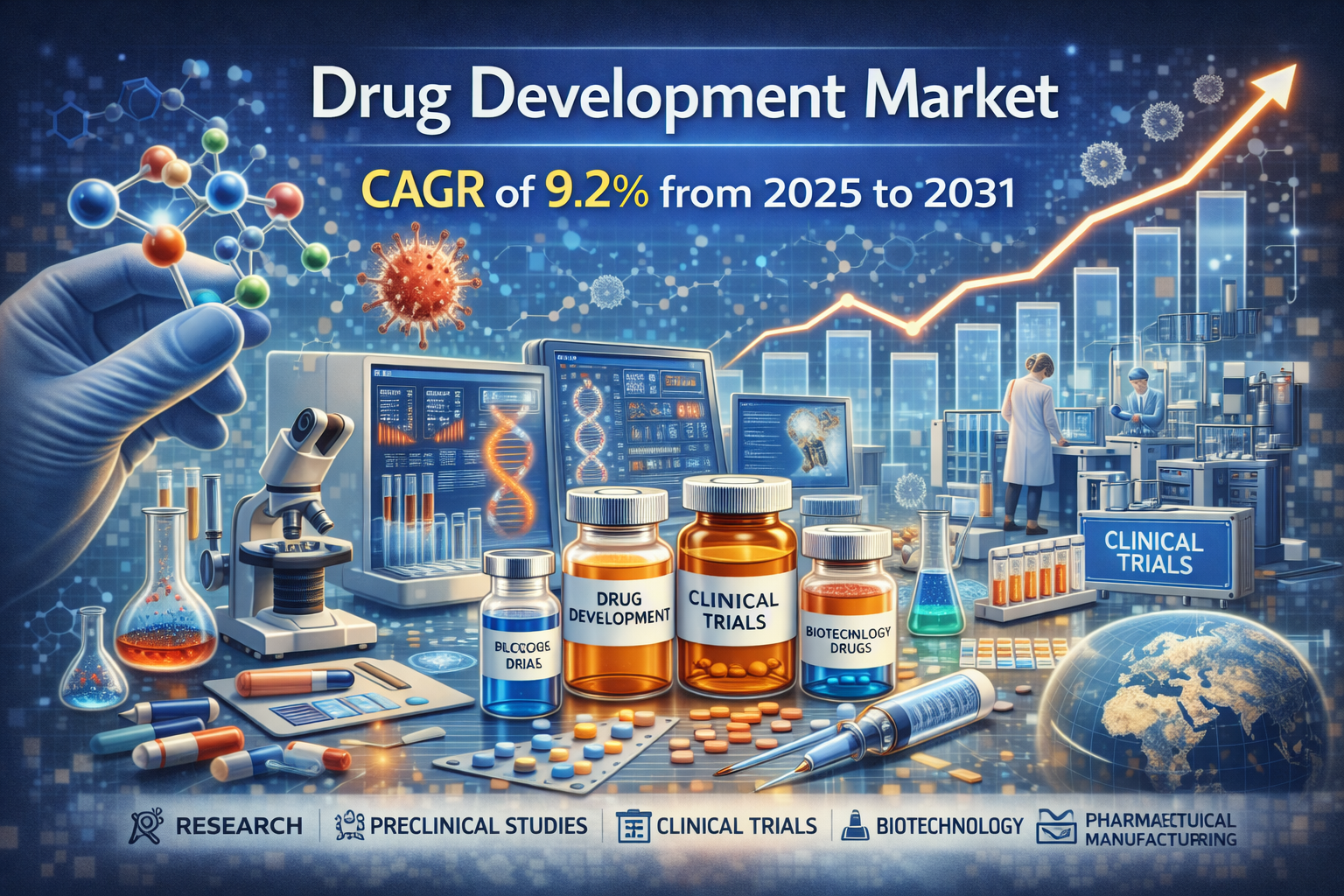
Drug development is the pathway through which potential drug candidates are evaluated for medical use. Scientists study their pharmacological effects, dosage, and side effects. Only successful candidates proceed to commercial production.
Drug Development Market In Depth Analysis
The Drug Development Market is expected to register a CAGR of 9.2% from 2025 to 2031, reflecting strong momentum driven by scientific innovation, rising disease burden, and expanding global healthcare investments. The market is segmented by Drug Type into Small Molecule Drugs and Biologic Drugs, by Technology into High Throughput Screening, Pharmacogenomics, Combinatorial Chemistry, Nanotechnology, and Other Technologies, and by End Use into Pharmaceutical Companies, Contract Research Organizations, and Other End Users. The report provides detailed global, regional, and country level analysis, presenting values in USD across all segments.
Market Overview
Drug development remains at the core of the pharmaceutical and biotechnology industries. Increasing prevalence of chronic diseases such as cancer, diabetes, and cardiovascular disorders continues to fuel demand for innovative therapeutics. Rising healthcare awareness, improving diagnostic capabilities, and growing investments in research and development are strengthening the pipeline of novel drugs globally.
The market demonstrates robust growth potential due to the integration of biotechnology, genomics, and advanced screening technologies. Personalized medicine and targeted therapies are reshaping traditional drug discovery models, making the process more efficient and outcome driven.
Get Sample PDF- https://www.theinsightpartners.com/sample/TIPRE00024322
Segmentation Analysis
By Drug Type
Small Molecule Drugs continue to dominate due to their established manufacturing processes, cost effectiveness, and broad therapeutic applicability. However, Biologic Drugs are gaining significant traction because of their high specificity and effectiveness in treating complex diseases such as autoimmune disorders and oncology indications. The rise in biosimilars is also creating competitive dynamics in this segment.
By Technology
High Throughput Screening plays a crucial role in accelerating compound identification and lead optimization. Pharmacogenomics is transforming treatment approaches by tailoring drugs according to genetic profiles, thereby improving efficacy and minimizing adverse effects. Combinatorial Chemistry enhances compound library creation, while Nanotechnology supports targeted drug delivery systems and improved bioavailability. Collectively, these technologies are reducing development timelines and enhancing success rates.
By End Use
Pharmaceutical Companies represent the largest share due to their extensive R&D budgets and global commercialization capabilities. Contract Research Organizations are experiencing strong growth as outsourcing becomes a strategic approach to reduce costs and streamline clinical trials. Other End Users, including academic institutions and research centers, contribute significantly through early stage innovation and collaborative research initiatives.
Growth Drivers
One of the primary growth drivers is the high incidence of chronic and lifestyle related diseases worldwide. The expanding geriatric population further increases demand for age specific therapies targeting Alzheimer’s disease, arthritis, and osteoporosis.
Advancements in biotechnology and genomics are accelerating the development of novel drug candidates. Technologies such as gene editing and RNA based therapies are expanding treatment possibilities for rare and complex conditions. Additionally, regulatory incentives for orphan drugs are encouraging innovation in underserved therapeutic areas.
Emerging Trends
Precision medicine is rapidly transforming the drug development landscape. By leveraging genetic data, pharmaceutical companies are designing personalized therapies that improve treatment outcomes and reduce side effects.
Collaboration between pharmaceutical and technology companies is another significant trend. The integration of artificial intelligence and big data analytics is optimizing clinical trial design, predicting drug efficacy, and shortening time to market.
There is also growing emphasis on biologics and biosimilars. As patents for major biologic drugs expire, opportunities are emerging for cost effective alternatives, expanding patient access and intensifying market competition.
Regional Insights
North America leads the Drug Development Market due to strong research infrastructure, significant funding, and supportive regulatory frameworks. Europe maintains steady growth supported by advanced healthcare systems and collaborative research programs.
Asia Pacific is expected to witness the fastest growth during the forecast period, driven by expanding pharmaceutical manufacturing capabilities, large patient populations, and increasing government initiatives in countries such as China and India. South and Central America and the Middle East and Africa are gradually emerging as attractive markets due to improving healthcare access and investment inflows.
Key Players
- Genome Biologics
- Abbott Laboratories Inc.
- Agilent Technologies Inc.
- AstraZeneca PLC
- AVIVA Biosciences
- Bayer AG
- Biotica Pharma
- Bristol Myers Squibb Company
- Collaborative Drug Discovery Inc.
- DeepBiome Therapeutics
- Eli Lilly and Company
- F. Hoffmann La Roche Ltd
- Gilead Sciences Inc.
- GlaxoSmithKline PLC
These companies focus on strategic collaborations, technology integration, pipeline expansion, and regional expansion to strengthen their competitive position.
Future Outlook
The Drug Development Market is poised for sustained expansion through 2031, supported by a CAGR of 9.2 percent. Increasing integration of digital technologies, expansion into emerging markets, and rising demand for precision therapeutics will continue shaping industry dynamics. As regulatory frameworks evolve and innovation accelerates, stakeholders across the value chain are expected to benefit from enhanced efficiency, improved success rates, and broader therapeutic reach.
Related Reports:

 English
 Arabic
 French
 Spanish
 Portuguese
 Deutsch
 Turkish
 Dutch
Dutch
 Italiano
 Russian
 Portuguese (Brazil)
 Greek
Greek