

Top Store Locator Trends in 2026 That Businesses Must Know
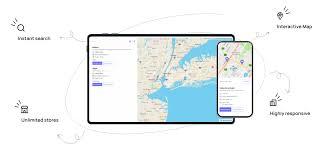
Top Store Locator Trends in 2026 That Businesses Must Know
As digital and physical retail continue to merge, store locators have evolved from simple address listings into powerful marketing tools. In 2026, businesses that invest in advanced store locator technology are gaining stronger local visibility, better customer engagement, and increased in-store traffic.
Here are the top store locator trends shaping the future of multi-location businesses.
1. Mobile-First Store Locator Design
More than 60% of local searches now happen on smartphones. Businesses are prioritizing responsive and fast-loading store locators to meet customer expectations.
A well-optimized Wordpress Store Locator ensures seamless performance across devices. Similarly, a Shopify Store Locator allows eCommerce brands to guide mobile shoppers directly to nearby stores.
Design-driven websites also benefit from responsive solutions like a Squarespace Store Locator and a Webflow Store Locator, which combine visual appeal with smooth functionality. Small businesses using Wix rely on a Wix Store Locator to capture local mobile traffic, while WordPress users enhance flexibility through an Elementor Store Locator. Retailers operating hybrid models depend on a WooCommerce Store Locator to support mobile-friendly pickup options.
2. Integration with Local SEO Strategies
Local SEO remains one of the strongest traffic drivers for physical businesses. In 2026, store locators are being structured with clear geographic data to improve rankings in “near me” searches.
A properly configured Wordpress Store Locator enhances search visibility by embedding maps and organizing store data efficiently. The same applies to a Shopify Store Locator, which helps online brands strengthen their offline presence.
Businesses using a WooCommerce Store Locator or Squarespace Store Locator are also leveraging structured data to improve local rankings. A responsive Webflow Store Locator and a simplified Wix Store Locator both contribute to stronger map-based search visibility.
3. Real-Time Location Updates and Scalability
As brands expand into new regions, real-time updates have become essential. Businesses want to add or modify store locations without redesigning their entire website.
A scalable Elementor Store Locator allows WordPress users to maintain design control while updating store information easily. Growing eCommerce brands using a Shopify Store Locator can quickly align new physical outlets with online marketing campaigns.
Retailers relying on a WooCommerce Store Locator benefit from centralized management systems, while agencies building projects with Webflow or Squarespace use a Webflow Store Locator or Squarespace Store Locator to future-proof client websites.
4. Omnichannel Shopping Experiences
Customers increasingly expect seamless integration between online shopping and physical stores. Store locators now play a crucial role in supporting buy-online-pickup-in-store (BOPIS) strategies.
A WooCommerce Store Locator helps customers locate nearby pickup centers after placing an order. Similarly, a Shopify Store Locator connects product pages directly to local stores, improving convenience.
Even content-driven websites using a Wordpress Store Locator can guide users from blog content to physical store visits. Small businesses operating with a Wix Store Locator also benefit from simplified in-store navigation.
5. Enhanced User Experience and Map Customization
Modern store locators offer more than just location pins. Advanced filters, custom branding, and interactive maps are becoming standard features.
A customizable Elementor Store Locator provides advanced layout control. A Webflow Store Locator ensures interactive design compatibility, while a Squarespace Store Locator maintains visual harmony.
Businesses aiming for simplicity can implement a Wix Store Locator, while expanding retailers rely on a scalable Wordpress Store Locator or WooCommerce Store Locator for long-term growth.
Final Thoughts
In 2026, store locators are no longer optional website add-ons — they are strategic tools for improving local SEO, customer engagement, and omnichannel growth.
Whether your website runs on WordPress, Shopify, Squarespace, Webflow, Wix, Elementor, or WooCommerce, investing in the right store locator solution ensures stronger visibility, higher foot traffic, and long-term competitive advantage.
Staying ahead of these trends will position your business for sustainable success in an increasingly connected marketplace.

 English
 Arabic
 French
 Spanish
 Portuguese
 Turkish
 Dutch
Dutch
 Italiano
 Russian
 Romaian
 Portuguese (Brazil)
 Greek
Greek