

Enterprise Governance Risk and Compliance Market Industry Outlook: Emerging Technologies, Market Analysis and Future Forecast
Enterprise Governance, Risk, and Compliance (eGRC) helps organizations proactively identify, assess, and mitigate potential risks that could impact operations, finances, or reputation. By implementing continuous monitoring, businesses can respond quickly to emerging threats and uncertainties.
Market Overview
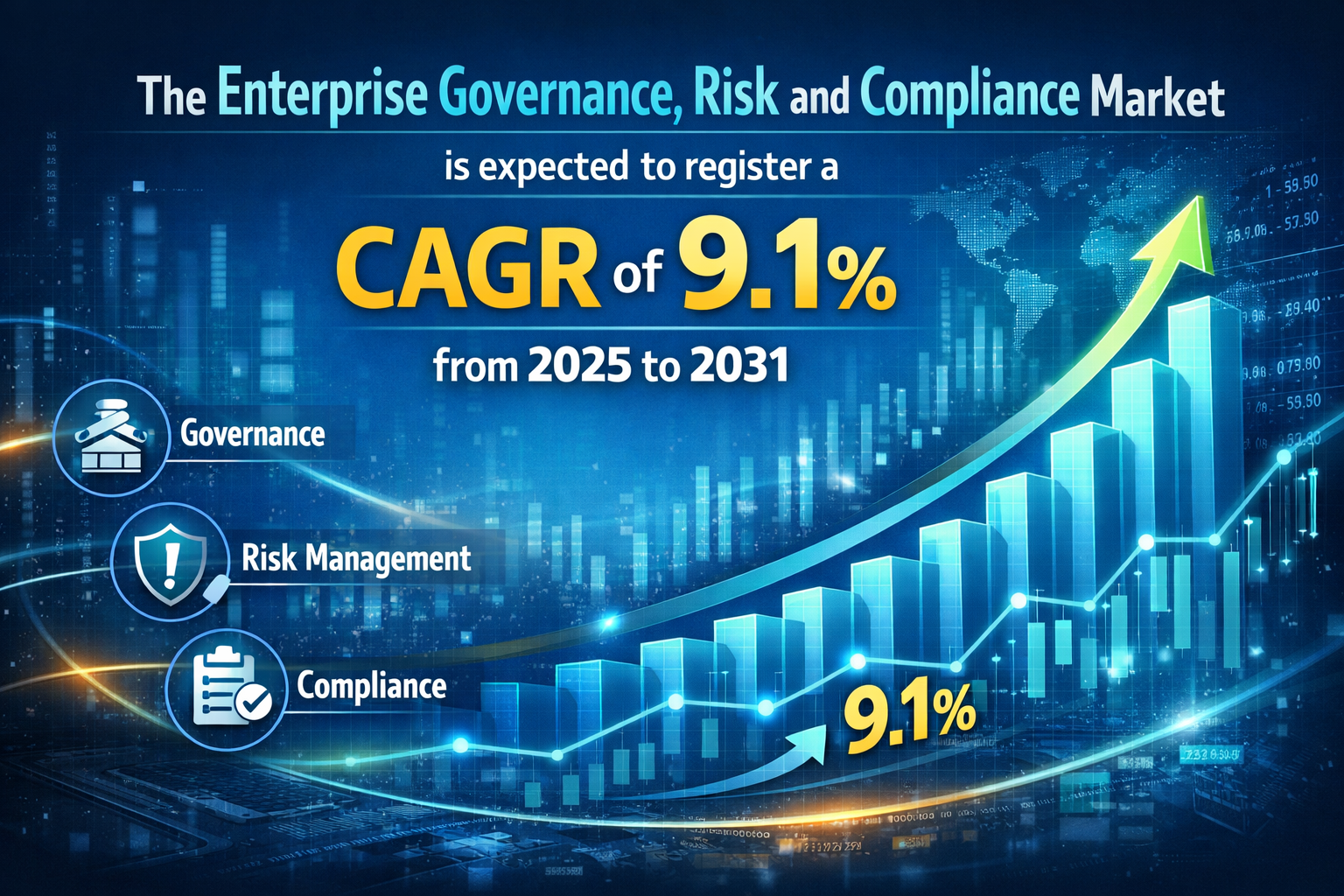
The Enterprise Governance, Risk, and Compliance (GRC) market is emerging as a critical component of modern organizational strategy as businesses face increasingly complex operational, regulatory, and cybersecurity environments. According to industry analysis, the global Enterprise GRC market is projected to grow at a CAGR of 9.1% between 2025 and 2031, reflecting strong demand for structured risk management and regulatory oversight solutions. Organizations across industries are prioritizing integrated GRC frameworks to ensure transparency, accountability, and operational resilience.
The market is segmented by component into software and services, with software solutions forming the core of automated risk assessment, policy management, audit tracking, and compliance monitoring. Services such as consulting, integration, and support are also witnessing steady demand as enterprises seek customized implementations. By deployment, cloud-based solutions are gaining significant traction due to scalability, remote accessibility, and cost efficiency, while on-premise systems continue to serve organizations with strict data control requirements. In terms of enterprise size, both SMEs and large enterprises are adopting GRC solutions, though large organizations currently dominate due to complex regulatory exposure. Key industry verticals include BFSI, manufacturing, healthcare, energy, and IT and telecom, each facing unique governance and risk challenges.
Market Drivers and Industry Dynamics
One of the primary growth drivers is the increasing regulatory pressure across global markets. Regulations such as GDPR, SOX, HIPAA, and PCI DSS require organizations to maintain strong governance structures and detailed compliance documentation. Failure to comply can result in heavy financial penalties and reputational damage, encouraging enterprises to invest in automated compliance tools.
The rising frequency and sophistication of cybersecurity threats also play a significant role in market expansion. Data breaches, ransomware attacks, and insider threats have elevated risk management from a compliance function to a strategic priority. Enterprises are integrating cybersecurity governance into broader GRC frameworks to ensure proactive risk detection and response.
Digital transformation further adds complexity to risk environments. The adoption of cloud computing, IoT, artificial intelligence, and big data introduces new operational and security risks. Organizations now require centralized platforms that provide visibility across hybrid infrastructures and align technology risks with enterprise risk management policies.
Download Sample PDF:https://www.theinsightpartners.com/sample/TIPRE00006056
Segmentation and Regional Insights
From a deployment perspective, cloud-based GRC solutions are expected to witness the fastest growth during the forecast period. Cloud platforms enable real-time monitoring, automated updates, and easier regulatory reporting, making them attractive for organizations operating across multiple geographies.
By industry vertical, the BFSI sector remains the largest adopter due to strict regulatory oversight and high exposure to financial and operational risks. Healthcare organizations are also increasing investments to manage patient data security and regulatory compliance, while manufacturing and energy sectors focus on operational risk and safety governance.
Regionally, North America holds a significant share of the global market due to early technology adoption, strong regulatory frameworks, and the presence of major solution providers. Europe follows closely, driven by stringent data protection regulations. The Asia-Pacific region, including India, China, and Japan, is expected to witness the highest growth due to rapid digitalization, expanding enterprise ecosystems, and increasing regulatory awareness.
Emerging Trends and Opportunities
Artificial intelligence and machine learning are transforming the GRC landscape by enabling predictive risk analytics and automated decision-making. AI-powered platforms can analyze large datasets to identify anomalies, forecast compliance risks, and recommend mitigation strategies, improving overall risk accuracy and response time.
Another key trend is the expansion of cybersecurity governance within enterprise risk frameworks. Organizations are increasingly adopting unified platforms that combine IT risk, operational risk, and regulatory compliance into a single dashboard, improving visibility and control.
The growing complexity of regulatory requirements across jurisdictions presents a significant opportunity for solution providers. Advanced platforms that automate regulatory tracking, reporting, and audit management are becoming essential for multinational enterprises.
Key Players
-
IBM Corporation
-
Oracle Corporation
-
SAP SE
-
SAS Institute Inc.
-
Wolters Kluwer Financial Services
-
MetricStream Inc.
-
Refinitiv
-
Deloitte Touche Tohmatsu Limited
-
LexisNexis Risk Solutions (RELX Group)
-
Bwise
Future Outlook
The future of the Enterprise GRC market will be shaped by increasing convergence between risk management, cybersecurity, and business strategy. As organizations continue to expand digital operations and operate across complex regulatory environments, demand for intelligent, scalable, and cloud-native GRC platforms will accelerate. Vendors that integrate AI-driven analytics, real-time monitoring, and industry-specific compliance capabilities will gain a competitive advantage. Additionally, growing adoption among SMEs and emerging markets will broaden the customer base. Overall, the market is expected to evolve toward more predictive, automated, and integrated governance ecosystems that support long-term organizational resilience and sustainable growth.
Related Reports:

 Arabic
 French
 Spanish
 Portuguese
 Deutsch
 Turkish
 Dutch
Dutch
 Italiano
 Russian
 Romaian
 Portuguese (Brazil)
 Greek
Greek