Large facilities often generate heat, dust, fumes, and humidity during daily operations. Without proper airflow management, these factors can:
Industrial fans help circulate, extract, or distribute air efficiently, ensuring a healthier and more controlled environment.
Main Types of Industrial Fans
Understanding the different types of industrial fans helps you choose the right solution for your facility.
1. Axial Fans
Axial fans move air in a straight line parallel to the fan shaft. They are commonly used for general ventilation and cooling.
Applications:
-
Warehouses
-
Parking garages
-
Large retail spaces
-
Workshops
Benefits:
2. Centrifugal Fans (Blowers)
Centrifugal fans use rotating impellers to move air at a 90-degree angle from intake to discharge.
Applications:
Benefits:
3. HVLS (High-Volume, Low-Speed) Fans
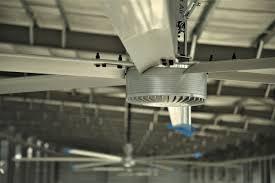
HVLS fans are large-diameter ceiling fans designed to move massive amounts of air at low speeds.
Applications:
-
Warehouses
-
Distribution centers
-
Gymnasiums
-
Agricultural facilities
Benefits:
4. Exhaust Fans
Exhaust fans remove stale, hot, or polluted air from enclosed spaces.
Applications:
Benefits:
5. Portable & Pedestal Fans
These heavy-duty fans provide targeted airflow and flexibility.
Applications:
-
Temporary cooling zones
-
Workstations
-
Event spaces
Benefits:
Key Applications in Commercial & Manufacturing Facilities
Industrial fans are widely used across various sectors:
Warehouses & Distribution Centers
Manufacturing Plants
Food Processing Facilities
Automotive & Mechanical Workshops
Benefits of Industrial Fans
1. Improved Air Quality
Industrial fans help remove pollutants, dust, and fumes, creating safer workplaces.
2. Energy Efficiency
Proper airflow reduces the load on HVAC systems, lowering overall energy consumption.
3. Temperature Regulation
Fans prevent hot and cold spots, improving overall climate consistency.
4. Enhanced Worker Comfort
Consistent airflow reduces heat stress and fatigue, boosting productivity.
5. Equipment Protection
Improved ventilation prevents overheating and extends machinery lifespan.
Choosing the Right Industrial Fan
When selecting an industrial fan, consider:
-
Facility size and layout
-
Required airflow capacity (CFM)
-
Ceiling height
-
Type of contaminants present
-
Energy efficiency
-
Installation requirements
Professional assessment can help determine the optimal configuration.
Final Thoughts
Industrial fan are essential components of modern commercial and manufacturing facilities. By understanding the different types—axial, centrifugal, HVLS, exhaust, and portable—you can select the right system to improve airflow, enhance safety, and reduce energy costs.
Investing in the proper industrial ventilation solution not only creates a more comfortable work environment but also supports long-term operational efficiency and productivity.



 English
 Arabic
 French
 Spanish
 Deutsch
 Turkish
 Dutch
Dutch
 Italiano
 Russian
 Romaian
 Portuguese (Brazil)
 Greek
Greek