

Step-by-Step Process of Clean Room Manufacturing (Myanmar)
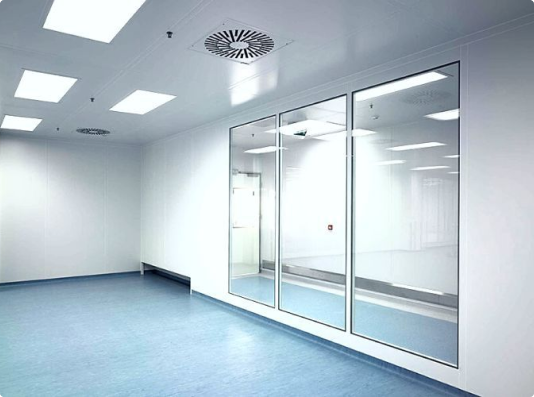
As Myanmar’s industrial sectors continue to modernise, businesses in pharmaceuticals, electronics, and food processing are discovering the importance of ultra-clean environments. To compete on a global stage, local companies must adopt international standards for safety and precision. This is where Clean Room Manufacturing (Myanmar) plays a vital role. By creating controlled spaces free from dust, microbes, and pollutants, manufacturers can ensure their products are safe and reliable for consumers. Understanding how these rooms are built and operated is the first step toward industrial excellence in our growing economy.
What Exactly is Clean Room Manufacturing?
Before diving into the steps, it is helpful to understand what a cleanroom actually does. Imagine a room where the air is filtered hundreds of times an hour, where the walls are made of special materials that don't shed dust, and where every person entering must wear protective gear.
In the context of Clean Room Manufacturing (Myanmar), these environments are classified by the number of particles allowed in the air. The fewer the particles, the "cleaner" the room. This is essential because even a tiny speck of dust can ruin a computer chip or contaminate a bottle of medicine.
Step 1: Planning and Requirement Analysis
Every successful project starts with a clear plan. In Myanmar, the first step is determining what level of cleanliness your specific industry requires.
Identifying the Cleanliness Class
Different products need different environments. For example, a facility making surgical masks might not need to be as sterile as one manufacturing injectable vaccines. Experts look at International Standards (like ISO 14644) to decide the air change rates and filtration levels needed for your specific Clean Room Manufacturing (Myanmar) goals.
Workflow Design
It isn't just about the room; it’s about how people and materials move through it. Designers map out "clean zones" and "dirty zones." This ensures that raw materials entering the room don't bring in outside contaminants, and finished products stay pure until they are sealed.
Step 2: Selecting the Right Materials
You cannot build a cleanroom with standard bricks and mortar. The materials used in Clean Room Manufacturing (Myanmar) must be non-porous and easy to sanitise.
- Wall Panels: Most modern cleanrooms use sandwich panels made of aluminium or galvanised steel with a smooth finish. These don't trap dust and can withstand strong cleaning chemicals.
- Flooring: Special epoxy or vinyl flooring is used. These floors are "coved," meaning they curve up at the wall so there are no sharp corners where dirt can hide.
- Ceilings: The ceiling usually holds the heavy filtration equipment, so it must be strong but also perfectly sealed to prevent air leaks.
Step 3: Installing the Air Filtration System (HVAC)
The "heart" of any Clean Room Manufacturing (Myanmar) facility is the Heating, Ventilation, and Air Conditioning (HVAC) system. This is not like a normal air conditioner you have at home.
HEPA and ULPA Filters
These systems use High-Efficiency Particulate Air (HEPA) filters. These filters are so dense that they can catch 99.97% of tiny particles. For very sensitive work, ULPA filters are used to catch even smaller contaminants.
Positive Air Pressure
Cleanrooms are usually designed with "positive pressure." This means the air pressure inside the room is higher than the pressure outside. When a door opens, air rushes out instead of letting dirty air rush in. This is a critical feature for maintaining integrity in Clean Room Manufacturing (Myanmar).
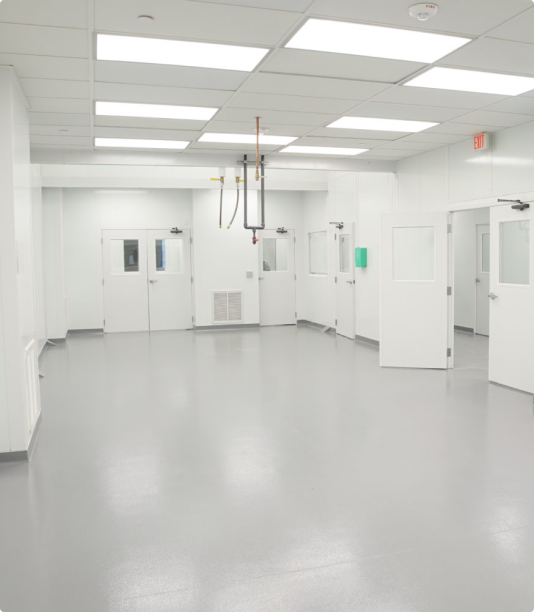
Step 4: Personnel and Gowning Protocols
Even with the best filters, humans are the biggest source of contamination. We naturally shed skin cells and hair. Therefore, the way people enter the room is a major part of the manufacturing process.
The Gowning Room
Before entering the main area, staff go through a gowning room. Here, they put on specialised "bunny suits," masks, gloves, and shoe covers. In many high-end Clean Room Manufacturing (Myanmar) setups, staff must pass through an "Air Shower"—a small chamber that blows high-velocity air to strip away loose dust before they enter the clean zone.
Strict Entry Rules
No makeup, jewellery, or outside food is allowed. Even the paper and pens used inside are special "cleanroom grade" items that do not produce dust when you write.
Step 5: Testing and Validation
Once the room is built, you cannot simply start working. You must prove it is clean. This is called "Validation."
- Particle Counting: Technicians use laser counters to check if the air meets the required ISO class.
- Airflow Testing: They check if the air is moving in the right direction and at the right speed.
- Microbial Testing: In pharmaceutical Clean Room Manufacturing (Myanmar), "settle plates" are used to ensure no bacteria or fungi are growing in the environment.
Step 6: Regular Maintenance and Monitoring
A cleanroom is a living system. Over time, filters get full, and seals can wear out. Continuous monitoring is essential. Modern facilities use sensors to track temperature, humidity, and pressure 24/7. If any level goes out of range, an alarm sounds so the team can fix the issue before the product is affected.
The Role of Modular Technology in Myanmar
Traditionally, building these rooms in Myanmar was difficult because it required many specialised construction workers on-site for months. However, the trend is shifting toward modular cleanrooms. These are pre-made parts that are shipped to the site and assembled quickly. This reduces the "mess" of construction and ensures a much higher quality finish.
For local businesses looking to scale up quickly, modular pods are becoming the preferred choice for Clean Room Manufacturing (Myanmar). They allow a factory to start small and add more "pods" as their business grows.
Conclusion: Partnering with Pod Tech Company
Navigating the complexities of cleanroom standards can be challenging, but you don't have to do it alone. As Myanmar's industrial sector enters this exciting new chapter, having the right infrastructure is the key to success. Pod Tech Company is proud to offer world-class cleanroom solutions tailored to the specific needs of the Myanmar market. Our innovative, prefabricated "podule™" technology eliminates the headaches of traditional construction, providing you with a high-performance, fully compliant environment that can be deployed in half the time. Whether you are launching a new pharmaceutical line or upgrading an electronics assembly plant, Pod Tech Company provides the expertise and the technology to make your Clean Room Manufacturing (Myanmar) goals a reality.

 English
 Arabic
 French
 Spanish
 Deutsch
 Turkish
 Dutch
Dutch
 Italiano
 Russian
 Romaian
 Portuguese (Brazil)
 Greek
Greek