

Role of Food Safety and Standards Act, 2006 in FSSAI Compliance
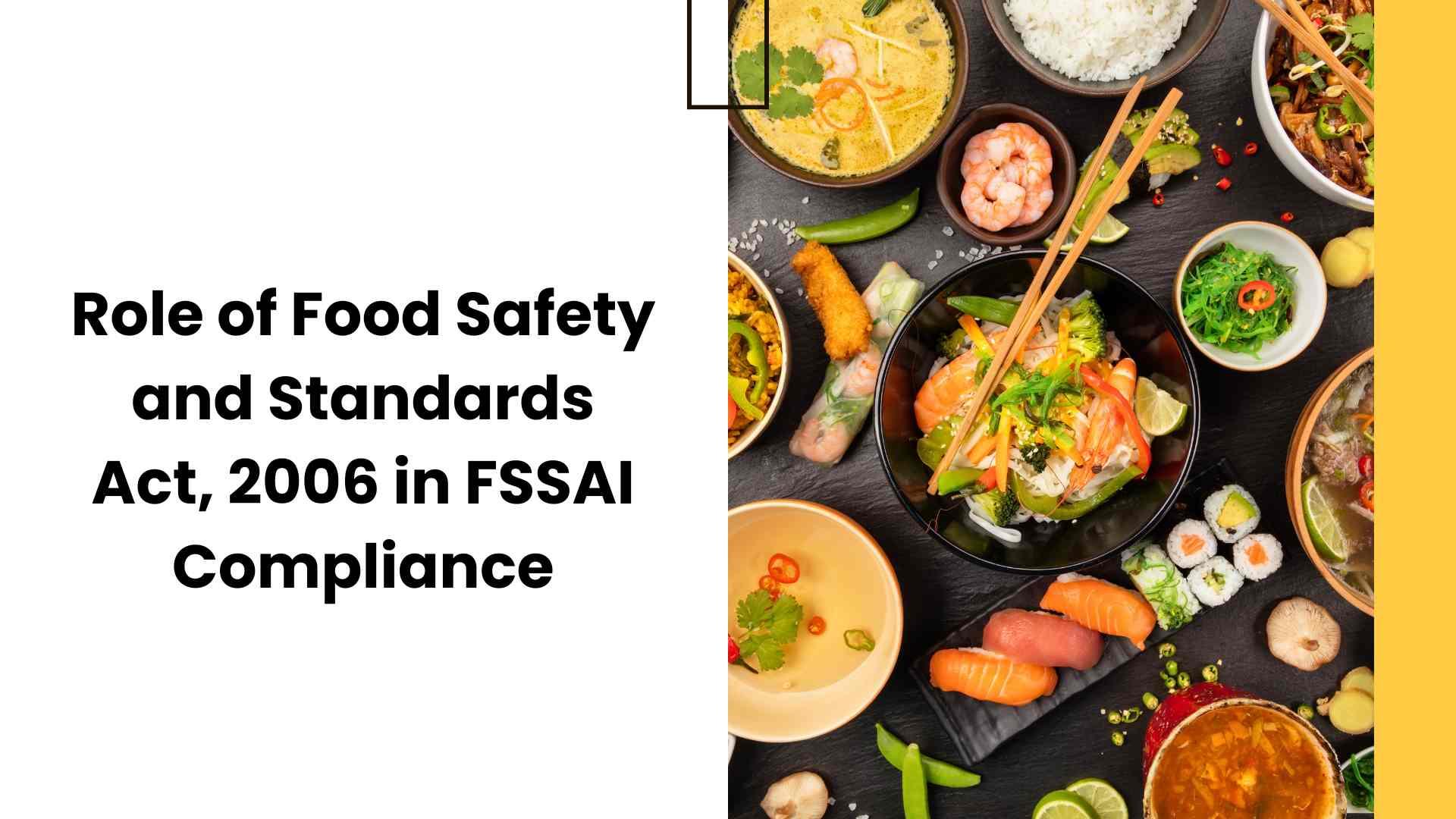
FSSAI Registration is a mandatory legal authorization required for anyone who runs a food-related business in India. The Food Safety and Standards Act, 2006 (FSS Act, 2006) is the primary legislation governing food safety and regulation in India. It was enacted to consolidate various food-related laws and establish a single reference point for all matters relating to food safety and standards. Under this Act, the Food Safety and Standards Authority of India (FSSAI) was created as the central authority responsible for implementing and enforcing food safety regulations across the country.
The Act plays a foundational role in ensuring that Food Business Operators (FBOs) comply with standardized safety, hygiene, and quality practices. It provides the legal framework that defines obligations, penalties, procedures, and regulatory powers concerning food production, distribution, sale, and import.
1. Establishment of a Centralized Regulatory Authority
Before the enactment of the FSS Act, food safety in India was governed by multiple laws and authorities, leading to confusion and inconsistent enforcement. The Act unified these regulations under one umbrella and established FSSAI as the apex body.
This centralization ensures:
-
Uniform food safety standards across India
-
Clear guidelines for food businesses
-
Consistent monitoring and enforcement
-
Streamlined licensing and registration processes
By creating a single authority, the Act simplifies compliance for FBOs and improves regulatory efficiency.
2. Mandatory Licensing and Registration
One of the most important roles of the Act is making FSSAI registration or licensing mandatory for all Food Business Operators. Whether a small street vendor, restaurant owner, food manufacturer, or importer, every entity involved in the food supply chain must obtain appropriate authorization.
This requirement ensures that:
-
All food businesses are legally recognized
-
Authorities can monitor and regulate operations
-
Food safety standards are implemented uniformly
Non-compliance with licensing requirements can result in penalties, fines, or cancellation of business operations, thereby reinforcing accountability.
3. Setting Food Safety Standards
The Act empowers FSSAI to frame science-based standards for food products. These standards relate to ingredients, additives, contaminants, labeling, packaging, hygiene, and storage conditions.
By defining clear benchmarks for quality and safety, the Act ensures that food products available in the market are safe for consumption. FBOs must align their manufacturing and operational processes with these standards to remain compliant.
4. Enforcement and Inspection Mechanisms
The FSS Act provides regulatory authorities with powers to conduct inspections, collect samples, and take enforcement actions if violations are detected. Food Safety Officers are appointed to monitor compliance at various levels.
If food products are found unsafe or misbranded, authorities may:
-
Impose penalties or fines
-
Seize or recall products
-
Suspend or cancel licenses
-
Initiate legal proceedings
These enforcement provisions act as a deterrent against unsafe practices and encourage businesses to maintain compliance consistently.
5. Emphasis on Food Safety Management Systems
The Act promotes the adoption of Food Safety Management Systems (FSMS), including Good Manufacturing Practices (GMP) and Good Hygiene Practices (GHP). Businesses are required to maintain hygienic facilities, proper storage, trained staff, and safe handling procedures.
This systematic approach ensures preventive control rather than reactive correction, reducing risks of contamination and foodborne illnesses.
6. Consumer Protection and Transparency
Consumer safety is at the core of the FSS Act. It includes provisions related to proper labeling, disclosure of ingredients, nutritional information, and allergen warnings. These measures empower consumers to make informed choices.
Additionally, strict rules against misleading advertisements and false claims ensure transparency in the food market. Businesses that violate labeling or advertising norms face significant penalties.
7. Penalties and Legal Accountability
The Act clearly outlines penalties for various offenses, such as selling substandard food, misbranding, adulteration, or operating without a valid license. Penalties range from monetary fines to imprisonment, depending on the severity of the violation.
This legal accountability strengthens compliance by making businesses responsible for the safety and quality of their products.
8. Support for Industry Growth and Trade
While the Act enforces strict standards, it also facilitates growth in the food sector. Aligning Indian food safety standards with international benchmarks, it promotes exports and enhances global acceptance of Indian food products.
A well-regulated food industry improves investor confidence and strengthens the overall economy.
Note: You can also apply for Water Testing Services for FSSAI
Conclusion
The Food Safety and Standards Act, 2006, serves as the backbone of food regulation and FSSAI compliance in India. By establishing a centralized authority, mandating licensing, defining safety standards, and enforcing accountability, the Act ensures that food businesses operate responsibly and ethically.
Its comprehensive framework not only protects public health but also fosters transparency, consistency, and trust in the food industry. For Food Business Operators, compliance with the Act is not merely a legal obligation but a commitment to delivering safe and high-quality products to consumers.
Ultimately, the Act plays a crucial role in building a robust food safety ecosystem in India—one that balances regulatory control with industry growth while prioritizing consumer well-being.

 English
 Arabic
 French
 Spanish
 Portuguese
 Deutsch
 Dutch
Dutch
 Italiano
 Russian
 Romaian
 Portuguese (Brazil)
 Greek
Greek