Electricity costs are becoming one of the fastest-growing household expenses. From air conditioning and heating to kitchen appliances, entertainment systems, and remote work equipment, modern homes consume more electricity than ever before. Even families that actively try to conserve energy often notice their monthly power bills steadily rising.
Energy-efficient appliances and LED lighting can certainly help reduce consumption, but for many households, those changes alone are not enough. That’s why solutions like the Energy Revolution System™ – Slash Power Bills Today are gaining attention among homeowners looking for alternative energy strategies.
The Growing Burden of Electricity Costs
Utility rates are influenced by multiple factors, including:
Because homeowners depend heavily on centralized power grids, they often have little control over pricing. Even modest rate increases can translate into hundreds of dollars annually.
This growing dependency creates financial unpredictability, pushing families to explore supplemental energy solutions that offer more stability.
The Problem with Traditional Energy Dependence
Most homes rely entirely on centralized power grids. While these systems provide convenience, they also introduce several vulnerabilities:
1. Exposure to Price Hikes
Energy providers periodically adjust rates. Consumers must absorb these increases.
2. Vulnerability to Power Outages
Storms, infrastructure failures, or maintenance disruptions can leave households without electricity.
3. Limited Control
Homeowners cannot directly influence how their electricity is generated or priced.
4. Environmental Concerns
Grid electricity often depends on fossil fuels, contributing to carbon emissions.
Supplemental energy systems aim to address some of these concerns by offering partial independence and long-term cost predictability.
What Is the Energy Revolution System™?
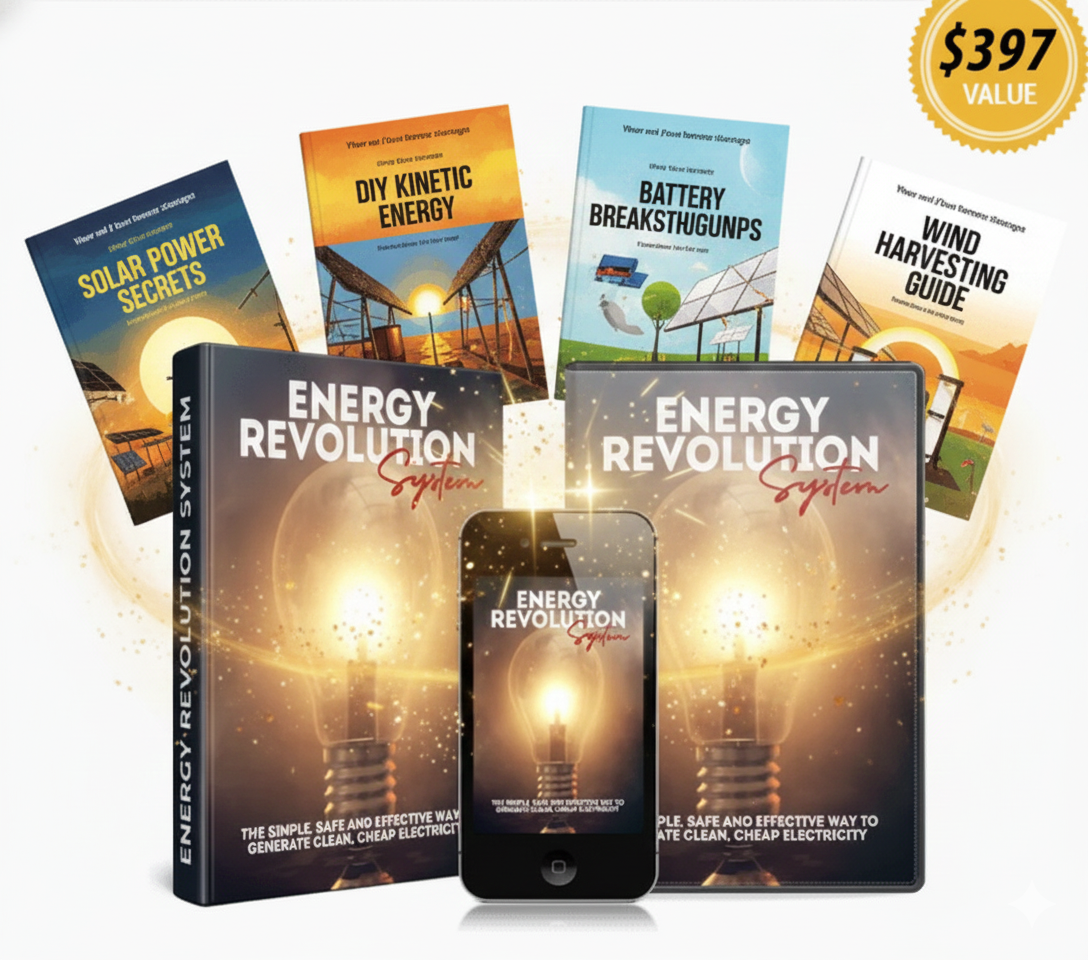
The Energy Revolution System™ is marketed as a DIY energy blueprint designed to help homeowners build a compact, cost-effective supplemental energy device. Rather than installing expensive rooftop solar panels, this system emphasizes smaller-scale construction using accessible materials.
The program typically includes:
-
Digital step-by-step blueprints
-
Visual diagrams and schematics
-
A list of affordable materials
-
Setup and safety instructions
-
Maintenance guidelines
Its core selling point is affordability and simplicity, positioning it as an alternative entry point into renewable energy.
What Makes the Energy Revolution System Unique?
Unlike full-scale solar installations that can cost thousands of dollars upfront, this system promotes compact and cost-conscious construction.
Key Highlights Include:
-
Digital blueprint access for instant download
-
Affordable material sourcing from hardware stores
-
Beginner-friendly, step-by-step tutorials
-
Compact design suitable for garages, sheds, or small spaces
Its marketing emphasizes that users don’t need advanced engineering skills to get started.
How the Energy Revolution System Claims to Work
The concept is centered around building a small supplemental energy unit that contributes to household power supply. While it may not replace the grid entirely, the system is designed to reduce dependency and overall consumption.
By generating supplemental energy:
The exact savings depend on household energy usage patterns and proper installation.
Potential Advantages
1. Budget-Friendly Entry Point
Compared to traditional solar panel installations, which often require professional installation and significant upfront investment, the Energy Revolution System offers a lower-cost alternative.
For homeowners hesitant to invest thousands of dollars, this may serve as a stepping stone into renewable energy.
2. Reduced Energy Bills
Even partial supplementation of electricity can lower monthly charges. While it may not eliminate bills entirely, it could reduce reliance on high-cost grid energy.
Savings vary depending on:
-
Household consumption
-
Local electricity rates
-
Seasonal energy use
3. DIY Satisfaction
For many homeowners, building their own energy device can be empowering. It provides a hands-on understanding of how electricity generation works and fosters greater awareness of consumption habits.
4. Educational Value
Beyond cost savings, the system may help users better understand renewable energy principles, home wiring basics, and energy efficiency strategies.
This knowledge alone can lead to smarter long-term decisions.
Practical Considerations Before Starting
Before attempting any DIY energy project, consider the following:
1. Local Building Codes
Some areas have regulations governing electrical modifications. Always check local guidelines.
2. Safety Regulations
Electrical systems can pose risks if improperly handled. Follow all safety instructions carefully.
3. Home Wiring Compatibility
Ensure the system is compatible with existing household circuits. Consulting an electrician is recommended.
4. Realistic Expectations
Energy savings depend on usage habits. A supplemental system works best when paired with energy-conscious living.
How to Maximize Results
To truly slash power bills today, layering multiple strategies is often more effective than relying on one solution alone.
Consider combining:
-
Energy Revolution System™
-
Energy-efficient appliances
-
LED lighting
-
Smart thermostats
-
Reduced phantom load usage (unplug idle electronics)
-
Insulation upgrades
-
Energy audits
For example, phantom loads—electricity consumed by plugged-in devices even when turned off—can account for a surprising portion of monthly bills. Reducing these hidden drains amplifies supplemental energy gains.
Is It a Replacement for Solar?
Not necessarily. The Energy Revolution System may serve as a supplemental solution rather than a full-scale solar replacement.
Large solar installations:
The Energy Revolution System focuses more on compact and affordable energy support. Those seeking full off-grid living would likely require larger renewable infrastructure.
Who Is It Best For?
The Energy Revolution System™ may appeal to:
-
Budget-conscious homeowners
-
DIY hobbyists
-
Individuals curious about renewable energy
-
People seeking supplemental power options
-
Families facing rising utility costs
It may not be ideal for renters or individuals uncomfortable handling electrical components.
Long-Term Financial Perspective
Reducing electricity bills isn’t just about monthly savings—it’s about long-term financial planning.
Even modest savings can accumulate significantly over time. For example:
When combined with broader energy efficiency upgrades, cumulative savings can become substantial.
Environmental Impact Considerations
In addition to financial benefits, supplemental energy systems may reduce reliance on fossil-fuel-based grid electricity.
Lower grid dependence may:
For environmentally conscious homeowners, this can be an added incentive.
Managing Expectations
While the Energy Revolution System™ – Slash Power Bills Today presents an appealing concept, it is important to approach it with realistic expectations.
It is not:
It is positioned as a supplemental strategy that may reduce dependency when implemented correctly.
Final Verdict
The Energy Revolution System™ offers a DIY-focused approach to reducing electricity bills through compact supplemental energy generation. While it may not eliminate energy costs entirely, it has the potential to provide additional support and long-term savings when combined with energy-efficient habits.
Homeowners seeking greater control over their electricity expenses may find value in exploring this system—provided they prioritize safety, verify local regulations, and maintain realistic expectations.
In a world of rising utility costs, even small steps toward energy independence can contribute to financial stability and greater peace of mind.



 English
 Arabic
 French
 Spanish
 Portuguese
 Deutsch
 Turkish
 Dutch
Dutch
 Italiano
 Russian
 Romaian
 Greek
Greek