

Capacitor Discharge Welding: Precision Joining for Modern Manufacturing
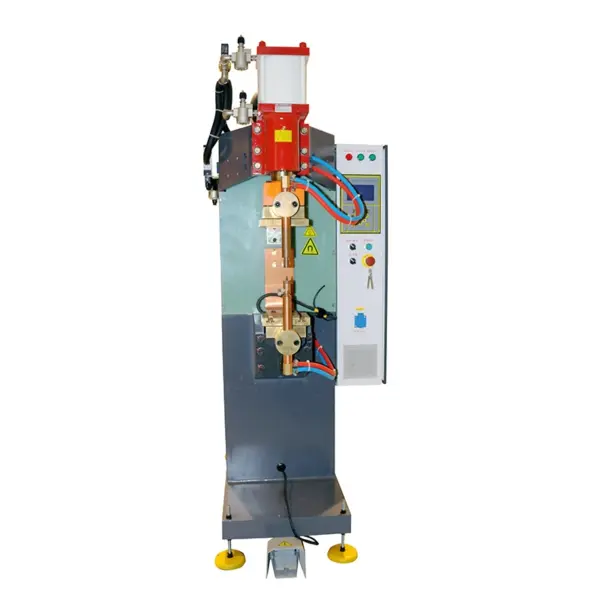
In today’s fast-paced industrial landscape, manufacturers demand welding solutions that deliver speed, accuracy, and repeatable quality. Capacitor discharge welding (CD welding) has emerged as a preferred method for joining small to medium-sized metal components, especially in automotive, electronics, and aerospace sectors. At Heron Welder, we specialize in advanced capacitor discharge welding systems, offering OEMs, automation integrators, and factory engineers reliable solutions for high-precision manufacturing.
In this guide, we will explore the principles of capacitor discharge welding, its applications, advantages over conventional methods, and best practices for optimizing production.
What Is Capacitor Discharge Welding?
Capacitor discharge welding is a form of resistance welding that uses a stored electric charge in capacitors to deliver a high-intensity, short-duration current to the workpiece. Unlike traditional resistance welding methods, CD welding generates energy in milliseconds, creating a localized weld with minimal heat-affected zones.
The process involves three main steps:
-
Charging – Capacitors are charged to a precise voltage level.
-
Discharge – The stored energy is released through electrodes, creating a controlled, high-intensity current at the weld point.
-
Fusion – The metal at the interface rapidly melts and solidifies, forming a strong metallurgical bond.
This rapid energy delivery makes CD welding ideal for thin sheets, small pins, terminals, and electronic components, where precision and minimal distortion are critical.
Key Components of a Capacitor Discharge Welding System
A typical CD welding system includes:
-
Capacitor Bank: Stores electrical energy before discharge.
-
Power Controller: Regulates voltage, pulse duration, and discharge timing.
-
Welding Gun or Electrodes: Transfers the current to the workpiece while applying mechanical pressure.
-
Automation Interface: Integrates the system into production lines for consistent, high-speed welding.
At Heron Welder, our CD welding systems are engineered with programmable controls, robust electrodes, and modular automation options to meet demanding production requirements.
Applications of Capacitor Discharge Welding
CD welding is widely used across industries where high-precision joining is necessary:
Automotive Industry
-
Battery tab welding for lithium-ion cells
-
Terminal and wire-to-component connections
-
Fastening clips, pins, and small brackets
Electronics and Electrical Components
-
PCB assembly and connector welding
-
Small terminal and pin attachments
-
High-speed, repeatable welds with minimal thermal stress
Aerospace and Specialty Manufacturing
-
Joining thin or delicate metallic components
-
Rapid, low-distortion welds on lightweight alloys
By integrating CD welding into automated production lines, manufacturers achieve high throughput and consistent quality, reducing the risk of component damage and minimizing post-weld processing.
Advantages of Capacitor Discharge Welding
CD welding offers several benefits over traditional resistance welding or mechanical fastening methods:
-
Ultra-Fast Welding – Welds completed in milliseconds for high-volume production.
-
Minimal Heat-Affected Zone – Reduces distortion and preserves component integrity.
-
Precision and Repeatability – Ideal for small parts and electronic assemblies.
-
Automation-Friendly – Easily integrated with robotic or conveyor-based systems.
-
Versatile Material Compatibility – Effective on copper, aluminum, steel, and coated metals.
These advantages make CD welding an attractive option for OEMs and automation integrators seeking reliable, scalable, and efficient welding solutions.
Capacitor Discharge Welding vs. Conventional Resistance Welding
| Feature | Capacitor Discharge Welding | Conventional Resistance Welding |
|---|---|---|
| Weld Time | Milliseconds | Seconds |
| Heat-Affected Zone | Minimal | Larger, potential distortion |
| Part Size | Small to medium | Medium to large |
| Automation Integration | High | Moderate |
| Material Suitability | Copper, aluminum, thin metals | Steel, thick sheets |
CD welding excels in applications where speed, precision, and minimal thermal impact are priorities, making it a preferred choice for modern, automated manufacturing lines.
Best Practices for Capacitor Discharge Welding
To maximize the efficiency and reliability of CD welding, consider these best practices:
-
Electrode Maintenance – Keep electrodes clean and properly shaped to ensure consistent energy transfer.
-
Parameter Optimization – Adjust voltage, pulse duration, and electrode pressure for each material and thickness.
-
Material Testing – Conduct pre-production tests to fine-tune settings and minimize defects.
-
Automation Integration – Utilize robotic or conveyor systems for consistent electrode placement and repeatable welds.
-
Quality Control – Implement inline inspection to detect defects early and reduce rework.
At Heron Welder, we provide tailored consultation to optimize CD welding parameters for your specific applications, ensuring maximum productivity and minimal downtime.
FAQs About Capacitor Discharge Welding
1. Can CD welding be used on aluminum and copper?
Yes. CD welding is highly effective for high-conductivity metals like aluminum and copper due to its rapid energy delivery.
2. What is the maximum thickness CD welding can handle?
Typically, CD welding is ideal for thin to medium sections (up to 3 mm), though specialized systems from Heron can handle slightly thicker components.
3. How does CD welding affect component strength?
When parameters are optimized, CD welding produces strong, repeatable welds with minimal heat-affected zones, preserving overall component integrity.
4. Can CD welding be automated?
Absolutely. CD welding is compatible with robotic arms, conveyors, and fully automated production lines, enabling high-volume precision assembly.
5. How do I maintain a CD welding system?
Routine checks on capacitors, electrodes, and control units, along with parameter verification, ensure consistent performance and long equipment life.
Why Choose Heron Welder for Capacitor Discharge Welding
As a global leader in industrial welding solutions, Heron Welder delivers advanced CD welding machines tailored for high-precision manufacturing. Our systems combine state-of-the-art electronics, durable components, and automation-ready designs to support OEMs, engineers, and factory managers in achieving superior production outcomes.
Whether you are integrating CD welding into a new assembly line or upgrading existing equipment, Heron provides full consultation, customization, and technical support to optimize your metal-joining processes.
Ready to experience precision, speed, and reliability in your manufacturing line? Contact Heron Welder today to request a quote or consult with our experts about customized capacitor discharge welding and automation solutions for your facility.

 English
 French
 Spanish
 Portuguese
 Deutsch
 Turkish
 Dutch
Dutch
 Italiano
 Russian
 Romaian
 Portuguese (Brazil)
 Greek
Greek