

Food, Pharma & Nutraceutical Demand Boosting the Encapsulated Citric Acid Market Growth
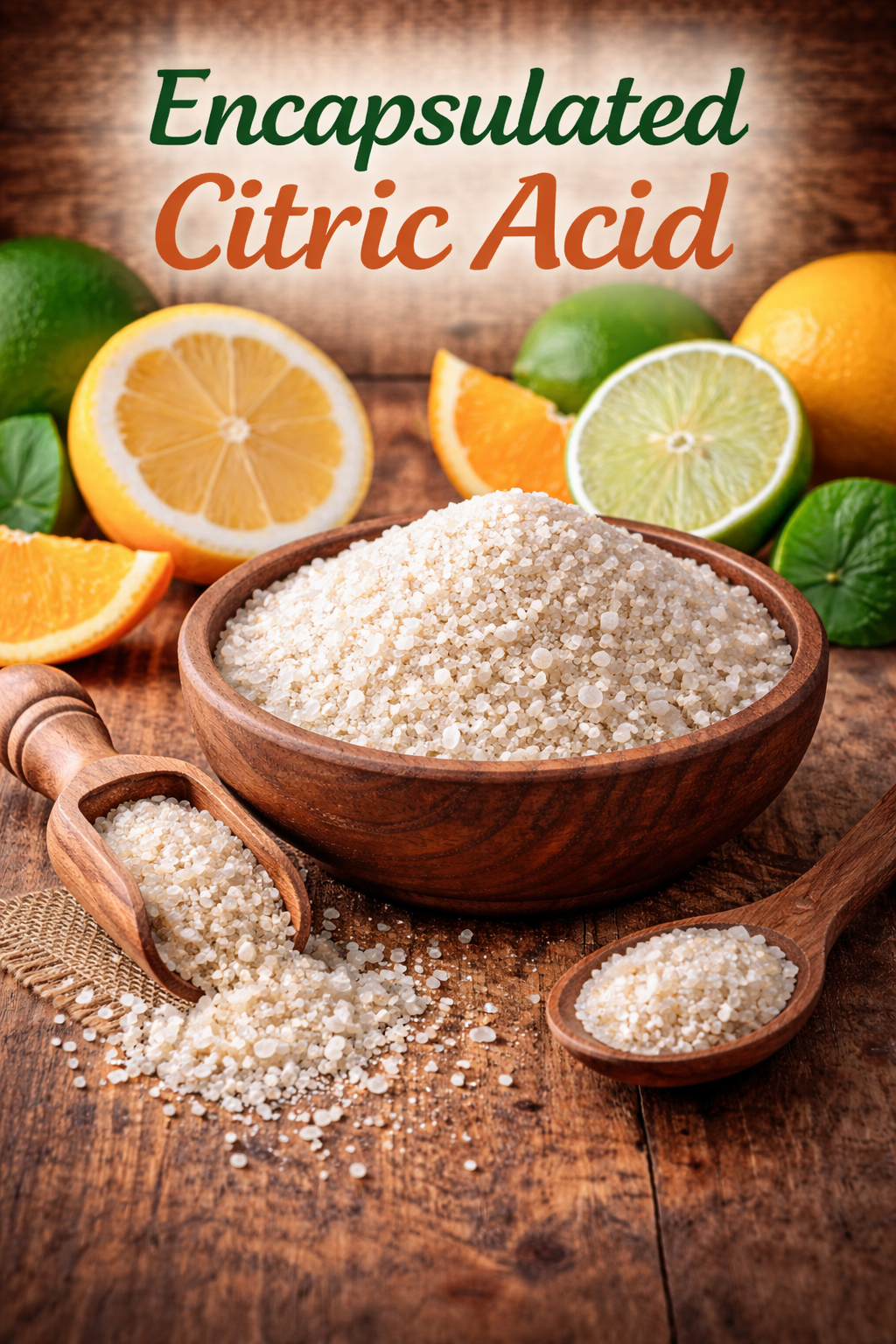
The Encapsulated Citric Acid industry revolves around the production and supply of citric acid that has been microencapsulated with protective coatings to control its release, mask its sour taste, and improve stability in various applications. Encapsulated citric acid is widely used in food and beverage products (e.g., powdered drink mixes, confectionery, seasonings), pharmaceuticals, cosmetics, and detergents where controlled acidity, enhanced sensory properties, and pH regulation are important. Encapsulation technologies such as maltodextrin, gum arabic, starch, or polymer-based coatings help prevent moisture absorption, reduce hygroscopicity, and improve flowability in dry blends. Market growth is driven by increasing demand for convenience foods, ready-to-mix formulations, clean-label solutions, and advanced delivery systems in oral care and personal care products, while manufacturers innovate to optimize encapsulation efficiency, release profiles, and cost-effectiveness for end-use industries.
The Encapsulated Citric Acid Market is projected to witness consistent expansion from 2026 to 2034, building on its 2025 valuation baseline and progressing at a steady compound annual growth rate throughout the forecast period. The positive outlook reflects rising demand for controlled release acidulants, technological refinement in encapsulation techniques, and growing preference for multifunctional food additives. As industries pursue enhanced product stability and longer shelf life, encapsulated citric acid has emerged as a strategic ingredient across multiple applications.
Encapsulation technology allows citric acid to be coated with protective layers that delay its release until specific processing or consumption conditions are met. This functionality improves flavor control, texture management, and product stability. The market is segmented by product type into polymer coated, hydrogenated vegetable oil, palm oil, and cottonseed oil variants. Polymer coated encapsulated citric acid is gaining traction due to its superior barrier properties and precision release capabilities, making it suitable for high performance food formulations. Hydrogenated vegetable oil based encapsulation remains popular in processed foods, while palm oil and cottonseed oil coatings serve cost sensitive and region specific requirements.
Market Segmentation
By application, the market spans food and beverages, meat products, snacks and savouries, and bakery products. The food and beverages segment accounts for a significant share, supported by demand for acidulants that enhance taste while preventing premature reactions during processing. In meat products, encapsulated citric acid helps regulate pH levels and extend shelf life without compromising texture. Snacks and savouries benefit from controlled tangy flavor bursts, while bakery manufacturers use encapsulated forms to prevent early interaction with leavening agents, ensuring consistent product quality.
End user segmentation includes industrial, HoReCa or foodservice, and household or retail consumers. Industrial users dominate the market due to large scale processing needs and integration of encapsulated ingredients into standardized formulations. The HoReCa segment is expanding steadily, driven by demand for consistent flavor and quality in quick service and casual dining formats. Retail and household adoption is gradually increasing as consumers become more aware of ingredient functionality and shelf life advantages.
Distribution channels such as hypermarkets and supermarkets, along with convenience stores, play a crucial role in retail penetration. Large format stores provide broader product visibility and brand comparison opportunities, while convenience outlets support impulse purchases and urban accessibility. At the regional level, North America and Europe maintain established demand due to advanced food processing industries. Asia Pacific is anticipated to record robust growth, fueled by expanding packaged food consumption in China, India, and Japan. Emerging markets in South and Central America, as well as the Middle East and Africa, present untapped opportunities as food manufacturing infrastructure evolves.
Request to sample Report- https://www.theinsightpartners.com/sample/TIPRE00016195
Market Growth
Market growth drivers are strongly linked to health and sustainability trends. Consumers increasingly prefer clean label ingredients and natural preservatives, positioning citric acid as a favorable alternative to synthetic additives. Encapsulation enhances its stability and functionality, aligning with innovative food preservation strategies. Sustainable production methods and eco conscious packaging initiatives further support adoption, as manufacturers seek to reduce waste and extend product shelf life naturally.
The competitive landscape features both global and regional players investing in research, production capacity expansion, and strategic partnerships. Market participants focus on improving encapsulation efficiency, optimizing cost structures, and customizing solutions for diverse food applications.
Key players operating in the Encapsulated Citric Acid Market include:
· Anmol Chemicals
· Balchem Corporation
· Gadot Biochem Europe BV
· Innovative Food Processors
· Lamirsa Group
· Pittsburgh Spice and Seasoning Company
· Watson Inc.
These companies emphasize product innovation, geographic expansion, and tailored formulations to strengthen their market position. Rising player density intensifies competition, encouraging technological differentiation and improved supply chain efficiency.
The report scope covers historical data from 2021 to 2024 and forecasts from 2026 to 2034, providing market size estimates in USD across product type, application, end user, and distribution channel segments. It also delivers insights into regional performance across North America, Europe, Asia Pacific, South and Central America, and the Middle East and Africa.
Future Outlook
Looking ahead, the Encapsulated Citric Acid Market is expected to benefit from advancements in microencapsulation technology, growing demand for functional foods, and increasing regulatory emphasis on safe and sustainable additives. As manufacturers innovate to meet clean label expectations and performance efficiency standards, encapsulated citric acid is likely to secure a stronger foothold in global food systems. Strategic investments in research, capacity expansion, and emerging market penetration will further shape the competitive dynamics and long term growth trajectory of the industry.

 English
 Arabic
 French
 Spanish
 Portuguese
 Deutsch
 Turkish
 Dutch
Dutch
 Russian
 Romaian
 Portuguese (Brazil)
 Greek
Greek