

Formwork System Market: Comprehensive Trends, Growth Drivers, and Strategic Developments by 2031
The global construction landscape is witnessing a massive transition toward industrialized building techniques, placing specialized temporary structures at the forefront of architectural efficiency. Formwork systems, which provide the essential molds for concrete pouring, have evolved from simple timber planks into highly engineered, modular solutions. This evolution is necessitated by the global push for faster project completion times and the rising complexity of modern urban infrastructure. As developers seek to balance cost, safety, and speed, the reliance on advanced formwork technology has become a cornerstone of the industry.
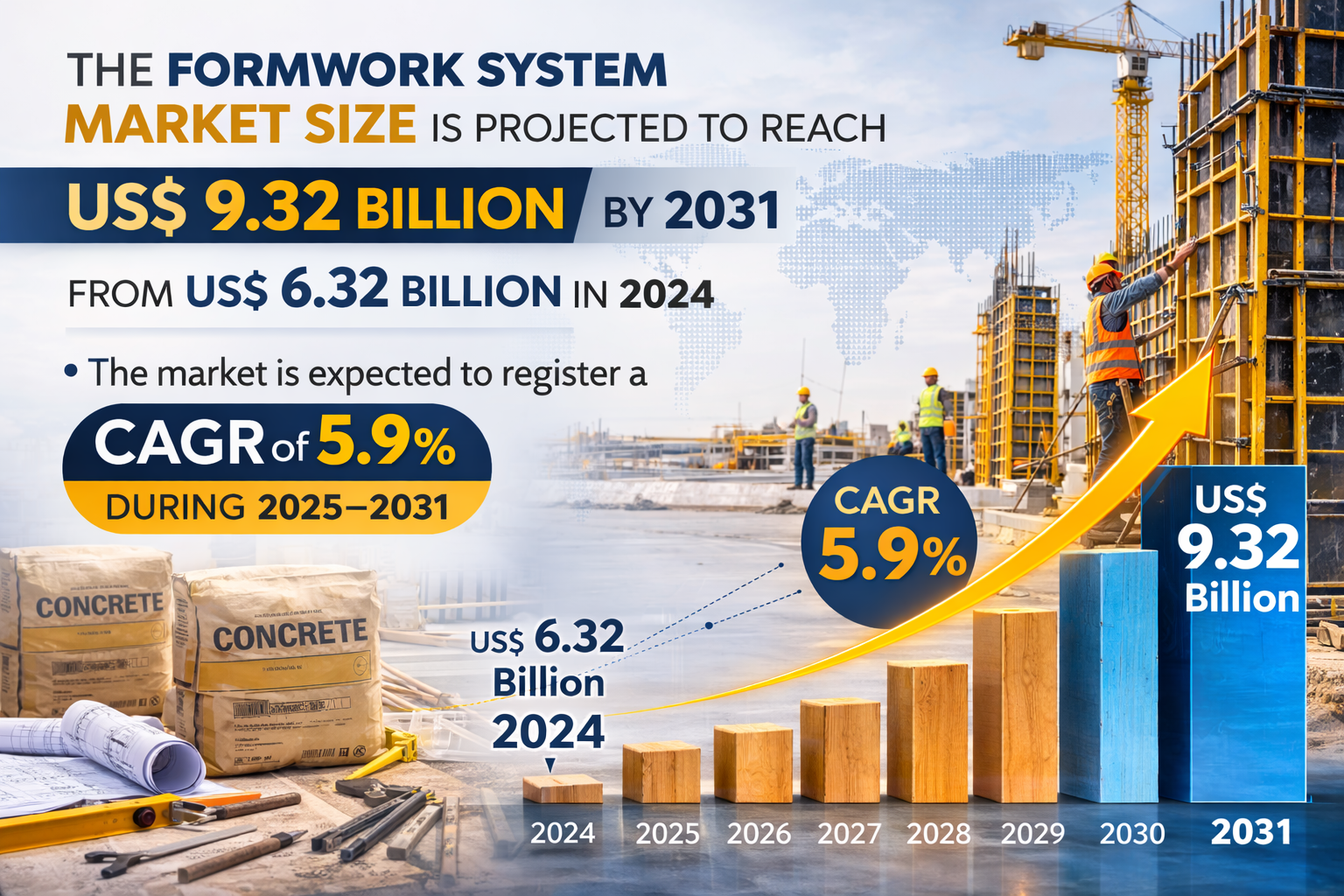
The formwork system market size is projected to reach US$ 9.32 billion by 2031 from US$ 6.32 billion in 2024. The market is expected to register a CAGR of 5.9% during 2025–2031. This steady growth reflects the indispensable nature of these systems in both residential and non residential construction sectors globally.
Download Sample PDF Report:https://www.theinsightpartners.com/sample/TIPRE00006601
Critical Formwork System Market Drivers
Several macro and microeconomic factors are acting as primary formwork system market Drivers in the current industrial climate. First and foremost is the global surge in urbanization. As more people migrate to urban centers, particularly in emerging economies, the demand for high rise residential buildings and commercial office spaces has skyrocketed. Vertical construction requires specialized climbing formwork and slipform systems that can move upward as the building grows, ensuring safety at extreme heights and reducing the need for massive scaffolding setups.
Another significant factor among the formwork system market Drivers is the critical shortage of skilled labor in the construction sector. Traditional timber formwork requires high levels of manual craftsmanship and on site adjustments. In contrast, modern aluminum and plastic modular systems are designed for "plug and play" assembly. This ease of use allows less experienced workers to assemble the forms quickly and accurately, thereby mitigating the impact of labor shortages and reducing the overall wage bill for contractors.
Sustainability and waste reduction also feature prominently as formwork system market Drivers . Conventional wood formwork often ends up in landfills after only a few uses. However, modern steel and engineered plastic systems can be reused hundreds of times. This durability aligns with the circular economy goals of major construction firms and helps projects achieve green building certifications like LEED or BREEAM. By reducing the consumption of raw timber and minimizing site waste, these advanced systems offer a compelling environmental and financial value proposition.
Recent Developments in the Industry
The formwork sector has recently seen a flurry of technological integrations and strategic business moves. One of the most notable developments is the adoption of lightweight materials. Manufacturers are increasingly utilizing carbon fiber reinforced polymers and high grade aluminum alloys to create panels that are incredibly strong yet light enough to be handled by a single worker. This shift reduces the dependency on heavy cranes, which are often a bottleneck on crowded urban construction sites.
Digitalization has also made its way into the formwork yard. Leading companies have developed proprietary software that integrates with Building Information Modeling (BIM). This allows engineers to simulate the entire concrete pouring process in a virtual environment before a single panel is delivered to the site. Recent software updates from major players now allow for real time tracking of formwork components using RFID tags or QR codes, ensuring that inventory is managed efficiently and losses are minimized.
Furthermore, there has been a significant trend toward "Hydraulic Self Climbing" systems. These systems use internal hydraulic cylinders to lift the formwork to the next level without the need for a crane. This development has revolutionized the construction of bridge pylons and skyscraper cores, as it allows work to continue even in high wind conditions where cranes would typically be grounded for safety.
Key Players in the Global Market
The competitive landscape is dominated by firms that provide not just the hardware, but also the engineering expertise required for complex geometries. These players are expanding their rental fleets to cater to small and medium enterprises that prefer operating expenditures over capital investments. Key players include:
-
PERI SE
-
Doka GmbH
-
Dallan S.p.a.
-
MEVA Schalungs Systeme GmbH
-
ULMA Construction
-
BrandSafway
-
Acrow
-
Efco Corp
-
Paschal India Pvt. Ltd.
-
Wall-Ties & Forms, Inc.
Regional Market Analysis
The Asia Pacific region remains the fastest growing market, fueled by massive government spending on infrastructure in India and Southeast Asia. The "Smart Cities" initiative in various countries has led to an unprecedented demand for tunnel and bridge formwork. In North America, the market is driven by a different set of factors, primarily the renovation of aging infrastructure and the construction of massive data centers and logistics hubs. Europe continues to lead in the adoption of high end, sustainable formwork technologies, with a strong focus on safety regulations and carbon footprint reduction.
Future Outlook
The future of the formwork system market will likely be defined by the convergence of robotics and modularity. We are already seeing the emergence of robotic arms capable of cleaning and oiling formwork panels automatically after use, which significantly extends the lifespan of the equipment. Additionally, the industry is moving toward "smart formwork" equipped with embedded sensors that can monitor the pressure and temperature of the concrete in real time. This data allows site managers to know exactly when the concrete has reached the required strength to strip the forms, potentially shaving days off a project schedule. As the world moves toward 3D concrete printing, formwork will evolve to accommodate hybrid methods, combining printed elements with traditionally cast sections for maximum structural integrity. This transition will ensure that formwork remains a vital, albeit high tech, component of the global building industry for decades to come.
Related Reports:
About Us
The Insight Partners is a leading global market research and consulting firm specializing in delivering actionable insights across various industries. Our research reports combine extensive primary and secondary research to provide accurate market intelligence, helping businesses make informed strategic decisions. The company provides detailed analysis on emerging technologies, market trends, competitive landscapes, and growth opportunities across sectors including technology, healthcare, manufacturing, and energy.
Contact Us
The Insight Partners
Phone: +1-646-491-9876
Email: sales@theinsightpartners.com
Website: https://www.theinsightpartners.com

 English
 Arabic
 French
 Spanish
 Portuguese
 Turkish
 Dutch
Dutch
 Italiano
 Russian
 Romaian
 Portuguese (Brazil)
 Greek
Greek