

Commercial Solar Solutions: Claim Your 30% Tax Credit Before July 4, 2026
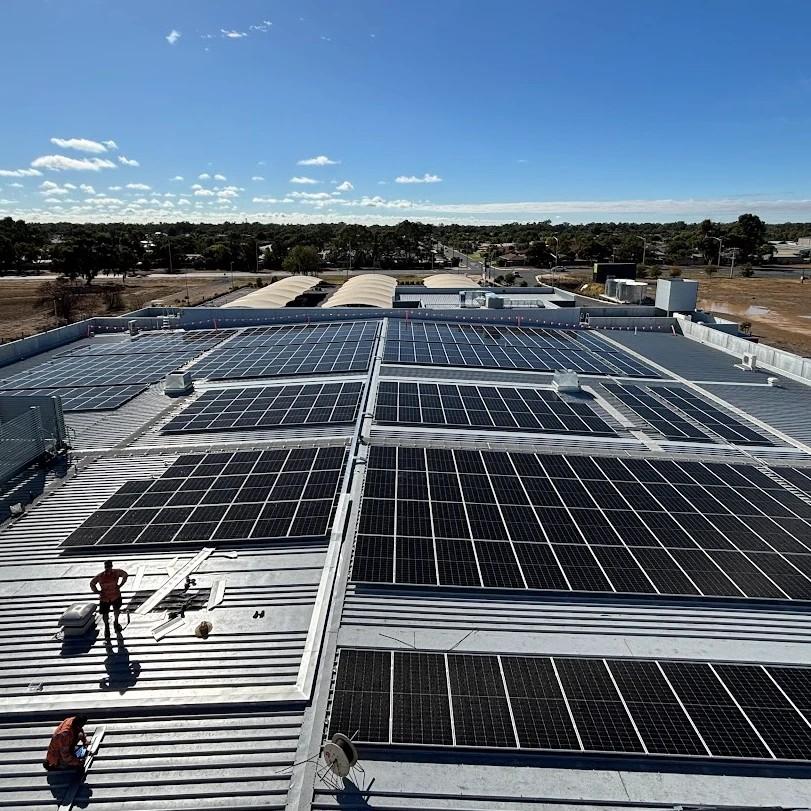
The clock is ticking for business owners across the country. If you have been on the fence about switching to solar, 2026 is the year that could define your company's financial future for decades to come. The federal government is offering a powerful 30% Investment Tax Credit (ITC) for commercial solar installations — but this window is closing faster than most business owners realize.
Here is everything you need to know about commercial solar solutions, the tax credit deadline, and why acting now could be one of the smartest financial decisions your business makes this year.
What Is the 30% Commercial Solar Tax Credit?
The Investment Tax Credit (ITC), governed under Section 48E of the Internal Revenue Code, allows businesses to claim 30% of the total cost of a commercial solar installation directly against their federal tax liability. This is not a deduction — it is a dollar-for-dollar reduction in the taxes your business owes.
To put that in real numbers: a $300,000 commercial solar system would generate a $90,000 tax credit. Stack that with 100% bonus depreciation under MACRS in the first year, and many businesses find they recover nearly half of their total system cost through tax benefits alone.
Eligible costs include solar panels, inverters, racking, wiring, installation labor, engineering, and permitting fees. Battery storage systems are also covered under the same credit, giving businesses an added incentive to invest in energy resilience.
Why July 4, 2026 Is the Critical Deadline
The One Big Beautiful Bill Act, signed into law on July 4, 2025, dramatically changed the timeline for commercial solar incentives. Previously, businesses had until 2032 to take advantage of the full ITC. That runway has now been cut significantly shorter.
Here is how the new deadline structure works:
• Construction begins by July 4, 2026: Your project must be placed in service within four calendar years, giving you until approximately 2030 to complete the build and still claim the full 30% credit.
• Construction begins after July 4, 2026: The project must be fully operational by December 31, 2027 — a much tighter window with far less flexibility.
• Miss both deadlines entirely: You lose eligibility for the federal ITC altogether.
Given that solar projects typically involve 3 to 6 months of planning, permitting, and procurement, businesses that have not yet started the process are already in the critical window. Every week of delay narrows your options.
New Rules That Every Business Owner Must Know
Alongside the new deadlines, the legislation introduced Foreign Entity of Concern (FEOC) restrictions. As of January 1, 2026, projects that were not safe harbored by year-end 2025 face new limits on sourcing solar components from certain countries, including China, Russia, and North Korea. This could impact equipment pricing, availability, and lead times.
Additionally, projects larger than 1.5 MW are now required to demonstrate a "Physical Work of Significant Nature" test rather than relying on the simpler 5% safe harbor method. This means large-scale commercial projects need active, documented onsite work to establish construction commencement. For smaller projects under 1.5 MW, the 5% safe harbor method — where you spend at least 5% of project costs on qualifying equipment — still applies.
Bonus Credits That Can Push Your Savings Even Higher
The base 30% ITC is just the starting point. Depending on your project's location and how it is built, additional bonus adders can push your total credit to 40%, 50%, or even higher:
• Domestic Content Bonus: An extra 10% for projects using U.S.-manufactured steel, iron, and components at qualifying thresholds.
• Energy Community Bonus: An additional 10% for projects sited in areas with a history of fossil fuel employment, brownfield sites, or near retired coal plants.
• Low-Income Community Bonus: Up to 20% for qualifying projects in designated low-income areas.
For nonprofits, schools, and government entities that do not have a traditional tax liability, the Direct Pay option converts the ITC into an actual cash refund from the IRS — making solar financially accessible regardless of tax status.
The Long-Term Business Case for Going Solar Now
Beyond the tax credits, the underlying business case for commercial solar has never been stronger. Energy rates continue to climb, and businesses that lock in solar energy today are shielding themselves from volatile utility pricing for the next 25 or more years. Most commercial solar systems deliver a payback period of just 3 to 7 years — after which the energy they produce is essentially free.
Companies like Winki Energy specialize in helping businesses navigate these exact decisions — from system design and financial modeling to permitting, installation, and ensuring projects qualify for every available incentive before the deadlines pass.
The Bottom Line: Do Not Wait
The 30% commercial solar tax credit is one of the most valuable financial incentives available to businesses today — but it requires action before July 4, 2026. Supply chain lead times, permitting delays, and new FEOC sourcing rules mean that the effective deadline for most businesses is right now.
Start your project, begin procurement discussions, or at minimum get a detailed proposal so you fully understand your numbers. The businesses that move now will be the ones saving tens of thousands — or more — in federal tax benefits while locking in lower energy costs for the next quarter century.
Commercial solar solutions are not just an environmental choice in 2026 — they are a financial strategy. And the window to maximize that strategy is closing fast.

 English
 Arabic
 French
 Spanish
 Portuguese
 Deutsch
 Dutch
Dutch
 Italiano
 Russian
 Romaian
 Portuguese (Brazil)
 Greek
Greek