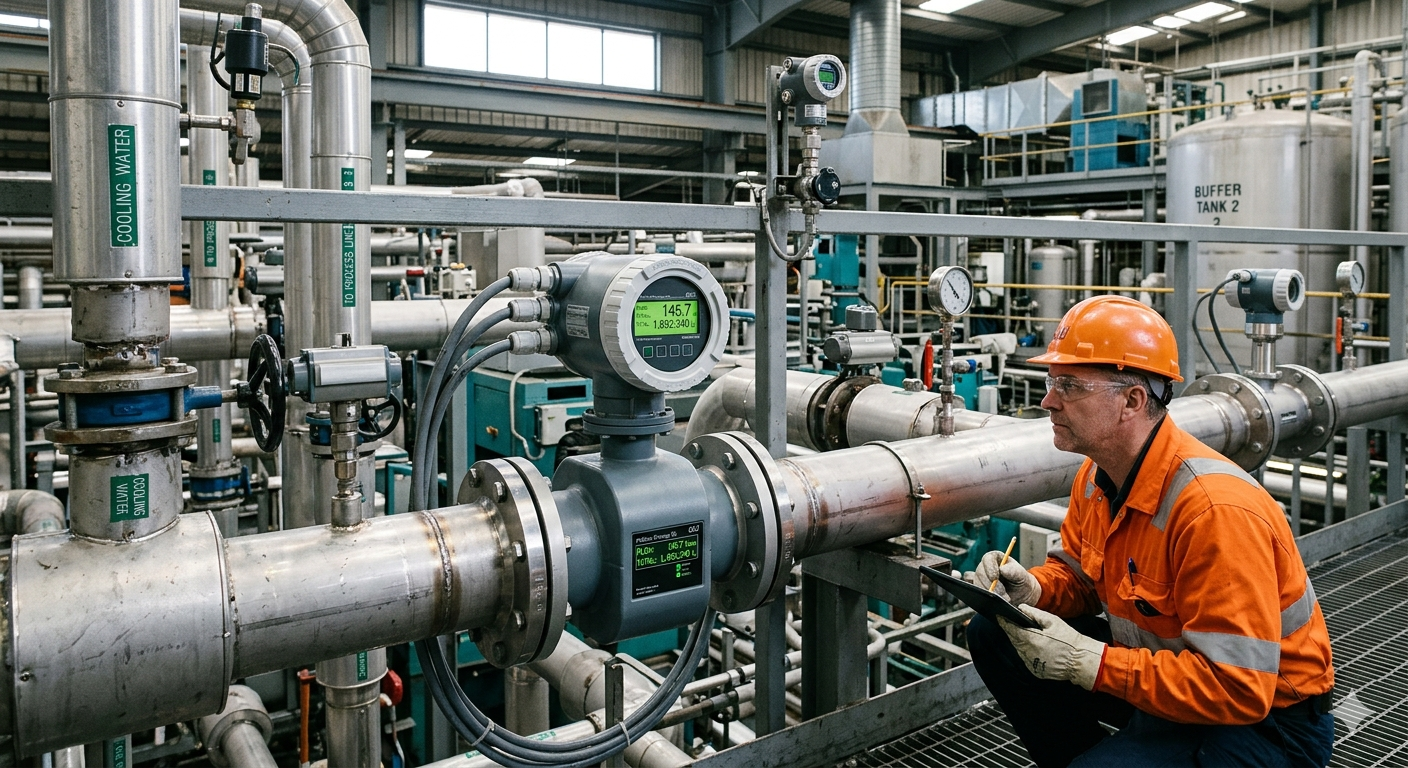
Accurate measurement and control of fluid flow are essential for efficient industrial processes. Industrial Flow Meters play a critical role in monitoring liquids, gases, and slurries across various sectors including manufacturing, chemical processing, and water treatment. These devices provide precise data that helps operators optimize operations, maintain safety standards, and improve overall efficiency.
Understanding Industrial Flow Meters
Industrial flow meters are devices designed to measure the rate at which fluids or gases move through a pipeline or system. They are used in applications ranging from simple liquid monitoring to complex chemical processes that require high accuracy and reliability.
These meters provide real time data that can be used for operational decisions, billing, and regulatory compliance. Depending on the type of fluid and process requirements, different flow meter technologies can be employed to ensure optimal performance. Businesses seeking Industrial Flow Meters benefit from improved control, reduced waste, and enhanced productivity.
Types of Industrial Flow Meters
There are several types of industrial flow meters, each suited for specific applications:
-
Electromagnetic Flow Meters – Ideal for conductive liquids, these meters provide accurate measurement without obstruction in the flow.
-
Coriolis Flow Meters – Measure mass flow and density, making them suitable for high precision applications in chemical and food processing industries.
-
Ultrasonic Flow Meters – Use sound waves to measure flow rate and are commonly used in water treatment and clean energy applications.
-
Turbine Flow Meters – Mechanical meters that are effective for clean liquids with steady flow rates.
Understanding the different types helps operators select the appropriate Industrial Flow Meters for their specific requirements. Each technology offers unique advantages in terms of accuracy, maintenance, and operational flexibility.
Key Benefits of Industrial Flow Meters
Industrial flow meters provide several important benefits for manufacturing and processing operations. Accurate measurement allows for better control of chemical reactions, mixing processes, and fluid delivery systems. This leads to higher quality products, reduced material waste, and cost savings.
Real time monitoring through flow meters enables predictive maintenance and early detection of anomalies, preventing costly downtime. They also support compliance with environmental and safety regulations by providing precise data for reporting purposes. Organizations implementing Industrial Flow Meters can achieve better operational transparency and efficiency across their processes.
Applications Across Industries
Industrial flow meters are used across multiple industries, including:
-
Chemical Processing – For monitoring and controlling reactions and ensuring precise dosing of chemicals.
-
Water and Wastewater Treatment – For accurate measurement of inflows, outflows, and chemical additives.
-
Oil and Gas – To monitor crude oil, refined products, and gas flows for operational control and billing.
-
Food and Beverage – For liquid measurement in processes such as brewing, juice production, and dairy operations.
The versatility of Industrial Flow Meters makes them an essential tool in ensuring consistent, high quality production in a wide range of applications. Businesses seeking efficiency improvements often prioritize installing reliable flow measurement systems.
Choosing the Right Industrial Flow Meter
Selecting the correct flow meter depends on multiple factors, including fluid type, flow range, accuracy requirements, temperature, and pressure conditions. Understanding the process requirements helps in determining whether an electromagnetic, Coriolis, ultrasonic, or turbine meter is most appropriate.
Consideration should also be given to maintenance needs and long term operational costs. Advanced meters may include digital outputs for integration with control systems, enabling automation and enhanced monitoring capabilities. Professionals evaluating Industrial Flow Meters can optimize performance by choosing devices suited for both current and future process requirements.
Installation and Maintenance Best Practices
Proper installation is critical for accurate flow measurement. Factors such as straight pipe length, orientation, and avoidance of turbulence affect the meter’s performance. Regular maintenance, calibration, and cleaning ensure long term reliability and accuracy.
Training operators to read and interpret data correctly enhances the effectiveness of the flow meter and supports proactive decision making. Facilities that prioritize proper installation and maintenance of Industrial Flow Meters see consistent performance and reduced risk of errors or downtime.
Conclusion
Industrial Flow Meters are essential tools for ensuring accurate measurement, process control, and operational efficiency in modern industrial settings. By selecting the right type of meter, ensuring proper installation, and maintaining regular calibration, organizations can achieve reliable, high quality monitoring of fluids and gases.
For companies looking to implement reliable flow measurement solutions, Toshniwal provides a comprehensive range of Industrial Flow Meters designed for diverse industrial applications. To explore more about precise and efficient solutions, visit Industrial Flow Meters.



 English
 Arabic
 French
 Spanish
 Deutsch
 Turkish
 Dutch
Dutch
 Italiano
 Russian
 Romaian
 Portuguese (Brazil)
 Greek
Greek