

How Free AI Applicant Tracking Software is Transforming Modern Recruitment
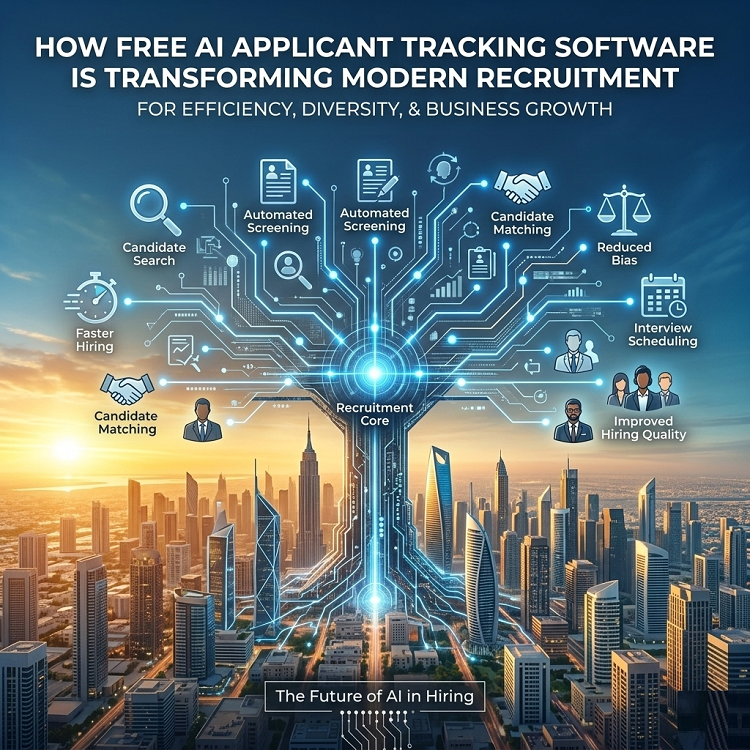
The recruitment landscape has undergone a seismic shift over the last decade. Gone are the days when a simple "Help Wanted" sign or a local newspaper ad would suffice. Today, a single job posting on LinkedIn or Indeed can attract hundreds, if not thousands, of applications within hours. For internal HR teams and small business owners, this volume is a double-edged sword: it provides a vast talent pool but creates an administrative nightmare that often leads to "resume fatigue" and missed opportunities.
In response to these hiring challenges, Artificial Intelligence (AI) has stepped in to bridge the gap. While enterprise-level tools have existed for years, the democratisation of technology has introduced a new player: free AI applicant tracking software. These platforms are no longer just digital filing cabinets; they are sophisticated engines transforming how companies discover, engage, and hire talent.
What is Free AI Applicant Tracking Software?
At its core, an Applicant Tracking System (ATS) is a software application that enables the electronic handling of recruitment needs. When you add AI into the mix, the software gains the ability to "learn" and perform tasks that previously required human intuition, such as reading resumes, identifying skills, and predicting candidate success.
The emergence of free AI applicant tracking software has been a game-changer for start-ups and growing businesses. It provides a centralised location to post jobs, collect applications, and move candidates through a pipeline. By offering AI-driven features for free, these platforms allow smaller organisations to compete with global corporations for top-tier talent without the heavy financial burden of premium software suites.
How AI is Transforming Recruitment
The integration of AI into recruitment isn't just about speed; it's about shifting the fundamental methodology of hiring from reactive to proactive.
Resume Screening Automation
The most significant bottleneck in recruitment is the initial screen. Recruiter data suggests that the average person spends only six to seven seconds looking at a resume before making a "yes" or "no" decision. AI doesn't get tired. It can scan thousands of documents in seconds, identifying keywords, experience levels, and educational backgrounds with 100% consistency.
Candidate Matching
Traditional keyword searches are often limited. If a recruiter searches for "Content Marketer" but a candidate lists "Digital Copywriter," a match might be missed. AI uses natural language processing (NLP) to understand context and synonyms, ensuring that the best-fit candidates are matched to roles based on their actual capabilities rather than just specific terminology.
Faster Hiring Process
"Time-to-hire" is a critical metric. High-quality candidates are usually off the market within ten days. By automating the top-of-funnel tasks, AI allows recruiters to jump straight to interviews with the most qualified individuals, significantly reducing the duration of the hiring cycle.
Reduced Bias
Human beings are prone to unconscious bias—favouring candidates who went to the same university or have familiar-sounding names. AI can be programmed to ignore these demographic markers and focus strictly on skills and experience, fostering a more diverse and inclusive workplace.
Key Features of Free AI ATS
Even at the free tier, modern AI-driven systems offer a robust set of tools designed to streamline the workflow.
-
Automated Resume Parsing: This feature extracts data from uploaded documents (PDFs, Word files) and populates a standardized candidate profile, making it easy to compare applicants side-by-side.
-
Smart Filtering: Users can set specific criteria—such as "minimum 5 years of Python experience"—and the AI will automatically surface the candidates who meet those exact requirements.
-
Interview Scheduling: Many platforms integrate with Google Calendar or Outlook to automate the back-and-forth of finding a time to meet, sending automated reminders to both the interviewer and the candidate.
-
Analytics & Reporting: Even basic versions often provide data on where candidates are coming from and which job boards are providing the highest quality leads.
Benefits for Businesses
The adoption of free AI applicant tracking software offers tangible advantages that go directly to the bottom line.
Time-Saving
By eliminating the manual data entry and initial screening phases, HR professionals can reclaim up to 40% of their work week. This time is better spent on high-value activities, such as employer branding and deep-dive cultural fit interviews.
Cost-Effective Hiring
Recruitment agencies often charge 15–25% of a new hire's annual salary. By utilising a free ATS, businesses can bring the recruitment process in-house effectively, saving thousands of dollars in headhunter fees.
Improved Hiring Quality
AI doesn't just find people faster; it finds better people. By analysing historical hiring data, AI can identify patterns in successful employees and look for those traits in new applicants, leading to higher retention rates.
Scalability
As a business grows, its hiring needs fluctuate. A digital system scales effortlessly, whether you are hiring one person a year or ten people a month.
Real-World Use Cases
The versatility of these tools makes them applicable across various sectors:
-
Start-ups: Small teams with no dedicated HR department use AI to manage the influx of applications that follow a successful funding round or product launch.
-
IT Companies: In the highly technical world of software development, AI helps filter through specific coding languages and framework proficiencies that non-technical recruiters might struggle to verify.
-
Remote Hiring Teams: For companies hiring across borders, an ATS acts as a "single source of truth," allowing distributed managers to collaborate on candidates across different time zones.
Common Challenges & Solutions
While the benefits are clear, the transition to AI-driven hiring isn't without its hurdles.
Over-reliance on Automation
One risk is that recruiters might stop "looking" at candidates and rely entirely on the AI's score. To solve this, AI should be viewed as a decision-support tool rather than a decision-maker. Humans should always have the final say in the selection process.
Data Privacy Concerns
Storing personal candidate data requires strict adherence to regulations like GDPR. Most reputable free AI applicant tracking software providers now build compliance into their platforms, but it is essential for businesses to verify where data is hosted and how it is protected.
Conclusion
The transformation of recruitment through AI is no longer a futuristic concept—it is the current reality. By leveraging free AI applicant tracking software, businesses of all sizes can move away from the chaotic, manual processes of the past and toward a data-driven, efficient future.
These tools do more than just manage applications; they level the playing field, allowing the best talent to find the best roles based on merit and skill. As AI technology continues to evolve, the barrier between a company and its "dream hire" will only get thinner. For any business looking to grow in a competitive market, adopting an AI-driven approach to hiring isn't just an option—it is a necessity for long-term success.

 English
 Arabic
 Spanish
 Portuguese
 Deutsch
 Turkish
 Dutch
Dutch
 Italiano
 Russian
 Romaian
 Portuguese (Brazil)
 Greek
Greek