

Countries Indian passport holders can visit without a visa in 2026?
One of the first questions every Indian traveller asks before planning an international trip is simple: do I need a visa? It is a fair question — the visa application process can be time-consuming, expensive, and uncertain, especially when you are trying to plan a spontaneous holiday or a last-minute break.
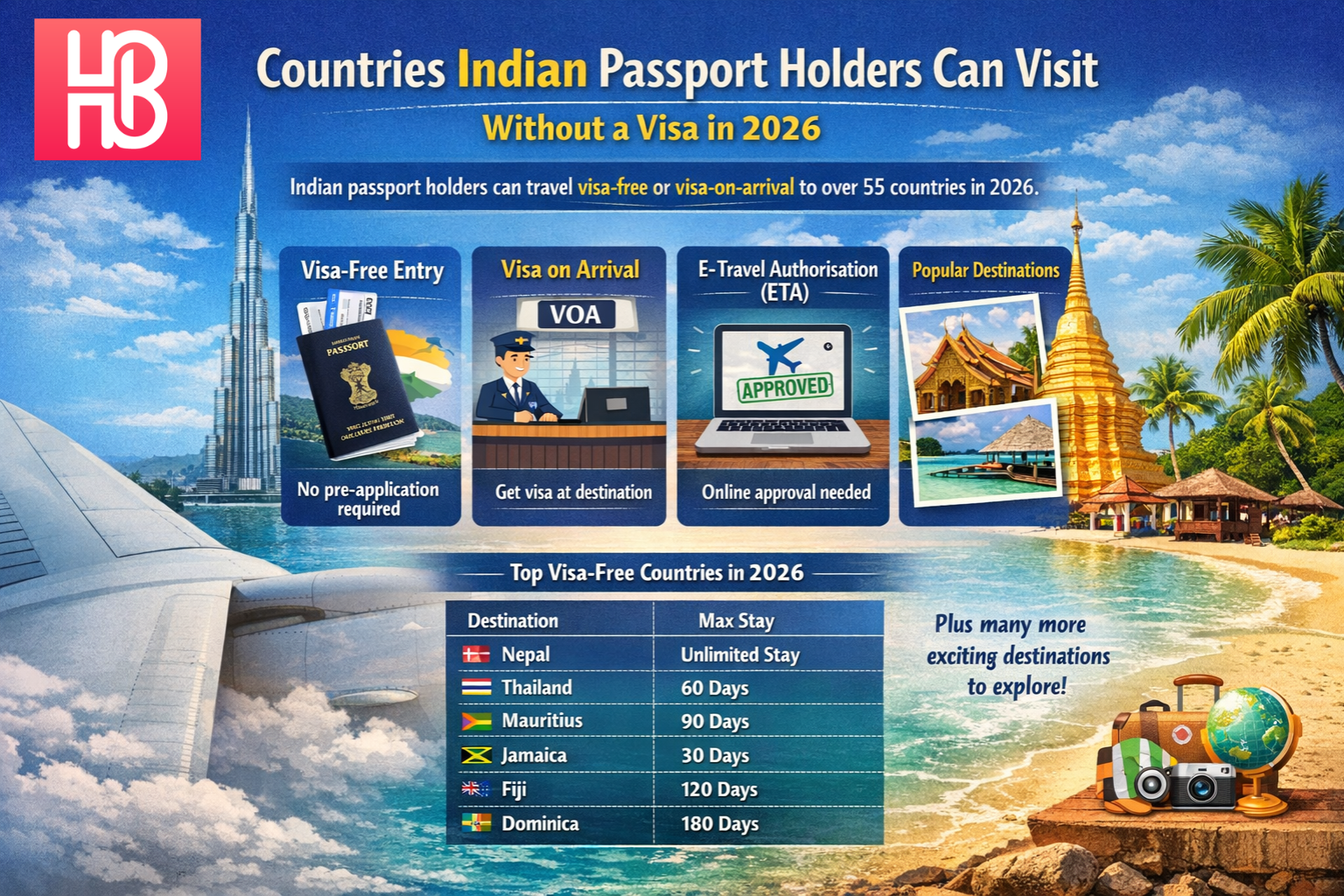
The good news in 2026 is that the answer is "no" for a growing number of destinations. Indian passport holders now have visa-free or visa-on-arrival access to around 55 to 60 countries and territories worldwide, depending on the index used for measurement. According to the Henley Passport Index 2026, India has risen to the 80th position globally — an improvement from 85th the previous year — reflecting steady progress in India's diplomatic reach and bilateral travel agreements.
This guide covers every category of visa-free access available to Indian passport holders in 2026: true visa-free entry, visa on arrival, and electronic travel authorisation. It also breaks down destinations by region, lists key stay durations, and answers the most commonly asked questions — so you can plan your international trip with full clarity.
What Does "Visa-Free" Actually Mean for Indian Passport Holders?
Before diving into the country list, it is worth understanding the three types of entry available to Indian travellers that are commonly grouped under the "visa-free" umbrella.
True visa-free entry means you can travel to a country without applying for any kind of visa in advance — online or at an embassy. You simply arrive, pass through immigration, and your passport is stamped. Countries like Nepal, Bhutan, Mauritius, and Thailand fall into this category for Indian citizens.
Visa on arrival (VOA) means you do not apply before leaving India, but you obtain a visa at the airport or border checkpoint of the destination country. This usually involves filling out a short form, presenting supporting documents, and sometimes paying a fee. Countries like Maldives, Indonesia, and Kenya operate on this basis for Indian travellers.
Electronic Travel Authorisation (ETA) is a pre-travel online approval that is typically quick, low-cost, and processed digitally before your departure. Sri Lanka and Myanmar currently offer this. It is different from a standard visa application in that there is no embassy visit, no interview, and usually no long wait time.
All three categories are generally considered "hassle-free" travel, which is why they are often grouped together in visa-free country lists.
Asia and the Pacific: The Strongest Region for Indian Travellers
Asia offers the widest and most convenient range of visa-free or easy-entry destinations for Indian passport holders, and many of these are also among the most popular holiday destinations from India.
Nepal remains the most accessible international destination for Indians. There is no visa requirement and no formal entry fee. Indian citizens can enter using a passport or even a voter ID card, making it ideal for both short getaways and extended stays. The open border means travel by road is straightforward, and the mountain landscapes, temples, and trekking routes make Nepal a perennial favourite.
Bhutan offers visa-free entry for Indian nationals for stays of up to 14 days. A simple entry permit is issued on arrival at Paro Airport or at the land border. Bhutan's unique philosophy of Gross National Happiness, its pristine monasteries like Tiger's Nest, and its strict commitment to low-impact tourism make it an exceptional and uncrowded destination.
Thailand allows Indian passport holders to enter visa-free for up to 60 days, with a possible extension of 30 additional days. This is one of the most significant recent upgrades in travel access for Indians. Bangkok, Chiang Mai, Phuket, and Koh Samui are all accessible without prior visa arrangements — a major benefit for one of the most popular travel destinations in Southeast Asia.
Malaysia offers visa-free entry for Indian nationals for stays of up to 30 days, a policy that has been extended through December 2026. Kuala Lumpur's Petronas Towers, the beaches of Langkawi, Batu Caves, and the rainforests of Borneo are all now reachable without any pre-travel visa process.
Sri Lanka recently introduced visa-free entry for Indian citizens for up to 30 days, a policy in effect from October 2024 until further notice. Sri Lanka's ancient ruins, tea estates in the hill country, whale watching in Trincomalee, and unspoiled beaches make it one of the most rewarding short-haul destinations from India.
Macao (SAR China) allows Indian nationals visa-free entry for up to 30 days. This compact but fascinating territory blends Portuguese colonial architecture with modern casino resorts and traditional Chinese culture.
Hong Kong permits Indian passport holders to enter visa-free for up to 14 days, provided travellers complete a pre-arrival online registration before visiting. The city's iconic skyline, street food, shopping, and proximity to mainland attractions make it well worth the brief registration step.
Fiji offers one of the most generous stays in the Pacific — Indian passport holders can enter visa-free for up to 120 days. With its coral reefs, crystal-clear lagoons, and warm Fijian hospitality, Fiji is a spectacular long-stay destination for travellers seeking something truly different.
Indonesia offers a visa-on-arrival facility for Indian citizens allowing stays of up to 30 days. Bali remains the most visited Indonesian destination for Indians, but Yogyakarta's temples, Lombok's beaches, and the wildlife of Komodo Island are equally compelling.
Philippines allows visa-free entry for 30 days to Indian nationals who hold a valid visa or permanent residency from specific countries including Australia, Japan, Canada, the Schengen Area, Singapore, or the UK. For all others, it remains a visa-on-arrival destination with a similar straightforward process.
Cambodia, Laos, and Myanmar all offer visa-on-arrival or ETA access for Indian nationals. Each offers rich cultural and historical experiences — Angkor Wat, the Mekong River towns, and the temples of Bagan — that are accessible without a standard embassy visa process.
Indian Ocean and Africa: More Open Than You Might Think
Mauritius is one of the top honeymoon and beach holiday destinations for Indians — and Indian nationals can enter visa-free for up to 90 days. The island's turquoise lagoons, Creole cuisine, luxury resorts, and inland hiking trails make it a destination that suits both relaxation and exploration equally well.
Maldives allows Indian tourists to enter without a visa for stays of up to 90 days. No prior application is needed — simply arrive, and a free tourist visa is stamped on entry. Given the Maldives' status as one of the world's premier island destinations, this level of easy access is a significant advantage for Indian travellers.
Kenya now offers visa-free entry for Indian citizens. This is a relatively recent change that has opened up Africa's most famous safari destination to Indians without any pre-travel visa formality. The Maasai Mara, Amboseli, and the Kenyan coast are all now directly accessible.
Senegal in West Africa allows Indian nationals to enter visa-free for up to 90 days. Dakar is a vibrant, culturally rich city with a thriving music scene, historic Gorée Island, and beaches that are far less visited by Indian tourists than they deserve to be.
Rwanda offers visa-on-arrival access to Indian passport holders. Rwanda has transformed rapidly into one of Africa's most visited destinations — Kigali is modern and clean, and the gorilla trekking experiences in Volcanoes National Park are considered among the most remarkable wildlife encounters on the continent.
Ethiopia and several other East African nations also offer visa-on-arrival access, making the African continent increasingly accessible for adventurous Indian travellers.
The Caribbean: Visa-Free Paradise Islands
The Caribbean is where Indian passport holders enjoy some of the most generous visa-free access in the world, yet it remains one of the most underexplored regions for Indian tourists. This is beginning to change.
Barbados welcomes Indian passport holders for up to 90 days without a visa. Pink-sand beaches, colonial plantation houses, rum distilleries, and warm Atlantic waters define the island experience. Barbados is also famously the birthplace of global pop icon Rihanna.
Jamaica allows Indian nationals to enter visa-free for up to 30 days. Beyond its reputation for music and beaches, Jamaica offers the Blue Mountains, the Martha Brae River, colonial history, and a food culture that is among the most distinctive in the Caribbean.
Grenada, known as the Spice Isle for its nutmeg plantations, offers 90 days of visa-free access to Indian passport holders. The island's volcanic landscape, underwater sculpture parks, and relaxed pace make it ideal for travellers seeking something beyond the typical tourist circuit.
Trinidad and Tobago can be visited visa-free for up to 90 days. Port of Spain hosts one of the Caribbean's most famous carnivals, while Tobago offers pristine coral reefs and wildlife reserves that are still largely undiscovered by the Indian travel market.
Dominica — not to be confused with the Dominican Republic — is nicknamed the "Nature Island" of the Caribbean. Indian nationals can stay here for an extraordinary 180 days visa-free, making it one of the most generous entry arrangements available to Indians anywhere in the world. Dominica's boiling lakes, ancient rainforests, and whale-watching opportunities are exceptional.
Haiti permits Indian citizens to stay for up to 90 days visa-free. Despite its complex history, Haiti has remarkable natural beauty — historic citadels, beaches, and a cultural depth that reward curious travellers.
St. Vincent and the Grenadines allows visa-free entry for stays of up to 30 days. The Grenadine islands — Bequia, Mustique, and the Tobago Cays — are considered some of the most beautiful sailing waters in the world.
Other Caribbean destinations including Barbados, Grenada, Montserrat, and the British Virgin Islands round out a region that Indian travellers are only just beginning to discover.
Central America and South America
El Salvador allows Indian nationals to enter visa-free for up to 90 days. Central America's smallest country is home to ancient Mayan ruins, volcanic lakes, surf beaches on the Pacific coast, and a growing coffee tourism scene.
Kazakhstan in Central Asia has also opened up visa-free access for Indian passport holders, making it an interesting option for travellers curious about the Silk Road cities of Almaty and Astana.
The Visa-Free Countries List at a Glance
Here is a summary of the key true visa-free destinations for Indian passport holders in 2026, along with maximum permitted stays:
| Destination | Visa Status | Max Stay |
|---|---|---|
| Nepal | Visa-Free | Unlimited |
| Bhutan | Visa-Free | 14 days |
| Thailand | Visa-Free | 60 days |
| Malaysia | Visa-Free | 30 days |
| Sri Lanka | Visa-Free | 30 days |
| Mauritius | Visa-Free | 90 days |
| Maldives | Visa-on-Arrival (Free) | 90 days |
| Fiji | Visa-Free | 120 days |
| Jamaica | Visa-Free | 30 days |
| Barbados | Visa-Free | 90 days |
| Grenada | Visa-Free | 90 days |
| Dominica | Visa-Free | 180 days |
| Haiti | Visa-Free | 90 days |
| Trinidad & Tobago | Visa-Free | 90 days |
| El Salvador | Visa-Free | 90 days |
| Senegal | Visa-Free | 90 days |
| Kenya | Visa-Free | — |
| Rwanda | Visa-on-Arrival | — |
| Indonesia | Visa-on-Arrival | 30 days |
| Macao | Visa-Free | 30 days |
| Hong Kong | Visa-Free (pre-reg) | 14 days |
| Kazakhstan | Visa-Free | — |
Note: Entry rules and durations are subject to change. Always verify with the official immigration authority of the destination before travelling.
What Documents Do You Still Need for Visa-Free Travel?
Visa-free entry does not mean you can walk off a plane with nothing but your passport. Immigration officers at every destination — however relaxed the entry rules — will verify your eligibility for entry. Here is what most visa-free countries will expect you to carry:
A valid Indian passport with at least six months of remaining validity beyond your intended date of departure from that country. Many travellers have been turned back at immigration — or denied boarding — because their passport was valid but not for long enough. Check the exact requirement for each destination before you travel.
Proof of onward or return travel. A confirmed return ticket or an onward booking to another destination is almost universally required as evidence that you intend to leave within the permitted stay period.
Confirmed accommodation details. A hotel booking confirmation, an invitation letter from a host, or proof of where you will be staying is commonly requested.
Proof of sufficient funds. Some destinations require evidence that you can support yourself financially during your stay — bank statements, credit card details, or a combination.
Travel insurance. While not mandatory at every destination, travel insurance is strongly recommended and is required entry documentation in some countries. It covers medical emergencies, trip cancellations, and unexpected situations that can arise when you are far from home.
Bonus: Indian Travellers with Valid US, UK, or Schengen Visas Get Extra Access
This is one of the lesser-known benefits that can significantly expand your travel options. Indian passport holders who carry a valid multiple-entry visa issued by the United States, the United Kingdom, or a Schengen Area country are eligible for visa-free or simplified entry into several additional destinations that would otherwise require a visa.
Countries that extend this benefit to Indians with valid US visas include Antigua and Barbuda, Albania, Georgia, Mexico, Panama, Peru, the Philippines, and several others. Countries accessible with a valid UK multi-entry visa include Albania, Georgia, Mexico, Montenegro, and several Caribbean territories. Always verify the specific conditions and current validity requirements before relying on this arrangement.
How to Plan a Visa-Free International Trip from India
Once you have identified your destination, the practical steps to planning a smooth visa-free trip are straightforward — but a few details matter.
Book your flights early. Visa-free status removes the visa processing step, but affordable international flights still need to be secured well in advance. Searching across multiple dates and checking connecting routes can significantly reduce the cost of travel to destinations like Barbados, Fiji, or Kenya that do not have direct flights from most Indian cities. If you are looking to compare international flight fares before confirming a destination, having all your options in one place saves both time and money.
Verify entry requirements 2 to 4 weeks before departure. Visa policies can change with little public notice. What was visa-free in January may have conditions attached by March. Always check the official immigration website of the destination country before you travel — not just a travel blog or aggregator.
Check passport validity carefully. The six-month validity rule catches more travellers than any other requirement. If your passport expires within six months of your planned return date, renew it before booking.
Plan for the return journey. Most immigration officers will ask for a confirmed return ticket at the time of entry. Book your return before you leave, even if you intend to extend your stay or alter plans later.
Respect maximum stay limits. Overstaying — even by a day or two — can result in fines, detention, and a black mark on your travel record that complicates future visa applications globally. Set a calendar reminder for your departure deadline.
Will India's Visa-Free Access Expand Further?
The trend since 2022 has been steadily positive. India's rise from 85th to 80th on the Henley Passport Index in a single year reflects active diplomatic effort to expand travel access for Indian citizens. Several countries — Thailand and Sri Lanka among the most notable — have added or extended visa-free arrangements specifically for Indian nationals in the past 12 months.
Travel experts and analysts suggest that India's expanding global economic footprint, its growing middle class of outbound travellers, and its strengthening bilateral relationships across Southeast Asia, Africa, and the Caribbean are likely to result in additional visa-free arrangements in the coming years.
Countries in East Africa, the Middle East, and potentially parts of Eastern Europe are being cited as areas where new agreements may emerge. For Indian travellers, this means the destination list should continue to grow.
Frequently Asked Questions
How many countries can Indian passport holders visit without a visa in 2026?
Depending on the index and methodology used, Indian passport holders have visa-free or visa-on-arrival access to approximately 55 to 62 countries and territories in 2026. The Henley Passport Index places India at 80th globally with access to around 55 destinations, while other indexes that include more territory-level entries report slightly higher numbers.
Is visa-free entry guaranteed for Indian citizens?
No. Visa-free access means you do not need to apply for a visa in advance, but it does not guarantee entry. Immigration officers at the destination country can still deny entry if you do not carry required documents, if your passport does not have sufficient validity, or if you cannot demonstrate adequate funds or onward travel plans.
Can I work in a country I enter on a visa-free basis?
Generally, no. Visa-free and visa-on-arrival access is typically granted for tourism, short visits, or transit only. Working in a country — even short-term — usually requires a separate work visa or permit regardless of the visa-free status of your passport.
Which visa-free countries are best for Indian honeymooners?
Mauritius, Maldives, Sri Lanka, Thailand, and Bali (Indonesia via visa on arrival) are consistently popular honeymoon destinations among Indian couples. All offer natural beauty, luxury accommodation options, and straightforward entry for Indian nationals.
Which visa-free countries are best for Indian families with children?
Thailand, Malaysia, Mauritius, and Nepal are highly recommended for families. All are well-connected from major Indian cities with direct or one-stop flights, offer family-friendly accommodation and activities, and provide easy entry without prior visa arrangements.
Do children with Indian passports also get visa-free entry?
Yes. Visa-free entry applies to all valid Indian passport holders regardless of age, including minors. However, children travelling without both parents may be required to carry additional documentation such as a parental consent letter in some countries.
Is the Maldives really free to enter for Indians?
Yes. Indian citizens receive a free tourist visa on arrival in the Maldives for stays of up to 90 days. There is no prior application and no visa fee. You will, however, need a return ticket and proof of confirmed accommodation.
Which African countries can Indians visit without a visa?
Kenya is now visa-free for Indian passport holders. Rwanda, Ethiopia, Senegal, Mauritius, and several other African nations offer visa-on-arrival access. Africa is significantly more open to Indian travellers than many people realise.
Does Nepal really have no entry requirements for Indians?
Indian citizens can enter Nepal using a passport or a valid voter identity card. No visa is required, and there is no entry fee. The open border between the two countries means Indian nationals can enter Nepal at any time without any pre-travel formality, which makes it the most accessible international destination from India by a significant margin.
What is the longest I can stay in a visa-free country on an Indian passport?
Dominica in the Caribbean allows Indian nationals to stay for up to 180 days on a visa-free basis — making it the most generous stay duration currently available. Fiji allows 120 days, Mauritius 90 days, and several Caribbean nations also permit 90-day stays.
Final Thoughts
The Indian passport is opening more doors than ever before in 2026. From the beaches of Barbados and the safaris of Kenya to the temples of Bhutan and the islands of the Maldives, there is now a genuinely wide and diverse range of international destinations that Indian citizens can explore without the time and effort of a visa application.
The key to making the most of this access is preparation — knowing exactly which type of entry applies to your destination, ensuring your passport has sufficient validity, carrying the right documents, and booking travel with enough lead time to get the best fares.
At HolidayBreakz India, the goal is to make that planning as seamless as possible — from comparing flights across visa-free destinations to reviewing fare conditions and baggage policies before you confirm a booking. When you know where you can go freely, the only thing left to decide is where you want to go first.
Travel light, travel smart, and let your Indian passport take you further in 2026.
Disclaimer: Visa rules, stay durations, and entry conditions are subject to change without notice. Always verify current requirements through the official immigration authority or embassy of your destination country before booking or travelling.

 English
 Arabic
 French
 Portuguese
 Deutsch
 Turkish
 Dutch
Dutch
 Italiano
 Russian
 Romaian
 Portuguese (Brazil)
 Greek
Greek