Parkinson’s disease is a progressive neurological condition that primarily affects movement. Among the most noticeable challenges are changes in gait and posture, which can significantly impact daily mobility and independence. Individuals may experience a shuffling walk, stooped posture, or difficulty initiating steps. Parkinson's Disease Rehabilitation provides structured interventions to improve walking patterns, enhance balance, and reduce the risk of falls. Through targeted therapy, individuals can regain confidence in movement and maintain functional independence.
Understanding Gait Challenges in Parkinson’s Disease
Gait abnormalities are common in Parkinson’s disease. Symptoms such as reduced step length, slowed walking speed, and difficulty turning can make daily activities more challenging. Parkinson's Disease Rehabilitation begins by assessing the individual’s walking patterns to identify specific difficulties. Understanding these challenges is essential for creating an effective rehabilitation plan that addresses both safety and mobility.
Posture Training for Better Alignment
Maintaining proper posture is critical for balance and efficient movement. Parkinson's Disease Rehabilitation incorporates exercises that strengthen core muscles, improve spinal alignment, and reduce stiffness. Posture training not only enhances appearance but also supports better walking mechanics and reduces strain on joints. Correct alignment allows for smoother, more controlled movement and decreases the likelihood of falls.
Gait Training Techniques
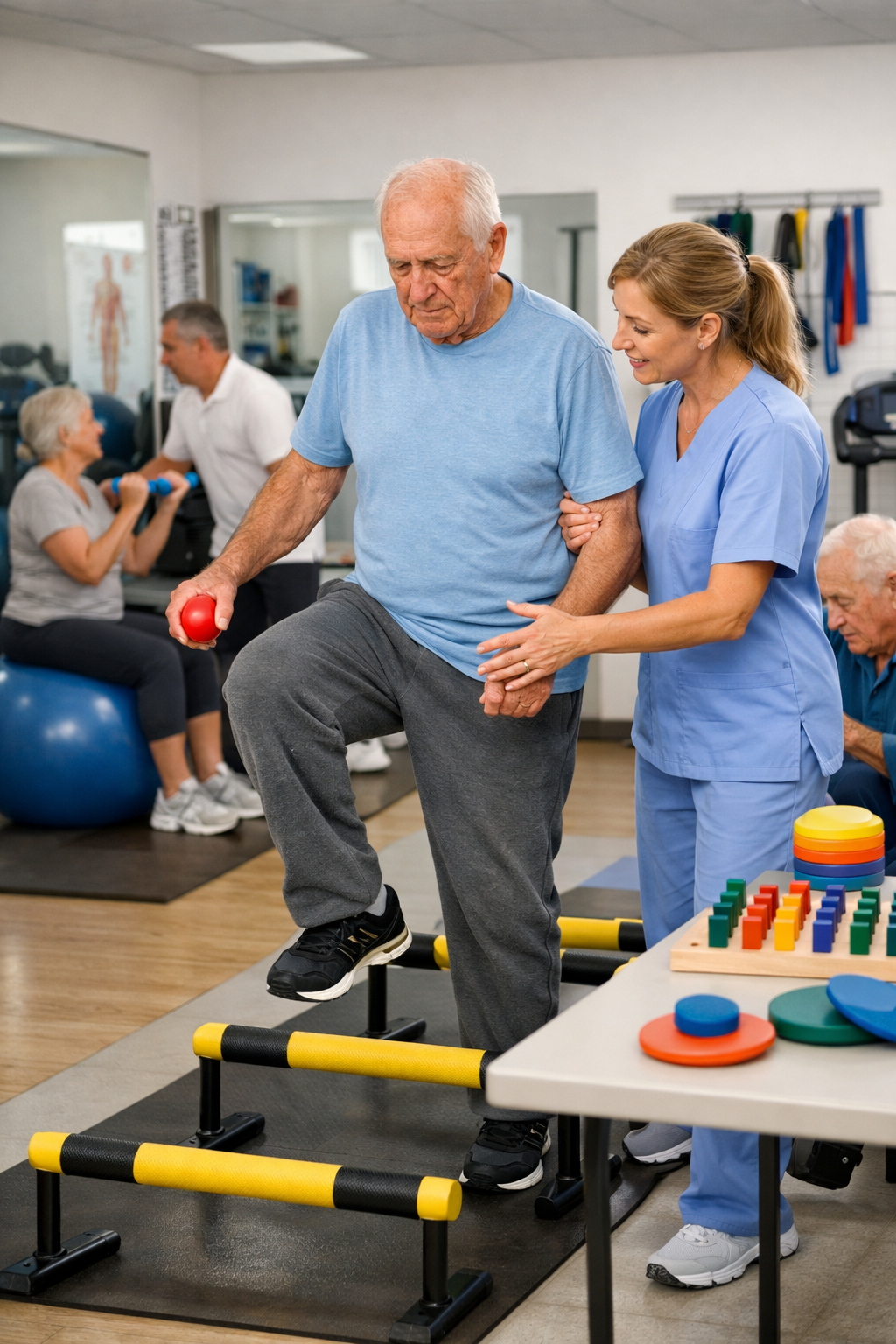
Gait training is a central component of Parkinson's Disease Rehabilitation. Therapists use targeted exercises to improve stride length, walking speed, and rhythm. Techniques may include stepping exercises, walking over obstacles, and practicing turns. Repetitive gait training helps retrain the brain and body to coordinate movements more effectively, leading to safer and more efficient walking.
Balance and Stability Exercises
Balance is often compromised in Parkinson’s disease, increasing the risk of falls. Parkinson's Disease Rehabilitation includes exercises that focus on stability, weight shifting, and controlled movements. Activities such as standing on one leg, side stepping, and using balance boards help strengthen stabilizing muscles. Improved balance not only enhances mobility but also builds confidence in performing daily activities independently.
Strengthening Lower Limbs for Mobility
Strong leg muscles are essential for walking and maintaining posture. Parkinson's Disease Rehabilitation emphasizes lower limb strengthening through exercises such as squats, leg lifts, and resistance training. Strengthening these muscles improves gait, supports proper alignment, and enhances overall endurance. Well conditioned legs contribute to safer and more fluid movement.
Incorporating Functional Activities
Functional training involves practicing real life activities that mimic daily movements. Parkinson's Disease Rehabilitation often includes exercises like stepping onto raised surfaces, navigating stairs, or walking while carrying objects. These activities help individuals adapt to real world scenarios and maintain independence in their daily routines.
Cueing and Rhythm-Based Techniques
Using external cues can improve walking patterns in Parkinson’s disease. Parkinson's Disease Rehabilitation incorporates techniques such as rhythmic auditory cues or visual markers to guide steps and enhance coordination. These strategies help overcome freezing episodes and promote smoother, more consistent gait. Rhythm-based training also improves timing and reduces hesitation while walking.
Consistency and Long-Term Practice
Consistent practice is key to achieving lasting improvements. Parkinson's Disease Rehabilitation encourages daily exercises and ongoing gait and posture training. Repetition reinforces neural pathways and ensures that the benefits of therapy translate into real-life mobility. Long-term commitment helps maintain independence and reduces the risk of falls over time.
Benefits of Gait and Posture Focused Rehabilitation
Focusing on gait and posture through Parkinson's Disease Rehabilitation offers wide ranging benefits. Individuals experience improved walking ability, increased confidence, reduced fall risk, and greater independence. Enhanced mobility also supports participation in social and recreational activities, contributing to overall quality of life.
Conclusion
Parkinson's Disease Rehabilitation plays a vital role in improving gait, posture, and overall mobility. Through targeted exercises, balance training, and functional practice, individuals can maintain independence and move safely with confidence. Buddhi Clinic offers specialized Parkinson's Disease Rehabilitation programs that focus on optimizing mobility, helping patients lead active and fulfilling lives.



 English
 Arabic
 French
 Spanish
 Portuguese
 Deutsch
 Turkish
 Dutch
Dutch
 Russian
 Romaian
 Portuguese (Brazil)
 Greek
Greek