

What is Dental CBCT and How Does It Work?
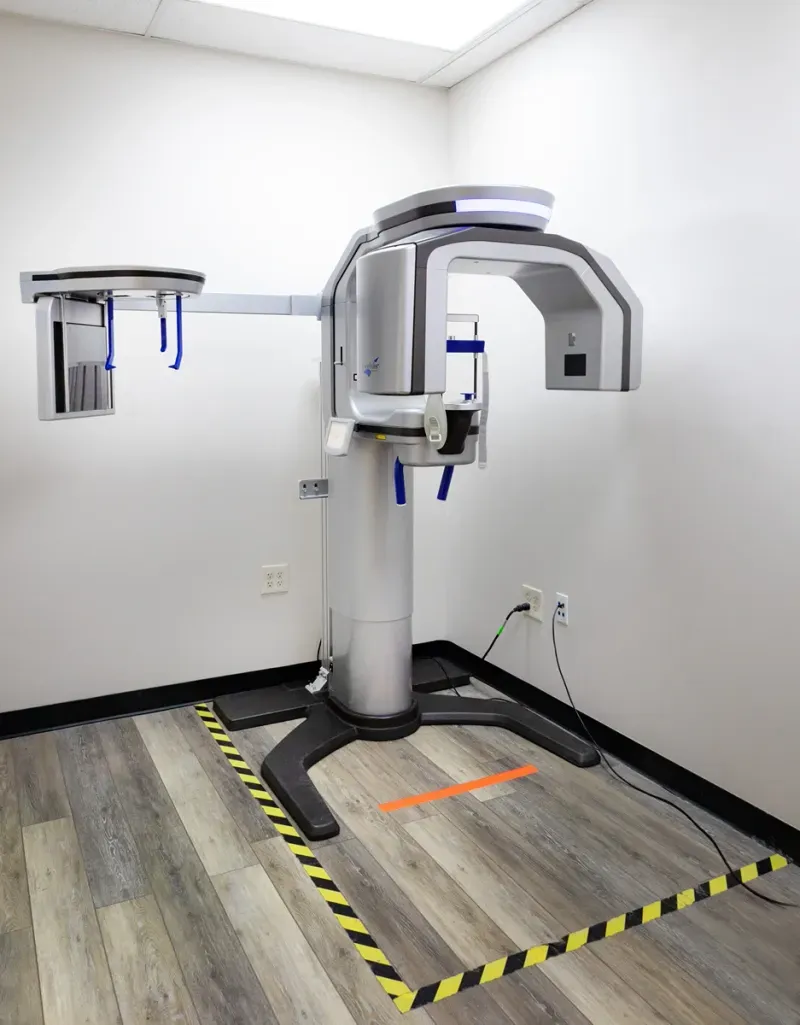
Dental imaging technology has advanced rapidly over the past decade, giving dentists and specialists better tools for diagnosis and treatment planning. One of the most powerful imaging technologies in modern dentistry is cone beam computed tomography (CBCT). Dental CBCT provides detailed 3D images of the teeth, jaws, and surrounding structures, enabling more accurate assessments and safer procedures.
If you’re curious about how this technology works and its benefits, this guide will provide a complete overview of Dental CBCT and why it’s becoming a critical tool for dental care.
What is dental CBCT?
Dental CBCT is a specialized type of X-ray that captures three-dimensional images of the oral and maxillofacial region. Unlike traditional dental X-rays, which provide only flat, two-dimensional images, CBCT scans create detailed 3D representations of teeth, bone, nerves, and soft tissues.
This advanced imaging technology allows dentists to analyze the structure and condition of your mouth in ways that conventional X-rays cannot. Patients considering dental CBCT in Tempe, AZ, often find that it offers peace of mind and clarity when planning complex dental procedures.
How Does Dental CBCT Work?
Dental CBCT works by rotating an X-ray source and detector around the patient’s head, capturing multiple images from different angles. These images are then compiled by computer software to create a complete 3D model of the oral structures.
The process is quick, usually taking less than a minute, and is non-invasive. Patients remain seated or standing during the scan, depending on the equipment used. The result is a high-resolution 3D image that allows dentists to view teeth, bone density, sinus cavities, and nerve pathways in precise detail.
Dental CBCT in Arizona is particularly valuable for planning procedures like dental implants, root canals, and orthodontic treatments, where understanding the exact anatomy is critical.
Advantages of Dental CBCT
The use of dental CBCT provides several significant advantages over traditional imaging methods.
1. Accurate Diagnosis
With 3D imaging, dentists can detect dental problems that may not be visible on standard X-rays, such as bone defects, impacted teeth, or jaw joint issues. This ensures a more accurate diagnosis and better treatment planning.
2. Enhanced Treatment Planning
Dental CBCT allows dentists to measure bone density, evaluate nerve locations, and plan surgical procedures with precision. This is especially important for dental implants, as precise placement reduces the risk of complications.
3. Reduced Need for Exploratory Surgery
Because CBCT scans reveal detailed internal structures, dentists can avoid unnecessary exploratory procedures. This minimizes patient discomfort and shortens recovery times.
4. Improved Patient Communication
3D images make it easier for dentists to explain conditions and treatment options. Patients can visually understand their dental health and make informed decisions about their care.
5. Lower Radiation Exposure Compared to Medical CT
Although CBCT involves radiation, the dosage is generally much lower than a traditional medical CT scan. This makes it a safer option for routine dental imaging when clinically necessary.
Common Uses of Dental CBCT
Dental CBCT has a wide range of applications, benefiting both patients and dental professionals.
1. Dental Implant Planning
One of the most common uses of CBCT is planning for dental implants. The 3D scan shows bone volume, density, and nerve locations, ensuring implants are placed accurately and safely.
2. Evaluation of Impacted Teeth
Wisdom teeth and other impacted teeth can be precisely located with CBCT. This information is crucial for oral surgeons to perform safe extractions.
3. Orthodontic Assessment
Orthodontists use CBCT to examine tooth alignment, jaw structure, and airway space. This helps in developing effective treatment plans for braces or other corrective procedures.
4. Endodontic Treatment
For root canal procedures, CBCT provides a clear view of complex root structures and canals, improving the chances of successful treatment.
5. Temporomandibular Joint (TMJ) Analysis
CBCT scans are valuable for assessing TMJ disorders by providing detailed images of the joint and surrounding bones.
What to Expect During a Dental CBCT Scan
Patients undergoing dental CBCT in Tempe, AZ, can expect a quick and comfortable experience. Here’s what typically happens:
- Preparation: Patients may be asked to remove jewelry, glasses, or dental appliances.
- Positioning: You’ll sit or stand in the CBCT machine, with your head stabilized to prevent movement.
- Scanning: The machine rotates around your head, capturing multiple images in under a minute.
- Image Review: The dentist reviews the 3D images to plan treatment or diagnose conditions.
Most patients experience little to no discomfort during the scan. Because the process is non-invasive and rapid, it’s suitable for adults and children alike.
Safety and Considerations
Dental CBCT is generally considered safe for most patients. The radiation exposure is relatively low, and modern machines use advanced technology to minimize risk.
However, CBCT is usually recommended only when clinically necessary. Pregnant patients and individuals with certain health concerns should discuss alternatives with their dentist.
Patients considering dental CBCT in Arizona should always consult a qualified dental professional to ensure the scan is appropriate for their specific needs.
How Dental CBCT Improves Outcomes
By providing a detailed 3D view of the oral structures, Dental CBCT enhances diagnostic accuracy, reduces risks during surgery, and improves overall treatment outcomes. Dentists can identify potential issues before they become serious, tailor treatment plans to the individual, and monitor progress over time.
This level of precision is especially valuable for patients undergoing complex procedures like implant placement, root canals, or corrective jaw surgery.
Conclusion
Dental CBCT represents a significant advancement in dental imaging, offering benefits that go far beyond traditional X-rays. Its ability to provide detailed, accurate, and three-dimensional views of oral structures makes it an essential tool for modern dentistry.
For patients seeking dental CBCT in Tempe, AZ, this technology ensures safer procedures, more accurate diagnoses, and better-informed treatment plans. Similarly, those considering Dental CBCT in Arizona can take advantage of cutting-edge imaging to improve dental outcomes and maintain long-term oral health.
Whether you’re planning dental implants, dealing with impacted teeth, or exploring orthodontic treatment, Dental CBCT provides the clarity and precision needed for optimal dental care. By choosing a practice equipped with this advanced technology, you’re investing in safer, more effective, and personalized treatment.

 English
 Arabic
 Spanish
 Portuguese
 Deutsch
 Turkish
 Dutch
Dutch
 Italiano
 Russian
 Romaian
 Portuguese (Brazil)
 Greek
Greek