

SAP Analytics Cloud Trends in 2026: Insights from Top IT Solution Providers
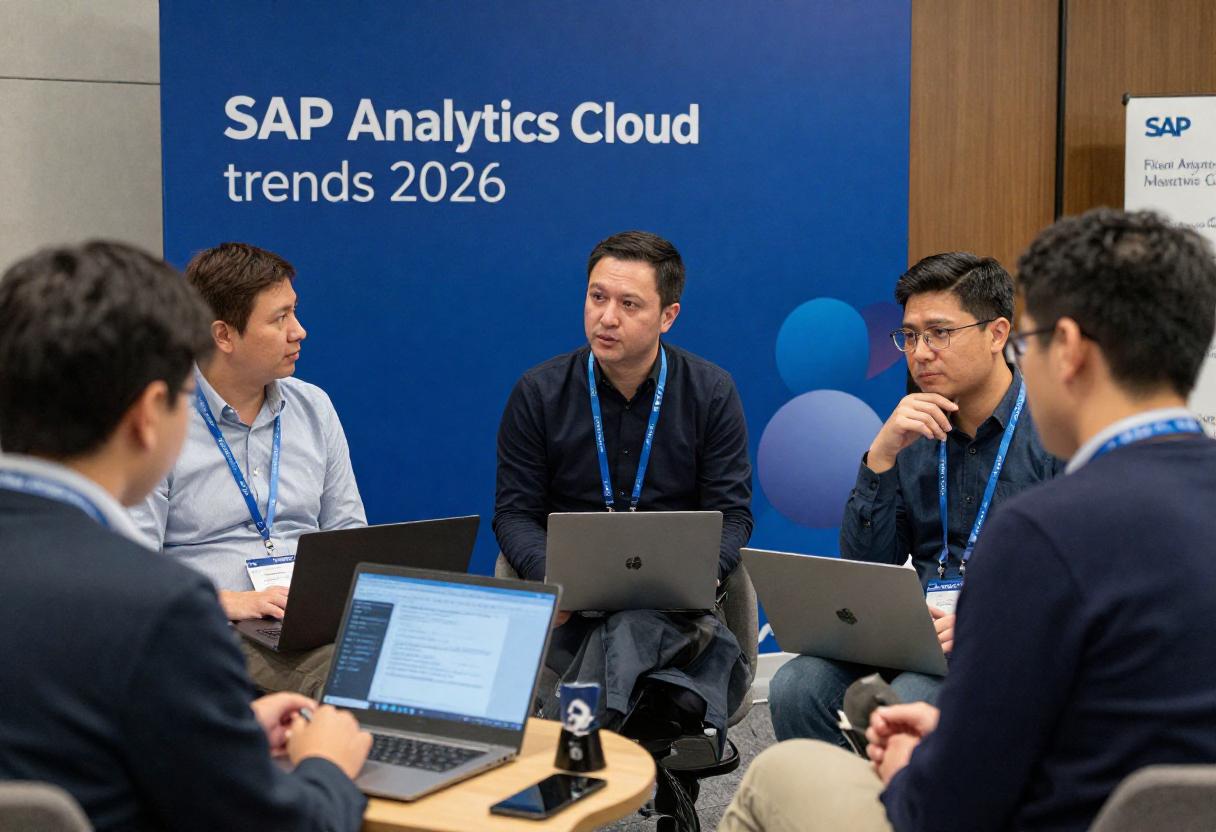
Businesses today generate enormous amounts of data every minute, but the real challenge lies in transforming that raw information into actionable insights. This is where SAP Analytics Cloud is gaining serious momentum in 2026. As organizations accelerate their digital transformation journeys, many are turning to modern analytics platforms that unify business intelligence, planning, and predictive analytics in a single environment. According to industry insights, SAP’s analytics ecosystem now integrates advanced AI capabilities, enabling companies to automate reporting, identify hidden data patterns, and make faster strategic decisions.
For enterprises working with IT Support Providers, SAP Analytics Cloud is no longer just another business intelligence tool—it has become a central hub for decision-making. Leading IT solution providers are helping organizations deploy this platform to streamline data workflows, reduce dependency on fragmented analytics tools, and unlock predictive capabilities that were once accessible only to data scientists. In 2026, the focus has shifted from simple dashboards to intelligent, AI-driven insights that help leaders plan proactively rather than reactively.
The Rise of AI-Driven Analytics
One of the most notable trends shaping SAP Analytics Cloud in 2026 is the rapid adoption of artificial intelligence within enterprise analytics systems. Modern organizations expect analytics tools to go beyond static visualizations. They want systems capable of detecting anomalies, forecasting trends, and recommending actions automatically. SAP’s analytics ecosystem supports this shift through machine-learning powered features that uncover patterns and relationships within complex datasets.
From financial forecasting to supply chain optimization, AI-driven analytics is changing how organizations interpret their data. Instead of manually exploring dashboards, business users can now ask natural-language questions and receive instant insights. Large dataset analysis takes a lot less time thanks to this capability. This change allows IT teams to concentrate more on strategic projects rather than repetitive reporting duties for businesses that work with TOP IT Support Providers. As a result, decision-making across departments is quicker and more flexible.
Integrated Planning and Analytics
Another major trend highlighted by leading IT consultants is the integration of business planning with analytics. Traditionally, organizations relied on separate tools for financial planning, operational forecasting, and data visualization. This fragmented approach often caused delays and inconsistencies in decision-making. SAP Analytics Cloud addresses this challenge by combining analytics and planning within a unified cloud platform.
With integrated planning, businesses can simulate different scenarios and immediately understand their potential impact. For example, finance teams can analyze revenue forecasts while supply chain managers evaluate operational constraints within the same system. TOP IT Support Providers often recommend this integrated approach because it improves collaboration between departments. Teams can align their strategies using shared data models and real-time insights, ensuring that everyone works toward the same business objectives.
Real-Time Data Connectivity and Cloud Integration
Data accessibility has become a critical factor in enterprise analytics. In 2026, organizations demand real-time access to information from multiple data sources, including ERP systems, cloud databases, and third-party platforms. SAP Analytics Cloud is designed to support this need by enabling live connectivity with systems such as SAP S/4HANA and various external databases.
This capability allows businesses to analyze live operational data without duplicating or moving it unnecessarily. For companies partnering with TOP IT Support Providers, this means faster analytics deployments and improved data governance. IT teams can build scalable data architectures where analytics tools directly connect to trusted data sources. As a result, decision-makers gain immediate insights into business performance, enabling them to respond quickly to market changes.
Enhanced Collaboration and Data Governance
Collaboration has become a core feature of modern analytics platforms, and SAP Analytics Cloud is no exception. In 2026, organizations increasingly require tools that allow teams to share insights, comment on dashboards, and collaborate in real time. These features aid in dismantling the conventional data silos that frequently keep businesses from making the most of their information assets.
Strong data governance frameworks are equally important, according to top IT support providers. Organizations must make sure that data is accurate, safe, and compliant with regulations as more people access analytics systems. Role-based access controls and governance features offered by SAP's analytics platform enable businesses to efficiently handle sensitive data while maintaining widespread access to insights.
Predictive and Scenario-Based Decision Making
Predictive analytics is another area where SAP Analytics Cloud continues to evolve. Businesses no longer want to rely solely on historical reports. Instead, they are seeking tools that help them anticipate future outcomes and plan accordingly. Modern predictive features allow organizations to run simulations, forecast demand, and evaluate potential risks before making strategic decisions.
This shift toward predictive decision-making is particularly valuable in industries such as retail, manufacturing, and finance. TOP IT Support Providers are increasingly helping enterprises implement predictive models within SAP Analytics Cloud to support advanced planning initiatives. By combining historical data with machine learning algorithms, companies can identify trends earlier and adapt their strategies more effectively.
The Growing Role of IT Solution Providers
While SAP Analytics Cloud offers powerful capabilities, successful implementation often depends on the expertise of experienced technology partners. TOP IT Support Providers play a critical role in guiding organizations through the adoption process. From system integration to data modeling and user training, these providers ensure that businesses can maximize the value of their analytics investments.
In 2026, many IT consulting firms are focusing on delivering industry-specific analytics solutions built on SAP technologies. These tailored solutions help organizations address unique operational challenges while accelerating their analytics initiatives. By leveraging the knowledge and technical expertise of these providers, businesses can deploy SAP Analytics Cloud more efficiently and achieve faster returns on investment.
Conclusion
The evolution of SAP Analytics Cloud in 2026 reflects a broader shift toward intelligent, data-driven enterprises. As AI-powered analytics, integrated planning, and real-time data connectivity become standard features, organizations are rethinking how they use data to guide their strategies. For companies aiming to stay competitive, adopting modern analytics platforms is no longer optional—it is essential.
With support from TOP IT Support Providers, businesses can successfully implement SAP Analytics Cloud and unlock the full potential of their data. From predictive forecasting to collaborative decision-making, the platform is shaping the future of enterprise analytics and helping organizations transform data into a powerful strategic asset.
For More Information:
How Opentext Services Support Compliance and Automation in SAP Business Services
How SAP Business Technology Platform Enhances SAP Service Management Capabilities
How the Right SAP Support Partner Strengthens SAP S4 HANA Operations

 English
 Arabic
 French
 Spanish
 Portuguese
 Deutsch
 Turkish
 Dutch
Dutch
 Russian
 Romaian
 Portuguese (Brazil)
 Greek
Greek