

Construction Cost Estimation Guide for Accurate Budgeting
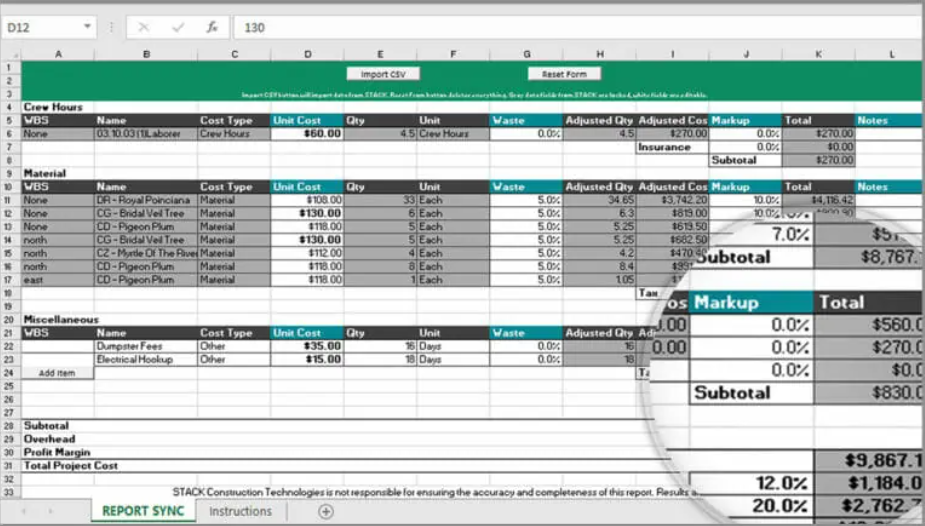
Every successful construction project begins with a clear and well-planned budget. This is where construction cost estimation plays a vital role. Whether you are building a house, managing a commercial project, or working on renovations, understanding the cost involved helps you avoid financial surprises and stay on track.
In simple terms, construction cost estimation is the process of predicting the total cost required to complete a project. From materials and labor to equipment and overheads, every detail is carefully calculated to ensure accuracy.
What is Construction Cost Estimation
Construction cost estimation is the process of calculating the expected expenses of a construction project before it begins. It includes both direct and indirect costs such as.
-
Material costs
-
Labor costs
-
Equipment expenses
-
Permits and legal fees
-
Contingency funds
A proper estimate provides a financial roadmap that guides the entire project from start to finish.
Importance of Construction Cost Estimation
Budget Planning
Accurate construction cost estimation ensures that you set a realistic budget. It helps clients and contractors understand how much money is needed and how it will be allocated.
Avoiding Cost Overruns
Without proper estimation, projects often exceed budgets. A detailed estimate reduces the chances of unexpected expenses.
Better Decision Making
When you know the costs involved, you can make informed decisions about materials, design, and project scope.
Project Approval
For investors and stakeholders, a clear estimate is essential before approving a construction project.
Types of Construction Cost Estimation
Preliminary Estimation
This is done in the early stages of a project. It provides a rough idea of the total cost based on basic information.
Detailed Estimation
A more accurate form of construction cost estimation, where every component is analyzed in detail, including materials, labor, and timelines.
Quantity Takeoff Estimation
This method focuses on calculating the exact quantity of materials required, which helps in precise budgeting.
Bid Estimation
Contractors prepare this estimate when submitting bids for projects. It includes all costs along with profit margins.
Key Components of Construction Cost Estimation
Materials
Materials are one of the biggest cost factors. Prices may vary depending on quality, location, and market conditions.
Labor
Labor costs depend on the workforce required, skill level, and project duration.
Equipment
Construction projects often require machinery and tools, which add to the overall cost.
Overheads
These include administrative expenses, utilities, and site management costs.
Contingency
A contingency budget is added to handle unexpected issues or price fluctuations.
Methods of Construction Cost Estimation
Unit Cost Method
In this method, costs are calculated per unit, such as per square foot or meter.
Analogous Estimation
This method uses data from previous projects to estimate costs for a new project.
Parametric Estimation
It uses mathematical models and historical data to calculate costs.
Bottom-Up Estimation
A detailed approach where each component is estimated individually and then summed up.
Tools and Technology in Cost Estimation
Modern tools have made construction cost estimation faster and more accurate. Digital software helps in.
-
Automating calculations
-
Reducing human error
-
Managing large datasets
-
Generating detailed reports
Platforms like Estimate lift provide advanced solutions to streamline the estimation process and improve accuracy.
Common Challenges in Construction Cost Estimation
Price Fluctuations
Material costs can change due to market conditions, affecting the overall estimate.
Incomplete Project Information
Lack of detailed plans can lead to inaccurate estimates.
Human Errors
Manual calculations increase the risk of mistakes.
Time Constraints
Rushed estimates often lack accuracy and detail.
Tips for Accurate Construction Cost Estimation
Use Reliable Data
Always base your estimates on current and accurate data.
Plan for Contingencies
Include extra funds to handle unexpected costs.
Update Estimates Regularly
Costs may change over time, so keep your estimates updated.
Use Professional Tools
Leverage platforms like Estimate lift for precise and efficient estimation.
Work with Experts
Experienced estimators can provide valuable insights and improve accuracy.
Role of Construction Cost Estimation in Project Success
A well-prepared construction cost estimation is the foundation of a successful project. It ensures that.
-
The project stays within budget
-
Resources are used efficiently
-
Deadlines are met
-
Risks are minimized
Without proper estimation, even well-designed projects can face financial and operational challenges.
Conclusion
In the construction industry, accurate budgeting is not just important it is essential. Construction cost estimation provides a clear financial plan that guides every stage of a project. From planning and design to execution and completion, it helps maintain control over costs and ensures project success.
By using modern tools like Estimate lift, following best practices, and focusing on detailed analysis, you can create reliable estimates that lead to better outcomes. Whether you are a contractor, builder, or property owner, investing time in proper estimation will save you money, time, and stress in the long run.

 English
 Arabic
 French
 Spanish
 Portuguese
 Deutsch
 Turkish
 Dutch
Dutch
 Italiano
 Russian
 Romaian
 Greek
Greek