

Automotive Spot Welder: Revolutionizing Precision Welding in Modern Manufacturing
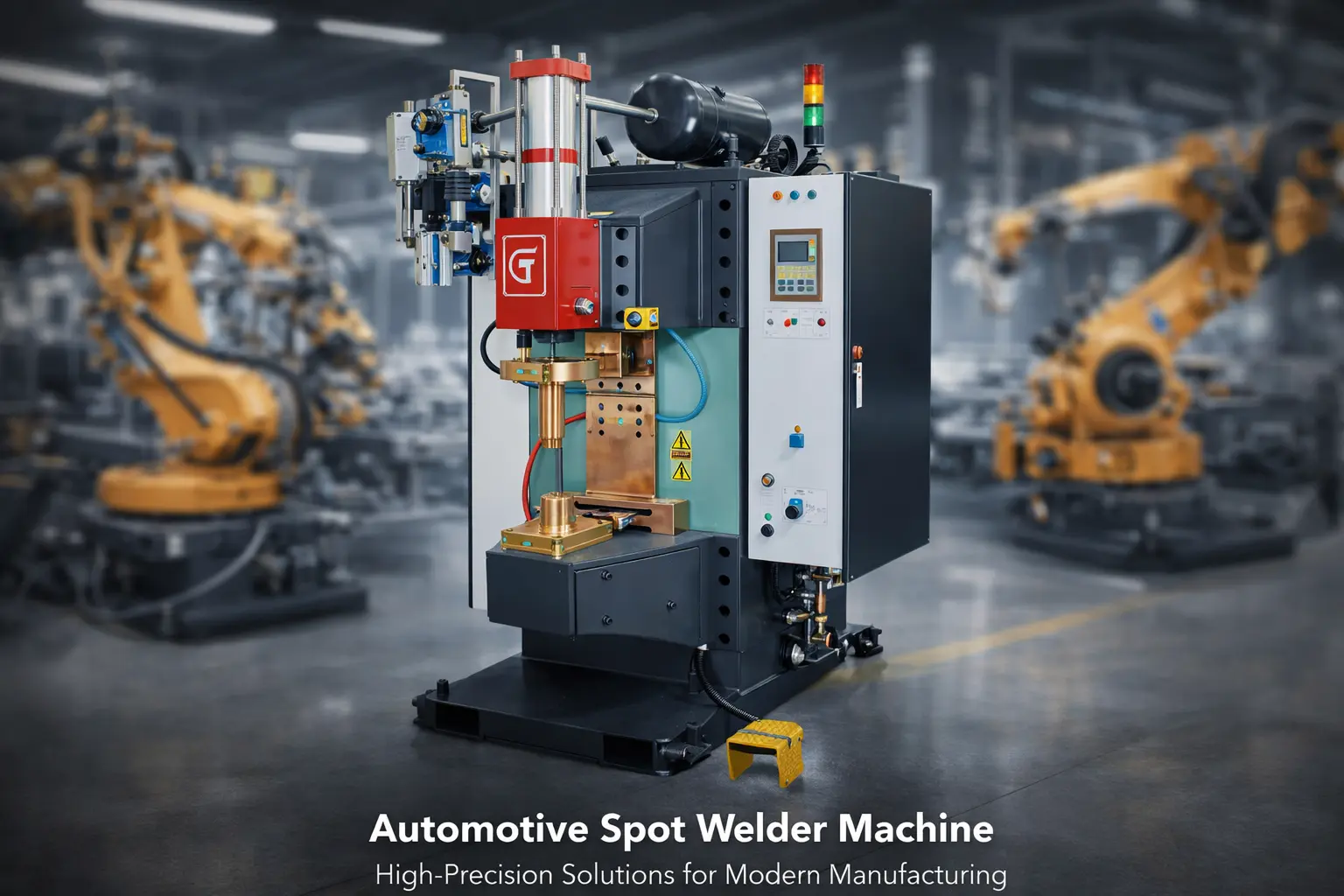
In today’s automotive industry, speed, accuracy, and repeatability are critical. Whether you’re assembling car body panels or constructing complex metal subassemblies, the right welding equipment can dramatically influence production efficiency and quality. Among the essential tools in modern manufacturing, the automotive spot welder stands out as a cornerstone technology for joining metal sheets with precision and reliability.
Heron Welder, a global leader in industrial welding and metal-joining solutions, offers a comprehensive range of spot welding machines designed to meet the exacting demands of automotive manufacturing and advanced industrial applications.
What Is an Automotive Spot Welder?
An automotive spot welder is a type of resistance welding machine that joins two or more metal sheets by applying heat generated from electrical resistance. Electrodes positioned on either side of the metal sheets deliver a controlled current, melting the metal at the contact point to create a strong, localized weld known as a “spot.”
Key Components:
- Electrodes: Copper-based tools that conduct electricity and apply pressure.
- Transformer: Steps down voltage while increasing current to deliver precise heat.
- Controller: Regulates weld time, current, and force to ensure consistent quality.
- Frame & Arm: Provides stability and access for automated or manual operation.
This process is fast, energy-efficient, and well-suited for high-volume automotive production lines.
How Automotive Spot Welding Works
Automotive spot welding relies on a combination of pressure, electrical current, and time. Here’s the step-by-step principle:
- Alignment: Metal sheets are positioned between electrodes.
- Current Flow: A high-amperage electrical pulse passes through the electrodes.
- Heat Generation: Resistance at the contact point causes the metal to melt locally.
- Pressure Application: Electrodes maintain pressure during cooling, forming a solid weld nugget.
- Weld Completion: The weld solidifies in milliseconds, leaving a strong, precise joint.
Heron’s MFDC (Medium-Frequency Direct Current) spot welders and capacitor discharge systems enable highly controlled, repeatable welds, even on thin-gauge automotive panels or aluminum alloys commonly used in lightweight vehicles.
Applications in the Automotive Industry
Automotive spot welders are essential for multiple stages of vehicle assembly:
- Body-in-White (BIW) Assembly: Joining roof panels, side panels, and chassis components.
- Structural Components: Reinforcing frames, cross-members, and pillars.
- Electrification Projects: Welding aluminum or mixed-metal battery enclosures and EV structural parts.
- Aftermarket & Specialized Vehicles: Custom fabrication, repair, and low-volume production.
Modern manufacturing demands not only reliability but also flexibility. Heron’s spot welders integrate seamlessly with automated welding cells, robotic arms, and conveyor systems, optimizing cycle times while maintaining consistent weld quality.
Comparing Spot Welding Technologies
Automotive manufacturers have choices when selecting welding systems. Understanding differences helps ensure optimal production efficiency:
| Technology | Advantages | Typical Applications |
|---|---|---|
| MFDC Spot Welding | Precise control, ideal for thin metals, energy-efficient | Passenger cars, aluminum panels |
| Capacitor Discharge (CD) Welding | Ultra-fast welds, minimal heat-affected zones | High-speed assembly lines, electrical enclosures |
| AC Transformer Spot Welding | Cost-effective, robust for mild steel | Mass-production steel body panels |
Heron offers a full spectrum of solutions, allowing OEMs and integrators to choose machines tailored to material type, thickness, and production volume.
Best Practices for Automotive Spot Welding
Maximizing weld quality and minimizing maintenance requires adherence to best practices:
- Electrode Maintenance: Regular cleaning and dressing prevent inconsistent welds.
- Proper Clamping Force: Ensures full contact without deforming sheets.
- Correct Current & Time Settings: Tailored to material type and thickness.
- Regular Calibration: Maintains repeatability across production cycles.
- Integration with Automation: Reduces human error and increases throughput.
Heron provides expert support, helping manufacturers optimize parameters and integrate customized robotic welding lines for maximum efficiency.
Why Choose Heron for Spot Welding Solutions
Heron Welder combines decades of expertise with cutting-edge technology to support automotive manufacturers worldwide. Key benefits include:
- Custom Automation: Tailored welding lines for high-volume production or specialized tasks.
- Global Service & Support: Commissioning, training, and maintenance to ensure uptime.
- Material Versatility: Machines capable of welding steel, aluminum, and hybrid assemblies.
- Innovation-Driven Design: MFDC, CD, and advanced spot welders engineered for modern industry challenges.
Whether upgrading existing production lines or designing new facilities, Heron delivers the reliability and precision required by today’s automotive OEMs.
Frequently Asked Questions (FAQs)
1. Can automotive spot welders join aluminum panels?
Yes. Heron’s MFDC spot welders provide precise heat control for thin aluminum sheets, making them ideal for EV and lightweight vehicle assembly.
2. What maintenance is required for spot welding electrodes?
Electrodes should be regularly cleaned and shaped to ensure consistent contact and prevent spatter, ensuring high-quality welds.
3. How fast can an automotive spot welder operate?
Cycle times vary based on material and thickness. Capacitor discharge welders can perform welds in milliseconds, while MFDC systems optimize speed for thin metals without compromising quality.
4. Can spot welders be integrated with robotic arms?
Absolutely. Heron’s spot welders are designed for seamless integration into automated production lines for improved throughput and repeatability.
5. What industries beyond automotive can benefit from spot welding?
Industrial appliances, aerospace, construction, and electrical enclosures all benefit from spot welding for precision metal joining.
Conclusion
In the era of high-speed, high-precision automotive manufacturing, choosing the right automotive spot welder is crucial. From body-in-white assembly to battery enclosure fabrication, Heron Welder provides robust, energy-efficient, and automated solutions that meet the demands of modern factories.
Elevate your production quality, reduce cycle times, and integrate advanced welding automation by consulting with Heron today. Request a quote or speak with our experts to design a customized welding solution tailored to your manufacturing needs.

 Arabic
 French
 Spanish
 Portuguese
 Deutsch
 Turkish
 Dutch
Dutch
 Italiano
 Russian
 Romaian
 Portuguese (Brazil)
 Greek
Greek