

Navigating the Future of the Dementia Drugs Market: Trends, Drivers, and Strategic Insights
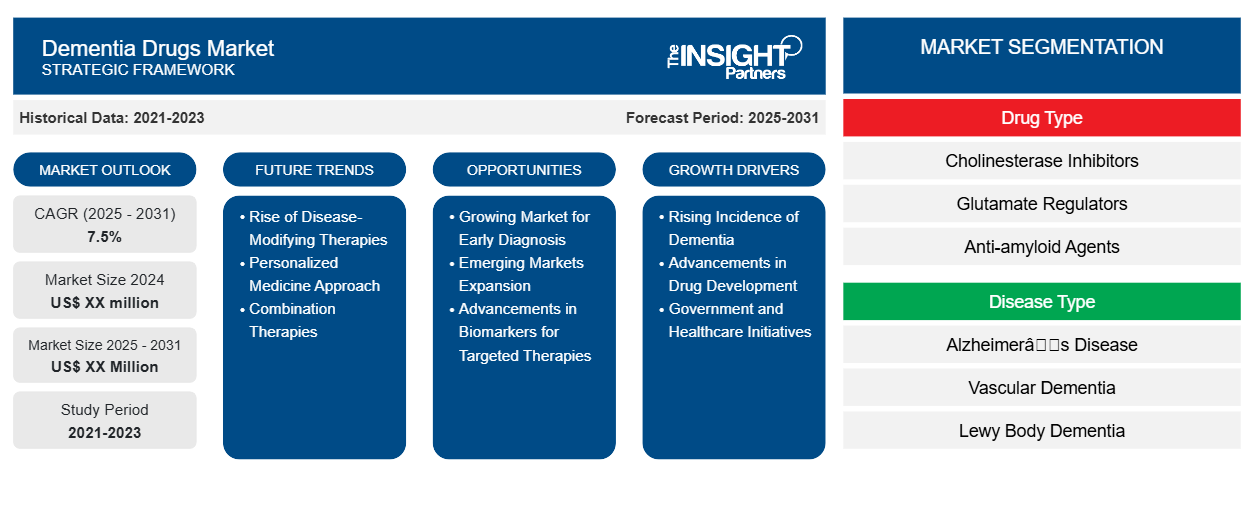
The global Dementia Drugs Market healthcare landscape is currently witnessing a significant shift as the prevalence of neurodegenerative disorders continues to rise. Among these, dementia stands out as one of the most pressing challenges for aging populations worldwide. The Dementia Drugs Market is expected to register a CAGR of 7.5% from 2025 to 2031, reflecting a period of intense clinical research and the introduction of groundbreaking therapeutic interventions. As healthcare systems strive to manage the economic and social burden of cognitive decline, the market for pharmacological treatments is expanding beyond traditional symptom management toward disease-modifying therapies.
Current market dynamics are characterized by a transition from older, generic cholinesterase inhibitors to a new era of monoclonal antibodies designed to target the underlying pathology of Alzheimer disease and related dementias. This evolution is supported by increased funding for research and development and a more streamlined regulatory environment that prioritizes unmet medical needs in the geriatric care sector. The integration of advanced diagnostics, including PET imaging and cerebrospinal fluid biomarkers, has further enabled earlier and more accurate patient identification, boosting the demand for early intervention drugs.
demands.
Download Sample Report - https://www.theinsightpartners.com/sample/TIPRE00040026
Key Drivers Fueling Market Expansion
The growth of the Dementia Drugs Market is underpinned by several critical drivers that are reshaping the industry. Foremost among these is the rapidly aging global population. According to the World Health Organization, the number of people living with dementia is projected to increase significantly over the next decade, particularly in low and middle income countries. This demographic shift ensures a consistent and growing patient pool, necessitating long term pharmacological support and innovative drug delivery systems.
Furthermore, the recent regulatory approvals of disease-modifying therapies (DMTs) have acted as a massive catalyst for market investment. For years, the market was limited to drugs that temporarily improved cognitive function without slowing the progression of the disease. The entry of therapies that target amyloid plaques and tau tangles has redefined the clinical pathway, encouraging major pharmaceutical players to reinvest in their neurobiology pipelines. This shift from symptomatic relief to potential disease modification is expected to drive high value growth throughout the forecast period.
Another significant driver is the rising awareness and improvement in diagnostic infrastructure. In developed regions, public health initiatives have focused on reducing the stigma associated with memory loss, leading to higher rates of early diagnosis. When patients are diagnosed in the prodromal or mild cognitive impairment stages, the window for effective drug intervention widens, increasing the overall volume of prescriptions. Additionally, the rise in lifestyle-related risk factors, such as cardiovascular disease and diabetes, which are linked to vascular dementia, continues to contribute to the rising incidence rates.
Strategic Landscape and Top Market Players
The Dementia Drugs Market is highly competitive, featuring a mix of established pharmaceutical giants and specialized biotechnology firms. These companies are focusing on strategic collaborations, mergers, and acquisitions to bolster their portfolios and accelerate the time to market for novel compounds. The competitive intensity is particularly high in the development of monoclonal antibodies and second generation symptomatic treatments.
The top players currently leading the market include:
- Biogen Inc.
- Eisai Co., Ltd.
- Eli Lilly and Company
- F. Hoffmann-La Roche Ltd.
- Novartis AG
- Pfizer Inc.
- Merck & Co., Inc.
- Johnson & Johnson (Janssen Pharmaceuticals)
- AstraZeneca
- Lundbeck A/S
These organizations are heavily invested in clinical trials that explore combination therapies, which aim to address the multifactorial nature of neurodegeneration. By targeting different pathways simultaneously, these players hope to achieve better efficacy rates and improve the quality of life for patients and caregivers alike.
Segmentation and Regional Outlook
From a drug class perspective, the market is segmented into Cholinesterase Inhibitors, NMDA Receptor Antagonists, and the emerging segment of Disease-Modifying Therapies. While Cholinesterase Inhibitors currently hold a substantial volume share due to their affordability and established presence, the Disease-Modifying segment is projected to experience the fastest growth in terms of revenue. This is attributed to the premium pricing of biologics and the high clinical value they offer to patients in the early stages of Alzheimer disease.
Geographically, North America currently dominates the global market share. This dominance is supported by a sophisticated healthcare infrastructure, high healthcare expenditure, and the early adoption of newly approved biologics. However, the Asia Pacific region is expected to witness the highest CAGR through 2031. Factors such as the massive population base in China and India, increasing government initiatives for elderly care, and a growing middle class with better access to specialty healthcare are driving this regional acceleration.
Challenges and Future Prospects
Despite the optimistic growth projections, the Dementia Drugs Market faces hurdles. The high cost of specialized biologics and the necessity for advanced diagnostic imaging can limit patient access, particularly in emerging economies. Furthermore, the high failure rate of clinical trials in the neuroscience space remains a risk for investors. Navigating the complex blood-brain barrier and the heterogeneous nature of dementia symptoms requires continuous innovation and substantial financial backing.
Looking ahead, the future of the market lies in personalized medicine. The industry is moving toward a precision medicine approach where drug regimens are tailored to a patient's genetic profile and specific biomarkers. As digital health tools and wearable technology become more integrated into clinical practice, real world evidence will play a crucial role in monitoring drug efficacy and safety outside of controlled trials.
In conclusion, the Dementia Drugs Market is entering a transformative phase. With a projected CAGR of 7.5% from 2025 to 2031, the market is poised for robust expansion driven by demographic shifts, regulatory breakthroughs, and a relentless focus on R&D. For stakeholders, pharmaceutical companies, and healthcare providers, the next few years will be defined by the successful commercialization of disease-modifying treatments and the expansion of care accessibility on a global scale.
Contact Information -
Email: sales@theinsightpartners.com
Phone: +1-646-491-9876

 English
 French
 Spanish
 Portuguese
 Deutsch
 Turkish
 Dutch
Dutch
 Italiano
 Russian
 Romaian
 Portuguese (Brazil)
 Greek
Greek