

Automated Airport Kiosk Market Growth Analysis
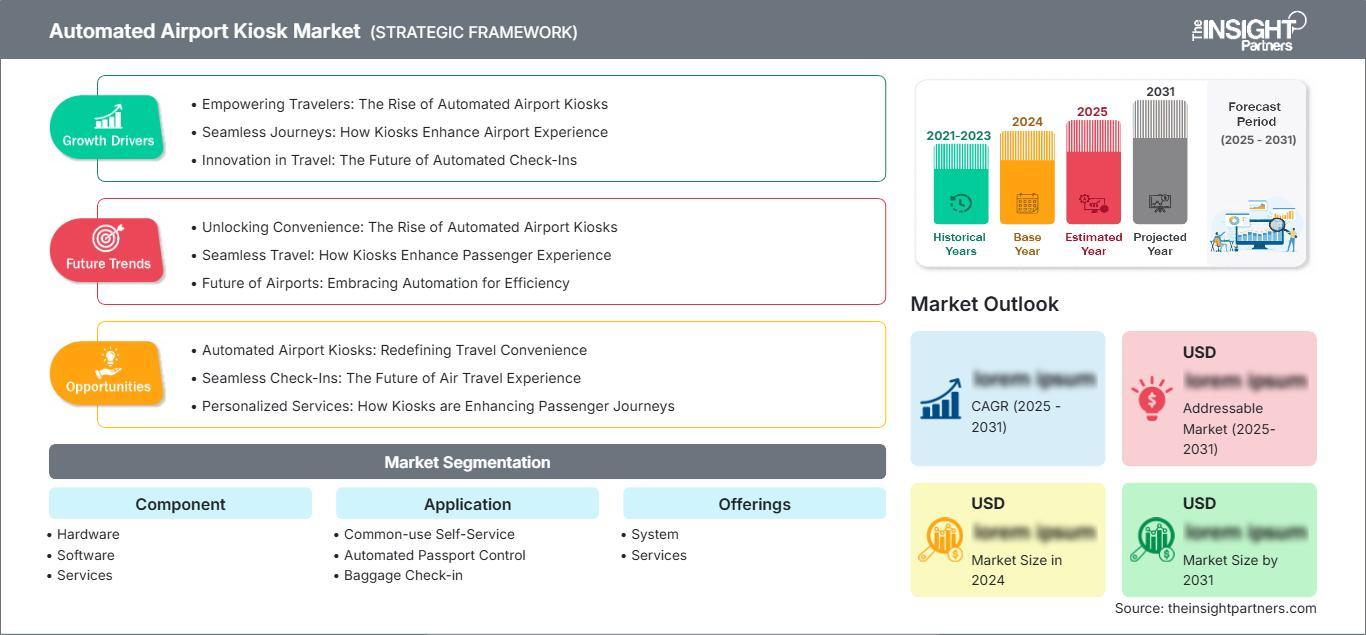
The global automated airport kiosk market aviation industry is undergoing a significant digital transformation, with the Automated Airport Kiosk Market emerging as a cornerstone of the modern "smart airport" ecosystem. These self-service terminals have evolved beyond simple check-in points to become sophisticated, multi-functional hubs that handle baggage tagging, immigration processing, and even retail interactions. As air travel continues to rebound and surpass pre-pandemic levels, the pressure on airport infrastructure to process passengers efficiently without physical expansion has made automation a strategic necessity
Download Sample Report - https://www.theinsightpartners.com/sample/TIPAD00002460
Key Market Drivers
The expansion of the automated airport kiosk market is primarily driven by the urgent need for operational efficiency. Traditional check-in desks are increasingly viewed as bottlenecks that contribute to passenger dissatisfaction and increased labor costs. Automated kiosks mitigate these issues by decentralizing the check-in and baggage drop processes, allowing airports to handle higher volumes of travelers within the same physical footprint.
Furthermore, the integration of advanced technologies like biometrics and Artificial Intelligence (AI) is a significant catalyst. Modern kiosks now utilize facial recognition to verify identities against digital passports, streamlining the Automated Passport Control (APC) process. This not only enhances security by reducing human error but also provides a "curb-to-gate" seamless experience that today’s tech-savvy travelers demand.
Rising Demand for Common-Use Self-Service (CUSS)
One of the most influential trends driving market adoption is the shift toward Common-Use Self-Service (CUSS) platforms. Unlike dedicated airline kiosks, CUSS units allow multiple carriers to share the same hardware. This versatility is particularly valuable for medium and large airports that manage dozens of international airlines. By implementing shared infrastructure, airports can optimize floor space and reduce the capital expenditure required for individual airline installations, thereby driving the hardware and software segments of the market.
Regional Market Outlook
North America currently leads the market, holding a dominant share due to the early adoption of automation and the presence of major technological innovators. The United States, in particular, has seen extensive deployment of biometric kiosks at major hubs to comply with tightening security regulations while managing some of the world’s highest domestic passenger volumes.
However, the Asia Pacific region is projected to be the fastest-growing market during the forecast period. Rapid airport modernization projects in India, China, and Southeast Asia are creating a massive demand for automated solutions. Government initiatives aimed at digitalizing public infrastructure and the construction of new "greenfield" airports in these regions provide a fertile ground for the latest generations of automated kiosks.
Leading Players in the Market
The competitive landscape of the automated airport kiosk market is characterized by continuous innovation and strategic partnerships between hardware manufacturers and software providers. The following are the top players influencing the market:
- SITA (Switzerland): A global leader in air transport communications and IT, known for its widespread CUSS and biometric solutions.
- NCR Voyix Corporation (US): A pioneer in self-service technologies, providing robust hardware and software for check-in and baggage handling.
- Amadeus IT Group SA (Spain): Focuses on cloud-based kiosk management and seamless passenger processing integration.
- Materna IPS GmbH (Germany): Specialized in automated baggage drop and self-service passenger handling solutions.
- Embross (Canada): A key provider of next-generation kiosks, recently expanding its footprint in the Middle East and Asia.
- Collins Aerospace (US): Offers comprehensive airport systems that integrate kiosks with broader flight management and security architectures.
- Kiosk Information Systems (US): Provides highly customizable hardware solutions tailored for specific airport retail and information needs.
Future Market Challenges
Despite the positive growth outlook, the market faces hurdles such as high initial investment costs and the complexity of integrating new kiosks with legacy airport systems. Cybersecurity remains a paramount concern, as kiosks process sensitive passenger data and financial information. To sustain growth, manufacturers are increasingly focusing on robust encryption and data protection protocols to build trust with both airport authorities and the traveling public.
The transition toward a fully automated passenger journey is no longer a futuristic concept but a present-day reality. As airports strive to become more resilient and passenger-centric, the automated airport kiosk market will remain a vital component of the global travel infrastructure, offering a blend of security, speed, and convenience.
Related Report :
· Interactive Kiosk Market Key Players Analysis and Growth Forecast by 2031
Contact Information -
Email: sales@theinsightpartners.com
Phone: +1-646-491-9876
Also Available in :

 Arabic
 French
 Spanish
 Portuguese
 Deutsch
 Turkish
 Dutch
Dutch
 Italiano
 Russian
 Romaian
 Portuguese (Brazil)
 Greek
Greek