

What Is a Residential VPN? Benefits of Using a VPN with a Residential IP
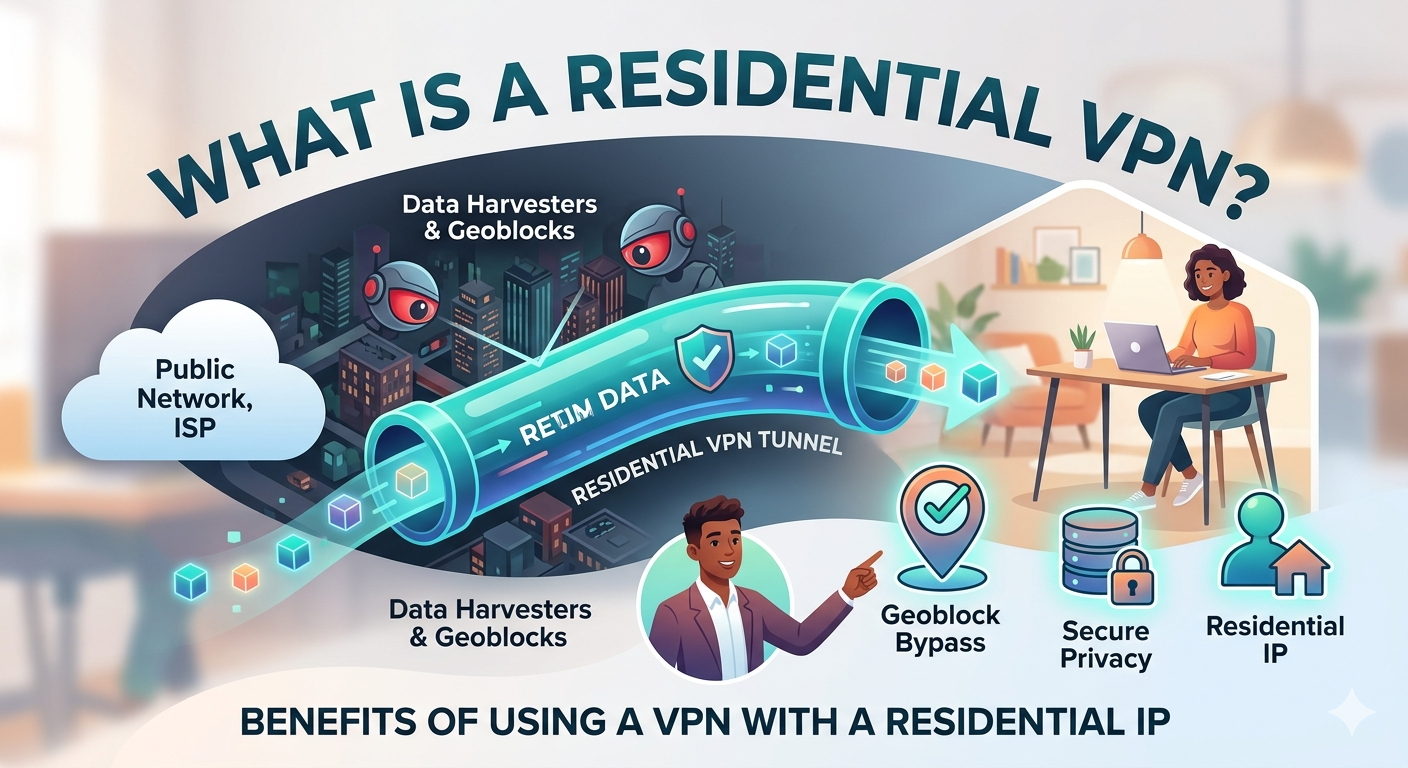
What if a stranger asks you for your personal IP address? Will you simply hand the information to the person? Well, this can be the case if you are using a Redential VPN. Now, you might think that a VPN protects your information online, so why would it ask for your IP address? This is because a residential VPN is a little different from the way traditional VPNs work, and in this blog, we will be exploring how a residential VPN works and how it is different from a traditional VPN.
Introduction to a Residential VPN
A residential VPN is a service that routes your internet traffic using a residential IP address, rather than a VPN service, as is the case with regular VPN services. This is mainly done on a peer-2-peer basic, which basically means that one user shares their IP address with another in exchange for their own.
Although you might think this concept to be fruitless, you will be surprised to know that residential VPNs have certain benefits of their own. They mainly use IP addresses of real users, rather than those from data centers, which can be breached. This is the main reason why residential VPN IP are also considered secure. Additionally, these VPNs are less prone to red flags and other restrictions, as real ISPs provide the IP addresses that are being used.
What is the main working principle of a residential VPN?
A residential VPN sends your internet traffic through someone else’s residential IP address, not your own. Usually, people join these networks by agreeing to share their own IP in return for access to others’; it’s kind of like a trade on a peer-to-peer network.
Instead of working with big, traditional VPN servers, these peer-to-peer setups use regular users’ devices. Every device becomes a mini-server, rerouting connections and swapping out your IP address while keeping things secure. It’s pretty direct.
When you sign up for a residential VPN, you’ll have to accept some sort of agreement or terms. If the idea of strangers using your IP gives you pause, definitely read the details before jumping in.
Read more here: https://vpneer.net/blog/residential-vpn/

 English
 Arabic
 French
 Spanish
 Portuguese
 Deutsch
 Turkish
 Dutch
Dutch
 Italiano
 Romaian
 Portuguese (Brazil)
 Greek
Greek