

EPR License for Battery Waste: A Complete Guide for Businesses in India
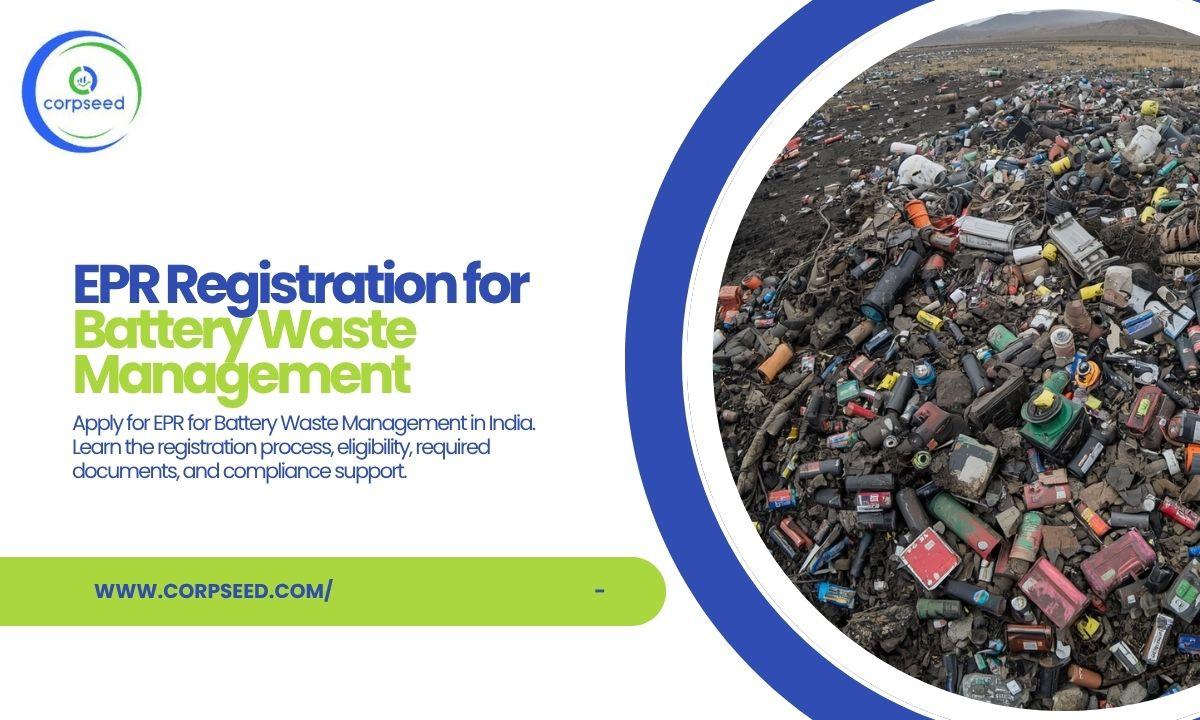
The rapid growth of batteries in India—driven by electric vehicles, renewable energy systems, and consumer electronics—has created a serious challenge: battery waste management. Improper disposal of used batteries can harm the environment and public health. To address this, the government has made it mandatory for businesses to obtain an EPR license for battery waste.
Whether you manufacture, import, or sell batteries or battery-operated products, compliance with Extended Producer Responsibility (EPR) rules is essential. This guide explains the concept, registration process, required documents, costs, and benefits in a simple and practical way.
What Is an EPR License for Battery Waste?
An EPR license for battery waste is an official authorization issued by the Central Pollution Control Board (CPCB). It allows businesses to legally manage the collection, recycling, and disposal of used batteries.
The EPR framework ensures that companies remain responsible for the entire lifecycle of the batteries they introduce into the market.
Simple explanation:
If your business sells batteries, you must ensure they are safely collected and recycled after use.
Why EPR License for Battery Waste Is Important
Used batteries contain hazardous materials such as lead, lithium, and cadmium. If these are not handled properly, they can contaminate soil, water, and air.
The EPR system helps prevent these risks by ensuring:
- Safe handling and recycling of battery waste
- Reduced environmental pollution
- Accountability for producers
- Efficient waste collection systems
- Compliance with government regulations
With the increase in EV adoption and electronic devices, managing battery waste has become more critical than ever.
Who Needs an EPR License for Battery Waste?
EPR registration is mandatory for multiple types of businesses involved in the battery supply chain.
Businesses that must register:
- Battery manufacturers operating in India
- Importers bringing batteries or battery-based products into India
- Producers or brand owners selling batteries under their brand
- Electric vehicle manufacturers using lithium-ion batteries
If your product includes a battery, EPR compliance applies to you.
Types of Batteries Covered Under EPR Rules
The EPR license for battery waste covers a wide range of battery categories.
Covered battery types include:
- Lead-acid batteries
- Lithium-ion batteries
- Nickel-cadmium batteries
- Automotive batteries
- Electric vehicle batteries
- Portable batteries used in gadgets
- Industrial batteries
- Rechargeable and non-rechargeable batteries
This means almost all battery-related businesses must comply with EPR regulations.
Legal Framework: Battery Waste Management Rules, 2022
The EPR system for batteries is governed by the Battery Waste Management Rules, 2022, introduced by the Ministry of Environment, Forest and Climate Change (MoEFCC).
Key provisions:
- Mandatory registration on the CPCB portal
- Annual recycling targets for producers
- Digital tracking of battery waste
- Environmental penalties for violations
- Ban on selling batteries without registration
These updated rules ensure better monitoring and stricter compliance.
Key Benefits of EPR License for Battery Waste
Obtaining an EPR license offers both legal and business advantages.
Benefits include:
- Legal authorization to sell batteries in India
- Enhanced brand credibility
- Compliance with environmental laws
- Reduced risk of penalties
- Improved sustainability practices
- Better business opportunities with large organizations
EPR compliance also strengthens your company’s reputation as an environmentally responsible brand.
Step-by-Step Process to Obtain EPR License for Battery Waste
The application process is fully online and handled by CPCB.
Step-by-step procedure:
- Register your business as a manufacturer, importer, or producer
- Sign up on the CPCB portal
- Fill out the application form with company and product details
- Upload required documents
- Submit an EPR action plan for waste collection and recycling
- Application review by CPCB
- Receive EPR license approval
Following the steps correctly helps avoid delays.
Documents Required for EPR License for Battery Waste
Accurate documentation is essential for successful registration.
Basic documents:
- Company PAN card
- GST certificate
- Certificate of incorporation
- Address proof
- Import-export code (if applicable)
Additional requirements:
- Battery/product details
- Brand authorization letter
- Agreement with authorized recyclers
- EPR action plan
- Sales data of batteries
Incomplete or incorrect documents can lead to rejection.
EPR Targets for Battery Waste Management
The government has set yearly recycling targets that companies must meet.
Example of EPR targets:
- Year 1 – Minimum 70% battery waste must be recycled
- Year 2 – Minimum 80% battery waste must be recycled
- Year 3 – Minimum 90% battery waste must be recycled
These targets ensure continuous improvement in battery waste recycling and environmental protection.
Common Challenges in EPR Registration
Many businesses face difficulties during the application process.
Common issues include:
- Lack of clarity about compliance rules
- Errors in documentation
- Difficulty in preparing EPR plans
- Finding authorized recyclers
- Meeting annual recycling targets
- Technical issues on the CPCB portal
These challenges often lead businesses to seek expert assistance.
Role of Consultants in EPR License Registration
Professional consultants simplify the EPR registration process.
They assist with:
- Preparing accurate documentation
- Filing applications correctly
- Creating EPR compliance plans
- Coordinating with CPCB
- Tracking application status
- Managing renewals and compliance
Internal links (for CMS use):
- EPR for Plastic Waste Management – [Insert internal link]
- EPR for E-Waste Management – [Insert internal link]
- Environmental Compliance Services – [Insert internal link]
Time Required to Get an EPR License
The approval timeline depends on document accuracy and verification.
Estimated duration:
- Documentation: 3–5 working days
- CPCB review: 15–25 working days
- Final approval: 20–30 working days
Submitting correct documents helps speed up the process.
Cost of EPR License for Battery Waste
The cost of obtaining an EPR license varies depending on business requirements.
Factors influencing cost:
- Type of business
- Volume of batteries sold
- Type of batteries
- Documentation complexity
- Consultant fees
Despite the cost, it is a necessary investment for legal compliance.
Penalties for Non-Compliance
Failure to obtain an EPR license can lead to serious consequences.
Possible penalties:
- Environmental compensation charges
- Ban on product sales
- Legal action
- Import restrictions
- Loss of business reputation
The government is actively monitoring compliance through digital systems.
Future Trends in Battery Waste Management
India is rapidly adopting electric mobility and renewable energy, increasing battery usage.
Future outlook:
- Growth in EV adoption
- Expansion of lithium-ion battery production
- Stricter environmental regulations
- Development of recycling infrastructure
- Increased digital monitoring
Businesses that comply early will gain a competitive advantage.
Frequently Asked Questions (FAQ)
1. Is EPR license for battery waste mandatory?
Yes, it is mandatory for all businesses involved in manufacturing, importing, or selling batteries.
2. Who issues the EPR license?
The Central Pollution Control Board (CPCB) issues the license.
3. How long does it take to get approval?
It usually takes 20–30 working days.
4. Do importers need EPR registration?
Yes, importers must also comply with EPR regulations.
5. What happens if a company does not comply?
Non-compliance can lead to penalties, legal action, and business restrictions.
Conclusion
The EPR license for battery waste is a crucial requirement for businesses operating in India’s battery ecosystem. It ensures responsible waste management, protects the environment, and helps companies meet legal obligations.
By understanding the process, preparing proper documentation, and following

 English
 Arabic
 French
 Portuguese
 Deutsch
 Turkish
 Dutch
Dutch
 Italiano
 Russian
 Romaian
 Portuguese (Brazil)
 Greek
Greek