

Climate Change Impact April 2026: Global Heatwaves Explained | Today’s Live International News
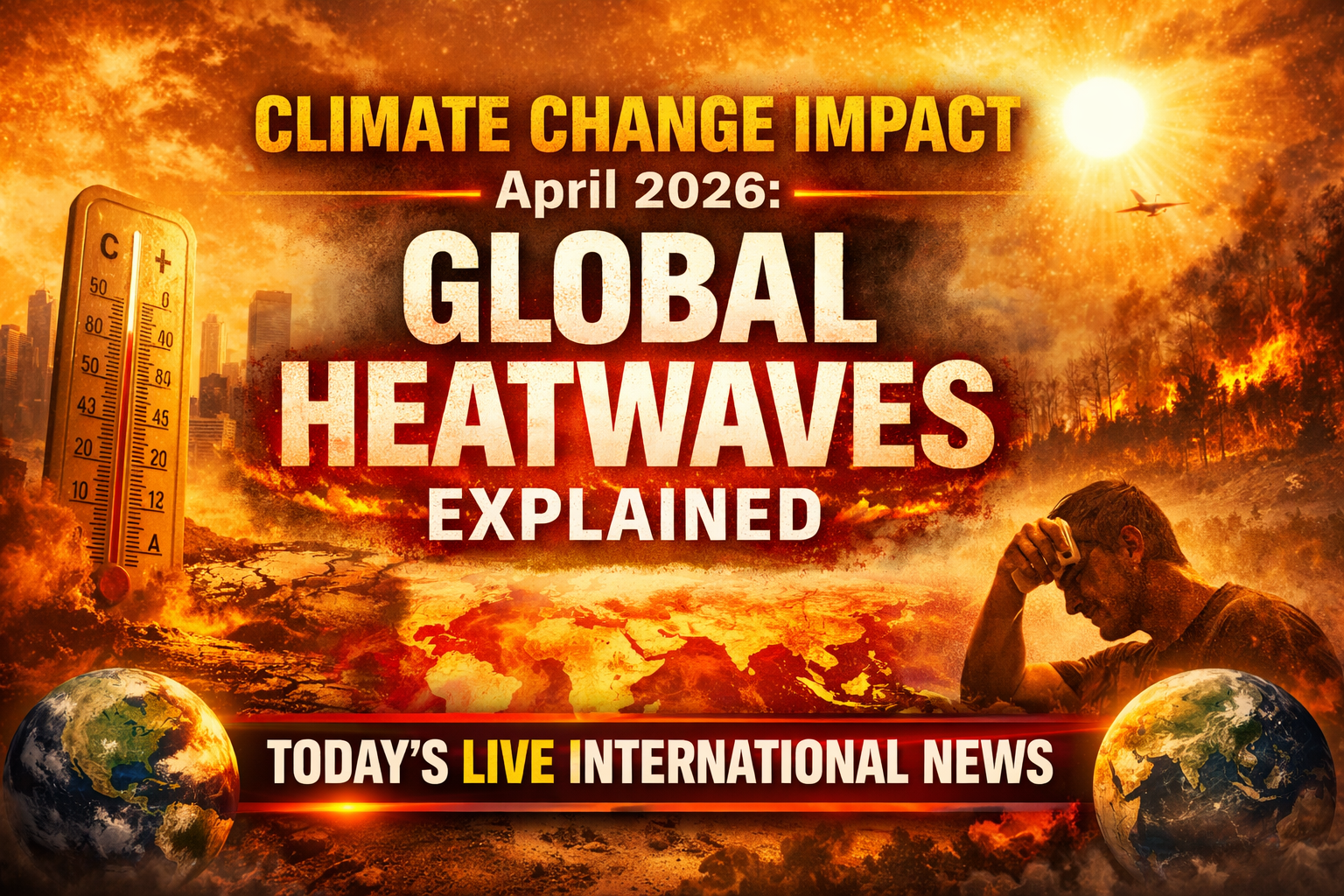
Introduction: The Planet Is Burning — And It's Not Slowing DownIf you have been following today's live international news, one story keeps coming back
louder than all others — the climate crisis. April 2026 is proving to be a critical month for global weather. From deadly heatwaves sweeping across continents to record-breaking floods, the Earth is sending us clear warning signs. Scientists, governments, and ordinary people around the world are waking up to a reality that can no longer be ignored.
This latest world news update today covers everything you need to know about the climate emergency unfolding right now — explained in simple, easy-to-understand language.
What Is Happening With the Climate in April 2026?
The world is in the grip of an accelerating weather crisis. Here is what the data and experts are telling us:
-
The period from 2015 to 2025 represents the 11 hottest years ever recorded, according to the World Meteorological Organization (WMO).
-
The relentless rise of greenhouse gases has driven global temperatures upward, with the last 10 years making up the top 10 hottest years on record. The year 2024 was the first year to cross the critical 1.5°C warming threshold set by the Paris Agreement.
-
Scientists from Berkeley and Copernicus warn that if the warming El Niño weather pattern strengthens in 2026, this year could break existing temperature records.
In short — we are living through an era of climate extremes, and April 2026 is no exception.
Heatwaves: The Deadliest Threat Right Now
Heatwaves are no longer a summer problem. They are arriving earlier, lasting longer, and hitting harder.
-
In March 2026, an extraordinary heatwave — made significantly worse by human-caused climate change — brought summer-like temperatures to California, Texas, and as far north as Montana, with forecasts of up to 30 degrees above seasonal averages.
-
Europe recorded over 60,000 heat-related deaths in a single summer heatwave in recent years — a grim reminder of how deadly rising temperatures can be for vulnerable populations.
-
Climate models confirm that extreme heat events that once occurred once every decade are now happening several times more frequently as the planet warms.
Why does this matter to you? Heat is the number one weather-related killer. It affects food production, water supply, and public health on a massive scale.
Global Weather Crisis: Floods, Droughts, and Storms
The climate crisis is not just about heat. It is reshaping weather patterns everywhere:
-
In the United States, the number of severe climate disasters increased nearly five-fold in 2024 compared to the 1990–2000 decade, with an average of just 12 days between major events.
-
Extreme weather events in 2025 caused thousands of deaths, displaced millions, and triggered billions of dollars in economic losses worldwide.
-
Oceans are now at their hottest in at least 1,000 years, heating faster than at any time in the past two millennia — and scientists warn this record ocean heat will fuel even more extreme weather through 2026.
India and Asia: Hit the Hardest
For readers following international news in Hindi and South Asian updates, this section is especially important. India and its neighbours are among the most exposed nations on Earth.
-
Between 1995 and 2024, India endured 430 extreme climate events, leaving 80,000 dead, over 1.3 billion people affected, and causing USD 170 billion in economic losses from cyclones, floods, and deadly heatwaves.
-
Millions across Africa, Asia, Central and South America have been exposed to acute food and water insecurity as a direct result of intensifying weather extremes.
As part of every Latest National News Update in India, climate alerts, heatwave warnings, and water shortage advisories are now a regular feature — and will remain so unless global action accelerates.
What Are Scientists and the UN Saying?
The Intergovernmental Panel on Climate Change (IPCC) is currently facing internal challenges and potential funding shortfalls, even as climate disasters are intensifying at an unprecedented pace — creating a dangerous gap in global scientific guidance for policymakers. To avoid mounting loss of life, biodiversity collapse, and infrastructure damage, the UN calls for urgent, ambitious, and accelerated action — both to adapt to climate change and to make rapid, deep cuts in greenhouse gas emissions.
What Can Be Done? Little Things, Big Changes
-
There is still hope, even in the middle of the crisis. Experts say this:
-
Governments need to put money into infrastructure that can handle climate change and early warning systems.
-
Communities should get ready for more extreme weather events.
-
People can lower their carbon footprints by making smarter choices about energy, eating less meat, and flying less.
-
People and the media need to stay up to date. Following today's live international news on climate keeps the pressure on the public.
Conclusion: The Climate Clock Is Ticking
April 2026 is a big deal. The science is clear, the effects are real, and time is running out to do something. This is a message for everyone, whether you are reading it as part of a world news update today, browsing Hindi-language international news, or catching up on the latest national news in India: climate change is real, it is dangerous, and we need to pay attention to it right away.
Keep up with the news. Be ready. And most importantly, make those in power take action.

 English
 Arabic
 French
 Spanish
 Portuguese
 Deutsch
 Dutch
Dutch
 Italiano
 Russian
 Romaian
 Portuguese (Brazil)
 Greek
Greek