

Why is API Integration Important in CRM Software Development?
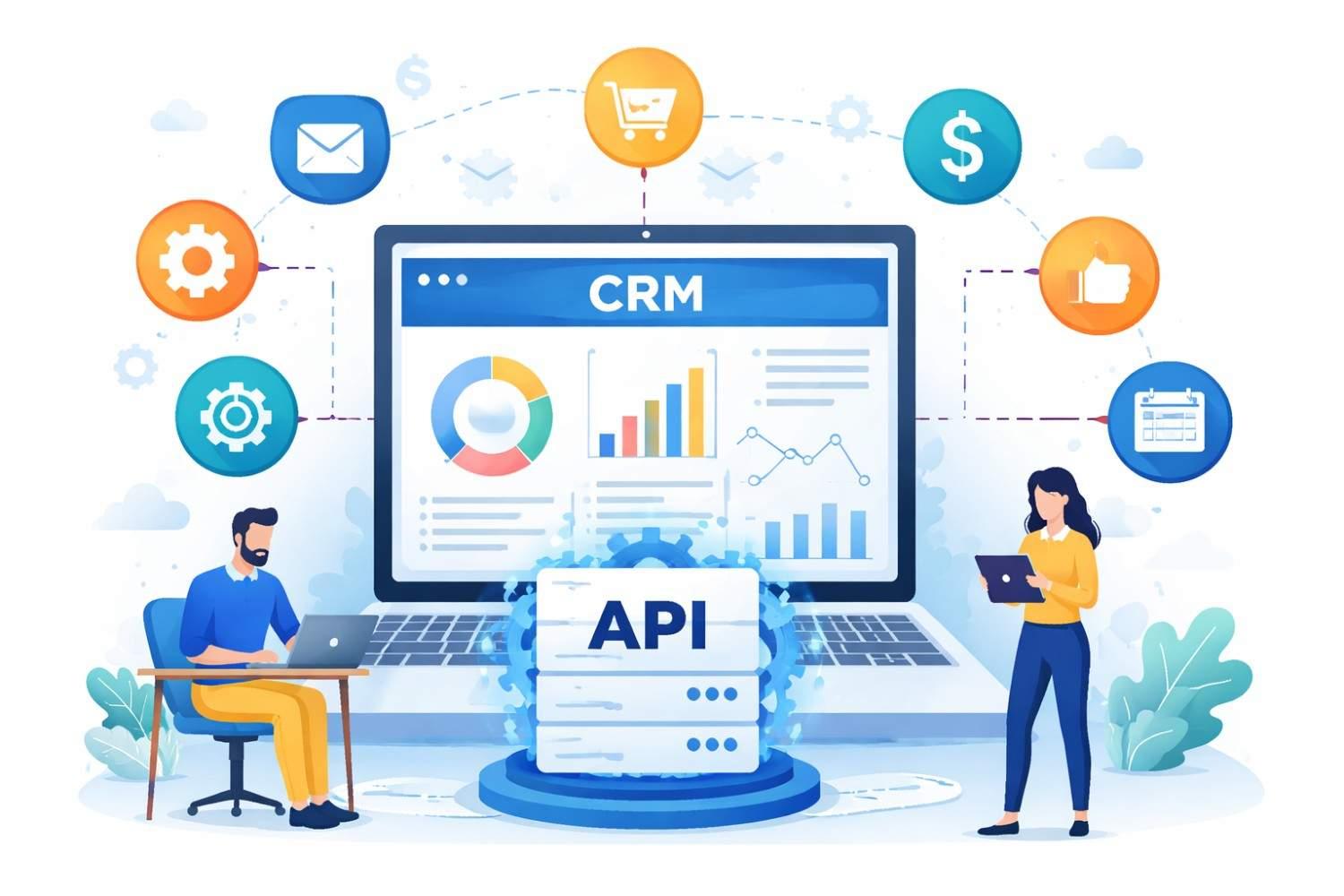
Modern businesses rarely struggle with ambition—they struggle with disconnected systems. A CRM may store customer data, but without proper connections, it behaves more like a static archive than a living system. This is where integration quietly transforms everything. At Kanhasoft, we often describe CRM as the command center—and APIs as the wiring behind the walls not glamorous, but absolutely essential. Through custom crm software development services, we ensure that every tool communicates seamlessly, enabling organizations to operate with clarity, speed, and a surprising amount of efficiency.
What is API Integration in CRM?
API integration in CRM refers to the process of enabling different software systems to communicate and exchange data in real time. Think of it as a translator that ensures tools understand each other without confusion (or unnecessary repetition). Whether it’s syncing customer data from a website form or pulling transaction details from a billing system, APIs make it possible. Without them, teams would rely on manual updates—something no modern business enjoys. In essence, APIs turn a CRM from a standalone platform into a connected, intelligent ecosystem.
Why Modern CRM Systems Depend on API Integration
Businesses no longer operate using a single tool—they rely on a network of applications working together. CRMs must adapt to this reality. API integration ensures that data flows smoothly between systems, eliminating delays and inconsistencies. Without it, decision-making becomes slower and less reliable. And this is where things start getting interesting—because once systems begin communicating in real time, operations become faster, smarter, and far more scalable. A modern CRM without APIs is like a smartphone without apps (technically functional, but missing the point).
Centralized Data Management
Data scattered across multiple platforms creates confusion and inefficiency. API integration brings everything into one place, allowing businesses to access accurate and up-to-date information instantly. Customer interactions, purchase history, and support records all align within the CRM. This centralization reduces duplication and minimizes errors. Teams no longer need to chase information across systems—it’s already there, organized and accessible. The result is not just convenience, but confidence in every decision made using that data.
Improved Workflow Automation
Repetitive tasks often consume valuable time that teams could spend on strategic work. API integration allows businesses to automate these processes efficiently. From capturing leads to triggering follow-up emails, workflows run without manual intervention. This is where API development and integration plays a critical role, ensuring systems communicate actions automatically. Automation reduces errors, speeds up operations, and improves consistency. Over time, these small efficiencies add up, creating a workflow that feels less like a process and more like a well-orchestrated system.
Enhanced Customer Experience
Customer expectations have evolved—they expect quick responses and personalized interactions. API integration helps meet these expectations by providing a complete view of each customer. When systems share data seamlessly, businesses can respond faster and tailor their communication effectively. A support agent, for instance, can instantly access purchase history and previous interactions. This eliminates the need for customers to repeat themselves (a small frustration, but a memorable one). Ultimately, integration helps create experiences that feel thoughtful, responsive, and genuinely connected.
Increased Productivity Across Teams
Switching between multiple tools often slows teams down more than expected. API integration eliminates this inefficiency by bringing essential data into a single interface. Sales, marketing, and support teams can collaborate without barriers, accessing the same information in real time. This alignment reduces miscommunication and accelerates task completion. Interestingly, productivity gains are often noticed gradually—until teams realize they are accomplishing more with less effort. That quiet improvement is usually the result of systems working together behind the scenes.
Scalability and Flexibility
Growth introduces complexity, and systems must evolve accordingly. API-integrated CRMs provide the flexibility to add new tools without disrupting existing workflows. Whether integrating a new marketing platform or upgrading accounting software, APIs ensure smooth transitions. This adaptability allows businesses to scale without rebuilding their entire system. In many ways, integration acts as future-proofing—preparing systems for changes that haven’t even been considered yet. Flexibility, after all, is not just a feature; it’s a necessity in a rapidly changing digital landscape.
Real-World Use Cases of API Integration in CRM
API integration proves its value in everyday business scenarios. CRMs connect with email marketing tools to automate campaigns, with accounting software to track payments, and with e-commerce platforms to manage orders. In one project, a client struggled with mismatched data across systems (spreadsheets were doing more work than they should). After integration, updates became automatic, and reporting accuracy improved dramatically. The transformation was not dramatic on the surface—but internally, everything worked better, faster, and with far fewer headaches.
Common Challenges in API Integration (And How We Handle Them)
Integration is powerful, but not without challenges. Security concerns, compatibility issues, and ongoing maintenance often create obstacles. Different systems may follow different data structures, making synchronization complex. At Kanhasoft, these challenges are addressed through structured planning and robust testing. Secure authentication methods are implemented, and compatibility is carefully evaluated before integration begins. Maintenance strategies ensure long-term stability. Challenges, in this case, are not roadblocks—they are simply part of building a system that works reliably under real-world conditions.
Best Practices for API Integration in CRM Development
Successful integration requires more than connecting systems—it requires thoughtful execution. Using secure authentication protocols ensures data safety, while selecting scalable APIs prepares systems for growth. Proper documentation simplifies future updates and troubleshooting. Regular monitoring helps identify and resolve issues before they escalate. These practices may seem routine, but they form the foundation of a reliable CRM system. Consistency in execution often determines whether integration becomes a long-term asset or an ongoing challenge.
How API Integration Impacts Business Growth
Growth depends on speed, accuracy, and informed decision-making. API integration supports all three by ensuring data is always current and accessible. Businesses can analyze trends, track performance, and respond to opportunities faster. Operations become more efficient, reducing delays and unnecessary costs. Over time, this creates a competitive advantage that is difficult to replicate. Integration, in many ways, becomes a silent driver of growth—working behind the scenes while businesses focus on strategy and expansion.
Why Businesses Choose Custom CRM with API Capabilities
Off-the-shelf CRMs offer convenience, but they often lack flexibility. Custom CRM solutions, on the other hand, are designed to fit specific business needs. With built-in API capabilities, these systems integrate seamlessly with existing tools. This eliminates limitations and allows businesses to create workflows that match their operations precisely. The result is a system that adapts to the business, rather than the other way around. Over time, this tailored approach delivers better efficiency and a stronger return on investment.
Future Trends in CRM API Integration
Technology continues to evolve, and CRM integration is evolving with it. AI-driven integrations are becoming more common, enabling predictive insights and smarter automation. Cloud-based ecosystems are expanding, making integrations more accessible and scalable. There’s also a noticeable trend—more tools communicating with each other than ever before (sometimes more efficiently than teams do). These advancements are shaping the future of CRM, turning it into a truly intelligent and interconnected platform.
Conclusion
API integration is no longer optional—it is fundamental to effective CRM software development. It connects systems, streamlines workflows, and enhances overall efficiency. Businesses that invest in integration often find that their operations become not only faster but also more reliable. At Kanhasoft, the focus remains on building systems that work together seamlessly (because disconnected tools rarely lead to connected outcomes). In the end, a well-integrated CRM doesn’t just support business processes—it quietly improves them in ways that are hard to ignore.
FAQs
1. What is API integration in CRM?
API integration allows a CRM system to connect with other software applications and exchange data automatically, improving efficiency and accuracy.
2. Why is API integration important for businesses?
It ensures seamless data flow between systems, reduces manual work, and supports faster decision-making.
3. Can CRM work without API integration?
Yes, but it will be limited in functionality and may require manual data handling, which reduces efficiency.
4. Is API integration secure?
When implemented correctly using secure authentication and encryption methods, API integration is highly secure.
5. How do businesses choose the right API?
The right API depends on compatibility, scalability, security, and the specific needs of the business systems being integrated.

 English
 Arabic
 French
 Spanish
 Portuguese
 Deutsch
 Dutch
Dutch
 Italiano
 Russian
 Romaian
 Portuguese (Brazil)
 Greek
Greek