

What Makes Jinyi Wall Radiator Bracket Reliable in Modern Heating Layouts
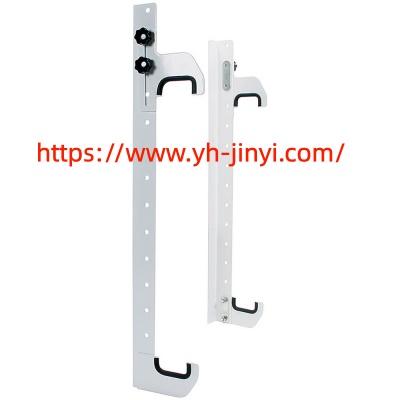
Jinyi Wall Radiator Bracket shows up in heating installations where the real challenge is not placing the system, but keeping it steady after everything starts running.
Vertical surfaces in real buildings are rarely perfectly uniform. Some feel solid immediately, others reveal slight variation only when load is applied. That is when installation choices start to matter more than expected. A small shift during fixing can become a visible issue later after enough operating cycles.
Heating systems do not stay still once they are activated. They warm up, cool down, and repeat that rhythm constantly. Each cycle brings small expansion and contraction. Nothing dramatic on its own, but over time it creates movement pressure that the support structure has to absorb quietly.
Weight distribution plays a steady role in how the system behaves. The load is continuous, and it does not always spread evenly across all fixing points. When pressure gathers in one area, the balance slowly shifts, even if the change is not obvious at first.
Installation accuracy also leaves a long shadow. A slight misalignment during setup might not show immediately. But after repeated thermal cycles, those small differences begin to surface. That is why careful positioning during installation often matters more than speed.
There is also vibration that comes from normal operation. It is subtle and often ignored, but it runs through every working heating system. If the support structure does not hold firm enough, that vibration can slowly translate into movement at the connection points.
Different sites behave differently. Some structures are solid and predictable, others carry hidden variation inside the surface. Installers adjust in real time, working with the actual conditions rather than relying only on drawings.
What stands out in practice is not how the system looks after installation, but how little it changes afterward. When everything stays in place without constant correction, the system feels more settled in daily use.
That stability is not the result of a single action. It comes from installation discipline, consistent support behavior, and how the structure handles repeated stress over time.
Over long periods, teams tend to focus on one simple signal. If adjustments are rarely needed after setup, the installation is holding its shape properly. That is usually the point where confidence in the system grows.
More product context and installation reference can be viewed at https://www.yh-jinyi.com/product/ where heating system components connect naturally with real project use.

 English
 Arabic
 French
 Spanish
 Portuguese
 Deutsch
 Turkish
 Dutch
Dutch
 Italiano
 Russian
 Portuguese (Brazil)
 Greek
Greek