

What Should You Check Before Selecting YOSHINE Phase Sequence Monitor Supplier
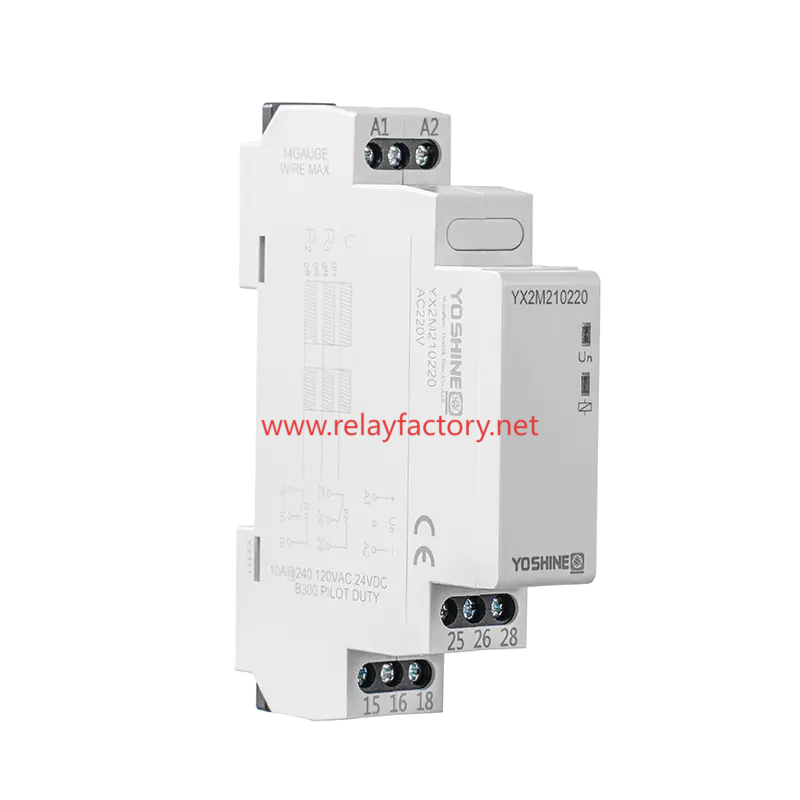
YOSHINE Phase Sequence Monitor Supplier usually becomes part of the conversation when a project moves beyond planning and into actual execution. On paper, many options may look similar, but once work starts, the differences show up in very practical ways.
At the beginning, most teams focus on whether the product meets basic requirements. That part is straightforward. What becomes more important later is whether everything stays consistent across deliveries. When multiple batches arrive, even small differences can slow things down during installation.
One thing people start noticing early is how smooth the cooperation feels. Not in a formal sense, just in how communication works day to day. If questions are answered clearly and updates come in without confusion, the whole process feels easier to manage. If not, even simple steps take longer than expected.
From an engineering point of view, installation is where things get real. Components need to fit into existing systems without extra adjustments. If something requires rework, it affects not just one step but the entire workflow. That is why compatibility often matters more than small differences in specifications.
Another detail that shows up during real use is how stable the behavior is across different units. It is easy to get one batch right. It is harder to keep that same level across repeated orders. Teams pay attention to that, because inconsistency means extra checking and adjustment on site.
Testing also becomes part of the evaluation, even if it is not always discussed openly. What matters is whether behavior stays predictable under repeated use. When things react the same way every cycle, people stop worrying about it and move on to other tasks.
There is also the question of how changes are handled. Projects rarely stay exactly the same from start to finish. Small adjustments come up, sometimes unexpectedly. A supplier that can respond without disrupting the flow makes a noticeable difference in keeping things on track.
Delivery plays its role too. It is not just about receiving products, but how ready they are for installation. Clear labeling, organized packaging, and consistent arrangement help reduce time spent sorting things out on site. These details seem small, but they add up quickly in larger projects.
Over time, teams begin to look at the overall pattern instead of individual details. Does each order feel the same as the last one. Does the process stay steady even when something changes. That is usually what builds confidence in long term cooperation.
In real projects, reliability is not something people talk about much. It shows up in how little attention something needs after installation. When components fit and behave as expected, they become part of the system without adding extra work.
Choosing a supplier in this context is less about making a quick decision and more about setting up a process that keeps working. The smoother that process feels, the easier everything else becomes.
If you want to see how these products are structured for practical industrial use, you can visit https://www.relayfactory.net/ where related control solutions are presented in a clear and usable way.

 English
 Arabic
 French
 Spanish
 Portuguese
 Deutsch
 Turkish
 Dutch
Dutch
 Italiano
 Russian
 Romaian
 Portuguese (Brazil)