

Zero-hours Contract Vs. Fixed Contract
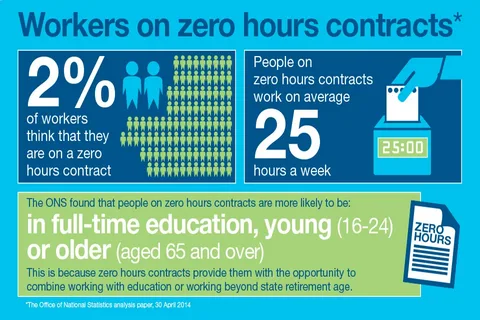
The modern working environment is evolving at a very high pace, and so is an employment contract. Today, companies are taking into consideration various kinds of contracts. To satisfy the needs of the business and provide flexibility to the employees. The two most prevalent are zero hours contracts and fixed term contracts.
As a student, an employee, or an employer who may be attempting to familiarise themselves with these types of contracts. It is important to be aware of how the said contracts operate, their advantages, and the disadvantages of entering into them.
Hence, this blog will simplify and express everything in straightforward, easy to understand language. So that you can clearly understand the difference and make a decision on which option is more appropriate in various contexts.
What is a Zero Hours Contract?
A zero hours contract is a form of employment agreement in which the employer does not have to give guarantees on the minimum hours of work. In the same way, it is not always the duty of the employee to take on the work presented to them.
Key Features:
-
No guaranteed working hours
-
Work is offered as needed
-
Employees are sometimes able to work with more than one employer.
-
Only paid by hours of work.
This kind of contract is widely applied in such industries as retail, hospitality and healthcare, where the demand may vary rapidly. In fact, by 2025, around 1.23 MN workers in the UK were working on this contract.
What is a Fixed Term Contract?
A fixed term contract is a contract where the employee is employed to work within a given period, or until a given project is completed. The contract can be renewed or terminated once the period is over.
Key Features:
-
Defined start and end date
-
Fixed working hours
-
Regular salary or wages
-
Typically incorporates employee benefits
Temporary or seasonal work, or positions based on a project, are commonly negotiated with fixed term agreements.
Key Differences Between Zero Hours and Fixed Contracts
The differences between these two types of contracts can assist you in making better choices.
Job Security
-
Zero Hours Contract: There is very minimal job security because there is no guarantee of hours.
-
Fixed Contract: It is more stable because the employment is guaranteed over a certain period.
Flexibility
-
Zero Hours Contract: Both the employer and the employee have a lot of flexibility.
-
Fixed Contract: Flexibility is low because the working hours and the working duration are already set.
Income Stability
-
Zero Hours Contract: The amount of income may fluctuate on a weekly basis.
-
Fixed Contract: Fixed income during the years of the contract.
Benefits
-
Zero Hours Contract: Do not provide much access to benefits like paid or sick leaves.
-
Fixed Contract: In many cases, they have similar benefits to permanent positions.
Commitment
-
Zero Hours Contract: The level of commitment is quite low from both sides.
-
Fixed Contract: More commitment since both sides come into an agreement with a fixed term.
Advantages of Zero Hours Contracts
Zero hours contracts are unpredictable, but it has a number of benefits.
Flexibility for Employees
The employees can work whenever they want, thus it suits the students, freelancers or other requests.
Opportunity to Gain Experience
It enables one to acquire working experience in new positions and sectors.
Work Life Balance
Workers are able to juggle personal responsibilities with work.
Employer Benefits
Employers are able to change the number of staff according to the demand and save on unnecessary labour costs.
Disadvantages of Zero Hours Contracts
Although there are these advantages, there exist a few disadvantages as well.
Unpredictable Income
The workers might find it hard to make ends meet because of irregular work schedules.
Lack of Job Security
There is no guarantee of getting work regularly. So, no job security.
Limited Career Growth
The training or development opportunities may not be given to the employees in the same manner.
Potential Exploitation
Some employers can abuse this type of contract by giving a very low number of hours.
Advantages of Fixed Term Contracts
Fixed contracts are more organised and permanent.
Job Stability
Employees are assured of work over a period of time.
Regular Income
Fixed pay means that there will be financial stability.
Access to Benefits
Benefits might include paid leave, bonuses and other benefits to the employees.
Skill Development
Employers will invest more in training and development.
Disadvantages of Fixed Term Contracts
Although fixed contracts are stable, they are limited as well.
Limited Flexibility
Workers have to follow established working hours and schedules.
Temporary Nature
When the contract terminates, so does the job.
Uncertainty After Expiry
The termination of the contract can force employees to seek new employment.
Less Freedom
Workers are less in control of their schedule; on top of that, they are on the zero hours contracts.
Which Contract is Better?
It does not have a one size fits all solution. The more advantageous one is based on personal needs and situations.
Zero Hours Contracts are Appropriate for:
-
Students
-
Freelancers
-
Individuals who demand to work part time or flexibly
-
Those who have more than one job.
Fixed Term Contracts are Appropriate for:
-
Professionals who are interested in stability
-
Persons who have financial obligations
-
Individuals seeking an organised work environment
-
They include those who desire career development opportunities.
Legal Considerations
Employment laws apply to both of these types of contracts, and employees are not deprived of some rights.
Zero Hours Contract Rights:
-
Minimum wage entitlement
-
Paid vacation (according to the number of worked hours)
-
Insurance against discrimination
Fixed Term Contract Rights:
-
Equal treatment with regard to permanent employees
-
Security against wrongful termination
-
Workplace benefits.
These rights should be known to prevent exploitation.
Impact on Employers
Employers should also be keen on selecting the appropriate type of contract.
The Reasons Employers Use Zero Hours Contracts:
-
In order to deal with varying demand.
-
To reduce labour costs
-
To maintain flexibility
The Reason Employers Use Fixed Term Contracts:
-
In order to fulfil certain projects
-
To address short term employee needs
-
To screen employees prior to the award of permanent positions
A combination of the two is common in organisations with the aim of striking a balance between flexibility and stability.
Real World Example
Consider a shopping outlet at a time when it is the holiday season.
-
To address busy hours, the store employs workers on a zero hour basis.
-
Simultaneously, it employs fixed term workers on a three month contract to maintain steady staffing.
The combination assists the business in working efficiently in accordance with the customers' demand.
HR in Contracts Management
The role of Human Resource (HR) professionals is very important in the administration of employment contracts. They are the ones to make sure that contracts are just, legitimate and favourable both to the employer and employees.
HR teams also help in:
-
Drafting clear agreements
-
Adhering to labour regulations
-
Dealing with employee expectations
-
Resolving disputes
Students undertaking HR frequently delve into the issues related to employment contracts, and in some cases, they consult CIPD Level 5 assignment writing services to enhance their comprehension of the complex HR principles and legal provisions.
Difficulties in Selecting the Right Contract
It may be difficult to choose the appropriate contract type because of:
-
Changing business needs
-
Employee expectations
-
Legal regulations
-
Economic conditions
Employers have to be very careful in analysing their workforce needs and then make the decision.
Future of Employment Contracts
The future of work is becoming flexible. As remote work and gig economy work environments gain momentum, zero hour contracts are on the increase.
Nevertheless, the need to have job security is also increasing, making the fixed term and permanent contracts still relevant.
Governments and organisations are in a constant endeavour to balance between flexibility and employee protection.
Final Words
Both zero hours contracts and fixed term contracts have their weaknesses and strengths. On the one hand, zero hours contracts are flexible, but on the other hand, they are not safe.
Conversely, fixed term contracts are secure but not flexible.
The decision of the right choice is based on personal needs, career goals and economic status.
The type of contract that employers will use should also take into account their operational needs and the welfare of the employees.
Simply put, neither one of the contracts is superior to the other they are simply designed to fulfil different functions. The knowledge of workplace differences will help employees and employers make more informed decisions and build a more balanced and productive workplace.
FAQs
1. What is a zero hours contract?
A zero hours contract involves an agreement in which the employer does not guarantee any minimum number of working hours. The staff also only work when required and are paid for the number of hours accomplished.
2. What is a fixed term contract?
A fixed term contract refers to a contract of a job that has a definite starting and finishing date. During regular hours, the employees are employed and receive regular pay.
3. Which is better: zero hours or fixed term contracts?
Zero hours contracts are preferable in terms of flexibility, whereas a fixed term contract is preferable in terms of job security and stable income.
4. Are there any legal rights to zero hours employees?
Yes, zero hour employees still enjoy the rights of a minimum wage, paid holidays (proportional to working hours), and the right against being treated unfairly.
5. Is it possible to refuse work by a zero hours employee?
Yes, in the majority of situations employees under zero hours contracts have the opportunity to accept or deny the work proposed by the employer.

 English
 Arabic
 French
 Spanish
 Portuguese
 Deutsch
 Dutch
Dutch
 Italiano
 Russian
 Romaian
 Portuguese (Brazil)
 Greek
Greek