

Large Part Injection Molding in China for EV Battery Trays and Components
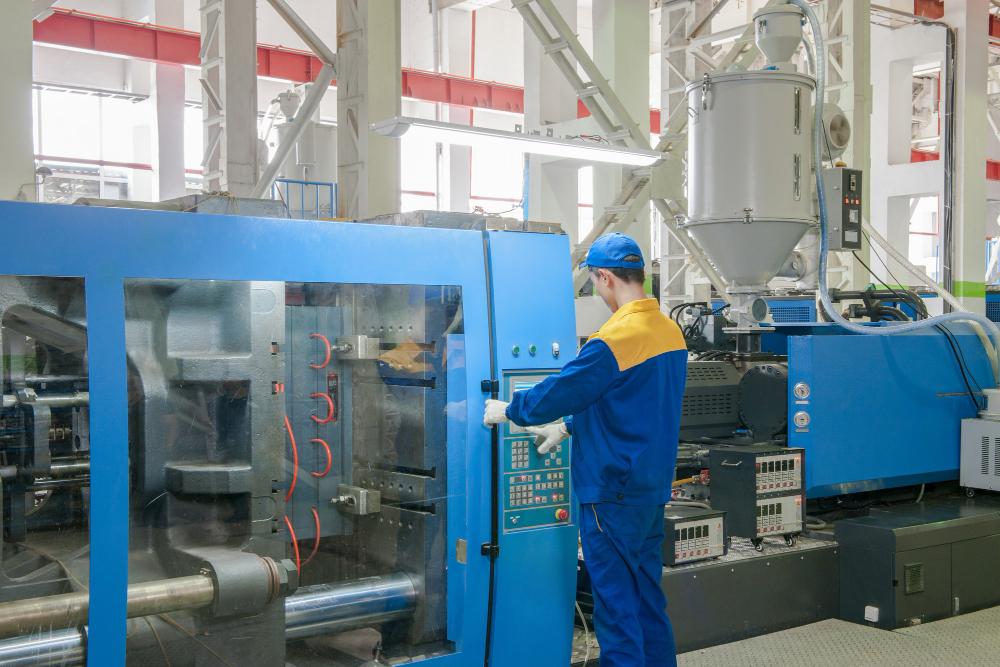
The electric vehicle industry demands massive, durable plastic components that can withstand extreme thermal and physical stress. For that reason, the use of large part injection molding in China allows automotive manufacturers to produce oversized items like battery trays with high dimensional accuracy. This specialized process supports the transition toward lighter, more efficient vehicle architectures without sacrificing structural integrity.
Understanding Heavy-Duty Press Requirements
Producing oversized components requires industrial machines with immense clamping forces, often exceeding several thousand tons. These heavy-duty presses maintain the pressure needed to keep large molds closed during the high-speed resin injection phase. Specialized facilities in the region house this equipment to accommodate the physical scale of modern electric vehicle parts.
Material Science for Battery Tray Production
Thermal stability and flame retardancy are the primary requirements for materials used in electric vehicle battery housings. Manufacturers often use long-fiber reinforced thermoplastics to provide the stiffness and impact resistance for large-scale parts. These advanced resins help protect sensitive battery cells from external damage and internal heat fluctuations.
Challenges of Large-Scale Mold Design
Designing a mold for a massive component requires complex engineering to account for material shrinkage and cooling rates. Engineers incorporate multiple injection points to fill the cavity evenly and prevent internal stresses that could lead to warping. Precision machining for these oversized tools requires specialized CNC equipment capable of handling massive steel blocks.
Benefits of Weight Reduction in Electric Vehicles
Replacing heavy metal enclosures with lightweight plastic alternatives directly improves the driving range of an electric car. China’s large part injection molding facilitates the creation of complex, single-piece structures that reduce the total part count in an assembly. This consolidation simplifies the manufacturing process and lowers the total weight of the battery management system.
Cooling System Integration in Molded Parts
Battery trays often feature intricate internal channels designed to manage the temperature of the power cells. High-pressure molding allows these cooling features to be integrated directly into the part geometry during a single production cycle. This integration eliminates the need for secondary assembly steps and reduces the risk of leaks in the thermal management system.
Precision Tolerances for Automotive Assembly
Automotive components must meet strict dimensional standards to fit perfectly within the vehicle chassis. Automated measurement systems verify that every large part adheres to the original CAD specifications with minimal deviation. Maintaining these tight tolerances prevents assembly line delays and guarantees the long-term reliability of the vehicle.
Structural Integrity and Crash Safety Standards
Plastic battery housings must pass rigorous safety tests to prove they can protect occupants during a collision. Engineering teams simulate various impact scenarios to optimize the ribbing and wall thickness of the molded trays. These reinforcements provide maximum strength while keeping the overall material usage as low as possible.
Surface Treatment for Chemical Resistance
Battery components are frequently exposed to harsh fluids and environmental contaminants during their service life. Manufacturers apply specific coatings or use inherently resistant resins to prevent degradation over time. These surface properties help the trays maintain their structural properties even in extreme weather conditions.
High-Volume Production Efficiency
Once the initial tooling is complete, the molding process offers a fast and repeatable way to manufacture thousands of identical parts. High levels of automation in Chinese factories reduce the time needed for part removal and secondary trimming. This efficiency allows automotive brands to meet the increasing global demand for new electric vehicle models.
Managing Thermal Expansion in Large Parts
Different materials expand and contract at various rates when exposed to the heat of a charging battery. Mold designers calculate these movements to make sure the plastic tray remains compatible with metal fasteners and frames. Accurate thermal modeling prevents the part from cracking or losing its seal during temperature cycles.
Quality Verification for Structural Components
Every oversized part undergoes non-destructive testing to check for internal voids or weak spots in the plastic. Technicians use ultrasonic or X-ray inspection methods to verify the density and consistency of the material. These thorough checks are a standard part of the manufacturing workflow for safety-focused automotive parts.
Collaborative Engineering and Design Support
The success of a large-scale molding project depends on close cooperation between the design team and the factory. Specialists provide feedback on part geometry to improve resin flow and reduce the risk of aesthetic defects like sink marks. This early intervention helps streamline the development process and minimizes the need for expensive mold modifications.
Cost Analysis for Large Part Tooling
While the initial cost for oversized steel molds is significant, the low price per part makes it a viable option for mass production. Companies amortize the tooling investment over hundreds of thousands of units to achieve a competitive market price. The scale of operation in the region helps keep these total production costs within a manageable range.
Key Takeaway
Large part injection molding in China provides the technical capacity and economic efficiency needed for modern electric vehicle production. Their advanced machinery and material expertise allow for the creation of durable, lightweight components that meet strict safety and performance standards. This manufacturing approach supports the continued evolution of the global automotive market.

 English
 Arabic
 French
 Spanish
 Portuguese
 Deutsch
 Dutch
Dutch
 Italiano
 Russian
 Romaian
 Portuguese (Brazil)
 Greek
Greek