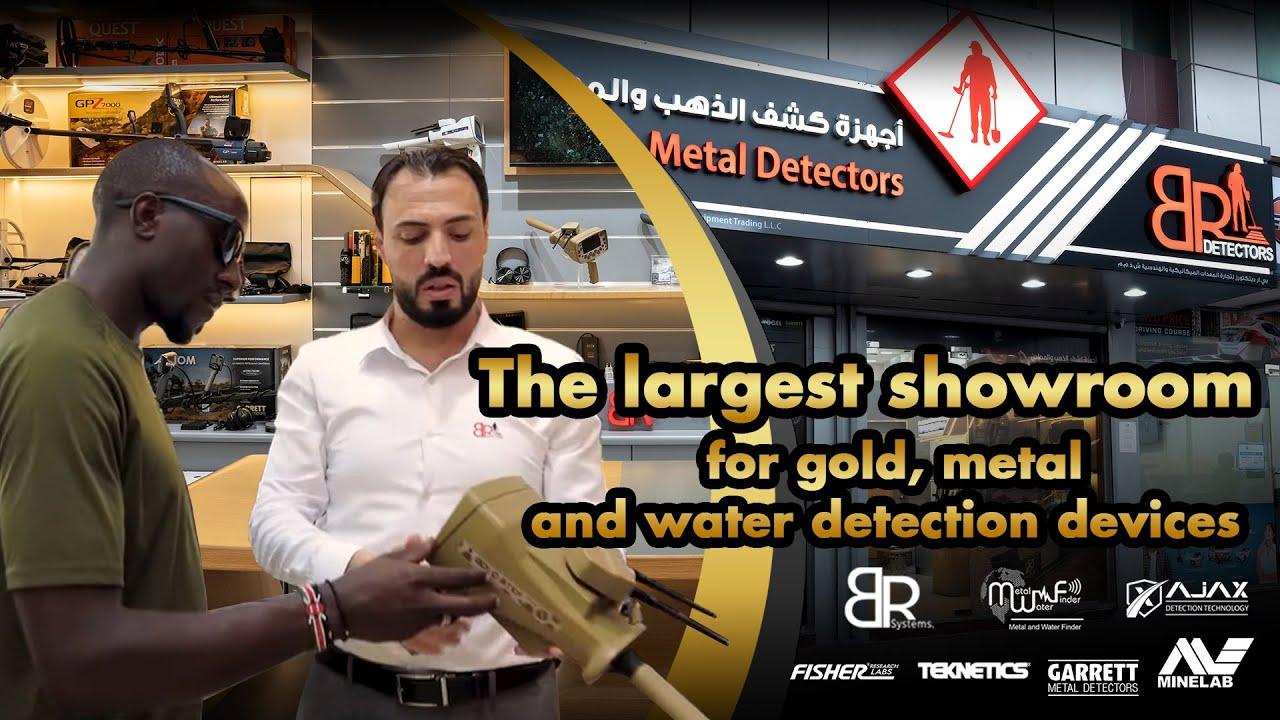
Modern industries and exploration fields are rapidly advancing, with high-precision detection systems becoming essential tools for professionals working in construction, archaeology, security, and mineral exploration. The demand for reliable underground scanning solutions has increased significantly as accuracy and efficiency become top priorities. In this growing market, BR Detectors Dubai for metal gold detectors, provides advanced and innovative solutions designed for users who require dependable performance in locating hidden metals, analyzing underground structures, and achieving accurate results in various environments. These technologies are widely used across professional and industrial applications due to their ability to deliver precise detection results with modern digital enhancements.
Introduction to Modern Detection Technology
Detection technology has evolved into a highly sophisticated field that combines electronics, digital processing, and intelligent sensing systems. Earlier detection devices were limited in functionality and often required extensive manual adjustments. However, modern systems are designed with automated features that significantly improve usability and accuracy.
Today’s detectors use advanced microprocessors that analyze signals in real time, allowing users to identify different types of metals with greater precision. These improvements have made detection systems more reliable in complex environments such as deserts, rocky terrain, and mineral-rich soils.
Another key improvement is the integration of adaptive calibration systems. These systems allow devices to automatically adjust based on environmental conditions, reducing interference and improving overall performance. This ensures consistent results across different exploration scenarios.
Growing Importance in Professional Industries
Detection systems are now widely used across multiple industries beyond traditional treasure hunting. In construction, they are essential for identifying underground utilities such as cables, pipes, and reinforcements before excavation work begins. This helps ensure safety and prevents structural damage.
In archaeology, detection tools play a crucial role in locating buried artifacts without disturbing the surrounding environment. This non-invasive approach allows researchers to preserve historical sites while conducting accurate and efficient excavations.
Security organizations also rely heavily on detection technology to scan public spaces, airports, and restricted zones for concealed metallic threats. This enhances public safety and ensures effective screening processes in sensitive areas.
Mining and geological exploration industries use detection systems to identify mineral-rich zones, improving resource extraction efficiency. By focusing on high-potential areas, companies can reduce operational costs and increase productivity.
Key Advancements in Detection Systems
Modern detection devices are equipped with a variety of advanced features that enhance performance and usability. One of the most significant advancements is multi-frequency scanning, which enables devices to detect different types of metals at varying depths simultaneously. This increases accuracy and efficiency in field operations.
Another important feature is automatic ground balancing. This technology allows detectors to adjust themselves based on soil composition, reducing interference caused by mineral variations. As a result, users can achieve stable performance even in challenging environments.
Digital signal processing is also a major innovation in modern detection systems. It helps filter out unwanted noise and false signals, ensuring that users receive clear and accurate detection results. This feature significantly improves decision-making during field operations.
Enhancing User Experience and Field Efficiency
Modern detection devices are designed with user convenience in mind. Lightweight materials and ergonomic structures make them easy to carry and operate for extended periods, which is especially important for professionals working in the field.
Real-time signal feedback systems allow users to instantly interpret detection results. This helps improve accuracy and reduces the time needed to identify underground targets. Combined with intuitive digital displays, users can easily monitor and adjust settings during operation.
In addition, wireless connectivity features enable devices to connect with smartphones and tablets. This allows users to store data, track locations, and analyze detection results more efficiently, improving overall workflow and organization.
Professional Reliability and Equipment Performance
High-quality detection equipment is essential for achieving consistent and reliable results in professional environments. These devices are built using durable materials that can withstand harsh environmental conditions such as heat, dust, and humidity.
Advanced internal systems ensure stable performance even in complex terrains. Users can adjust sensitivity levels, frequency ranges, and detection modes based on specific requirements, making these systems highly versatile.
The demand for metal and gold detectors continues to grow as industries recognize their importance in exploration, safety, and resource identification. These tools are widely used by professionals who require precision, depth accuracy, and consistent performance in their operations.
Integration of Smart Technologies and Artificial Intelligence
Artificial intelligence has significantly transformed modern detection systems by improving accuracy and efficiency. AI-powered devices analyze signal patterns more effectively, reducing false readings and enhancing target identification.
Smart ground analysis features automatically adjust device settings based on environmental conditions. This eliminates the need for manual calibration and simplifies the overall operation process, allowing users to focus more on exploration activities.
Some advanced detection systems also include 3D imaging capabilities. These features provide visual representations of underground objects, allowing users to better understand their size, shape, and depth before excavation begins.
Environmental and Operational Advantages
Modern detection systems contribute to more sustainable exploration practices by reducing unnecessary digging and minimizing environmental impact. Accurate detection ensures that only relevant areas are excavated, helping preserve natural landscapes and archaeological sites.
Improved efficiency also reduces operational costs by saving time, fuel, and labor resources. This makes detection technology highly valuable for both small-scale users and large industrial operations.
Energy-efficient designs extend battery life, allowing users to operate devices for longer periods in remote locations. This is particularly beneficial for fieldwork in areas where charging facilities are not easily accessible.
Expanding Applications Across Industries
Detection systems continue to expand their role across multiple industries. In environmental research, they are used to study underground conditions and monitor changes in soil composition. This helps scientists better understand natural processes and ecological patterns.
In urban infrastructure development, detectors assist engineers in safely planning construction projects by identifying hidden underground structures. This reduces risks and ensures project stability in densely populated areas.
Emergency response teams also use detection systems in critical situations to locate hidden objects or assess dangerous environments. Their versatility makes them valuable tools in disaster management and public safety operations.
Future Trends in Detection Technology
The future of detection systems is expected to be shaped by continuous innovation in artificial intelligence, sensor technology, and digital processing. Devices will become more autonomous, capable of making intelligent decisions based on real-time environmental data.
Cloud-based systems will allow users to store and analyze detection data remotely. This will improve collaboration between teams working in different locations and enhance overall efficiency in large-scale projects.
Advancements in miniaturization will lead to smaller yet more powerful devices. These improvements will increase portability while maintaining or even improving performance levels, making detection systems more accessible across industries.
Conclusion
Modern detection technology has become an essential part of multiple industries, offering advanced solutions for locating underground metals, improving safety, and increasing operational efficiency. With continuous innovation in artificial intelligence, sensor systems, and digital processing, these tools are becoming more accurate, intelligent, and reliable. Their expanding applications in construction, archaeology, mining, and security highlight their importance in shaping the future of professional exploration and underground analysis.



 English
 Arabic
 French
 Spanish
 Deutsch
 Turkish
 Dutch
Dutch
 Italiano
 Russian
 Romaian
 Portuguese (Brazil)
 Greek
Greek