

Understanding the Maleic Anhydride Price Trend in Simple Words
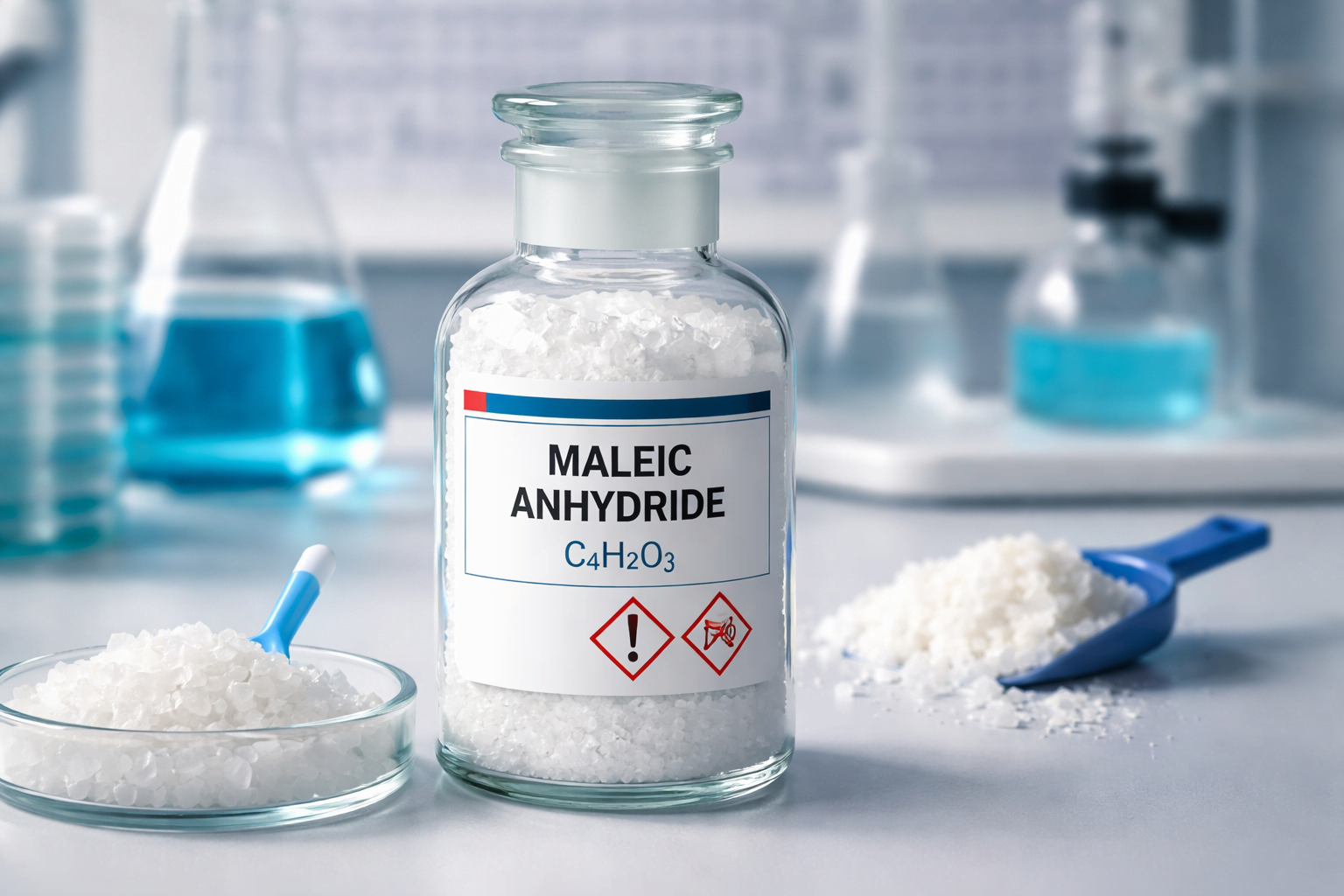
The Maleic Anhydride Price Trend is an important topic for many industries because this chemical is widely used in making resins, plastics, coatings, and other everyday materials. When we talk about the MA Price Trend, we are simply looking at how the price of maleic anhydride goes up and down over time. These changes may seem technical, but they are actually connected to simple things like demand, supply, raw material cost, and overall market conditions.
What is Maleic Anhydride and Why is it Important?
Maleic anhydride is a basic industrial chemical mainly used to produce unsaturated polyester resins. These resins are used in products like fiberglass, paints, coatings, and construction materials. Because it is used in so many industries, even a small change in its price can affect many businesses.
For example, when the price of maleic anhydride increases, the cost of making products like plastic items or construction materials also increases. On the other hand, when prices fall, manufacturers get some relief and can manage their production costs better.
👉👉👉Please Submit Your Query For Maleic Anhydride Price Trend, Market Analysis and Forecast: https://www.price-watch.ai/book-a-demo/
Simple Overview of Maleic Anhydride Price Trend
If we look at recent years, the Maleic Anhydride Price Trend has mostly shown a weak or downward movement. This does not mean prices always fall, but overall, the market has been under pressure.
One of the main reasons is that supply has been quite stable or even high, while demand has not grown as strongly as expected. In many regions like Asia, Europe, and North America, industries such as construction and automotive have slowed down, which reduced the need for maleic anhydride.
In simple words, when there is more supply and less demand, prices naturally go down.
Key Factors Affecting MA Price Trend
1. Raw Material Cost
The biggest factor behind the MA Price Trend is the cost of raw materials like butane and benzene. These materials are linked to crude oil prices. So, when oil prices go up, production costs also increase, and this can push prices higher.
But when raw material prices fall, manufacturers can produce maleic anhydride more cheaply, which often leads to lower market prices.
2. Supply and Demand Balance
This is the most basic factor. If industries like construction, automotive, and packaging are doing well, demand increases, and prices rise.
But recently, demand has been weak. Many buyers are purchasing only what they need and avoiding bulk buying. At the same time, production levels have remained steady, creating an oversupply situation.
3. Industrial Growth and Economic Conditions
The global economy plays a big role in the Maleic Anhydride Price Trend. When the economy is strong, industries grow, and demand increases.
However, when there is uncertainty or slowdown, companies reduce production, and demand falls. This directly impacts prices.
4. Downstream Industry Demand
Maleic anhydride is mainly used in resins and coatings. So, if these industries slow down, the demand for maleic anhydride also drops.
For example, weaker demand from the construction and automotive sectors has been one of the major reasons for the recent price decline.
5. Global Trade and Logistics
Shipping costs, import-export conditions, and global trade policies also influence prices. Sometimes, even if demand is stable, high transportation costs can affect the final price.
Similarly, smooth logistics can increase supply in the market, which may reduce prices.
Regional Price Trends in Simple Terms
Asia Pacific
In countries like China and Japan, prices have shown a downward trend due to high supply and weak demand. Buyers are cautious and prefer short-term purchases.
Europe
In Europe, prices have also remained under pressure because of slow industrial activity and reduced demand from key sectors.
North America
The market here has been slightly more stable, but still, weak demand and steady production have kept prices from rising significantly.
Overall, the global MA Price Trend shows a similar pattern across regions — stable supply but slow demand.
Recent Market Behavior
In recent quarters, prices have not shown strong growth. Instead, they have fluctuated within a limited range.
- Prices declined due to oversupply and weak demand
- Buyers avoided large purchases
- Production remained steady
- Inventory levels stayed sufficient
For example, in some regions, prices dropped because industries delayed restocking and used existing inventory instead.
This shows that the market is currently more buyer-driven than seller-driven.
Future Outlook of Maleic Anhydride Price Trend
Looking ahead, the Maleic Anhydride Price Trend is expected to remain somewhat unstable but mostly under pressure unless demand improves.
Here are some simple expectations:
- Prices may stay low if demand remains weak
- Any rise in construction or automotive activity can push prices up
- Changes in crude oil prices can affect production cost
- Supply adjustments may help stabilize the market
Experts believe that a strong recovery will only happen when industrial demand increases significantly.
Real-Life Understanding of the Trend
To understand this in a very simple way, think of it like a vegetable market:
- If farmers bring too many vegetables and customers are few → prices fall
- If supply is limited and customers are many → prices rise
The same logic applies to the MA Price Trend.
Right now, the market has enough supply but fewer buyers, so prices are not increasing much.
Conclusion
The Maleic Anhydride Price Trend is influenced by simple but powerful factors like supply, demand, raw material costs, and global economic conditions. In recent times, the MA Price Trend has mostly shown a downward or stable pattern due to weak demand and sufficient supply.
Even though the market is currently under pressure, it is not permanent. As industries recover and demand improves, prices may start to rise again. Understanding these trends in simple terms helps businesses and individuals make better decisions.
In the end, the Maleic Anhydride Price Trend is not just about numbers—it reflects the overall health of multiple industries and the global economy.
About Price Watch™ AI
Price-Watch AI is an India-based, independent raw material price reporting agency that provides real-time price forecasts and data-driven insights into global raw material markets. Price-Watch AI specializes in tracking raw material prices, analyzing market trends, and delivering timely updates on plant shutdowns, supply disruptions, capacity expansions, and demand-supply dynamics. The Price-Watch AI platform empowers manufacturers, traders, and procurement professionals to make faster, smarter decisions. Leveraging AI-powered forecasting and over a decade of historical data, Price-Watch AI transforms market volatility into actionable opportunity.
Futura Tech Park,
C Block, 8th floor 334,
Old Mahabalipuram Road,
Sholinganallur, Chennai, Tamil Nadu, Pincode - 600119.
𝐋𝐢𝐧𝐤𝐞𝐝𝐈𝐧: https://www.linkedin.com/company/price-watch-ai/
𝐅𝐚𝐜𝐞𝐛𝐨𝐨𝐤: https://www.facebook.com/people//61568490385598/
𝐓𝐰𝐢𝐭𝐭𝐞𝐫: https://x.com/pricewatchai
𝐖𝐞𝐛𝐬𝐢𝐭𝐞: https://www.price-watch.ai/

 English
 Arabic
 French
 Spanish
 Portuguese
 Deutsch
 Dutch
Dutch
 Italiano
 Russian
 Romaian
 Portuguese (Brazil)
 Greek
Greek