

RSV Symptoms in Adults Explained: Causes and Care Guide with ER Care for RSV
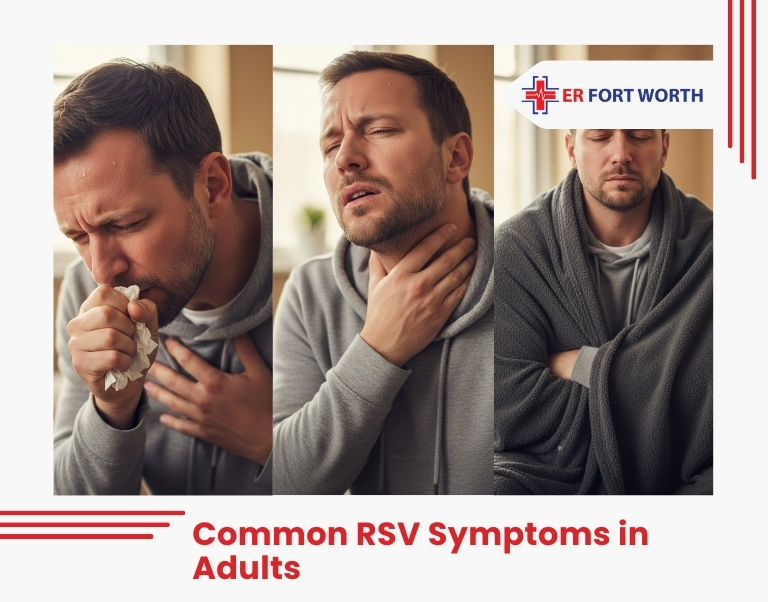
Respiratory Syncytial Virus (RSV) is a common but potentially serious respiratory infection that affects adults across the United States. While many cases are mild, some can worsen quickly and require ER care for RSV, especially in older adults or those with chronic health conditions.
Understanding RSV Symptoms in Adults, their causes, and when emergency care is needed is essential for preventing severe complications.
What is RSV? (AEO Definition)
RSV is a contagious virus that infects the lungs and airways. It spreads through coughing, sneezing, or touching contaminated surfaces.
In adults, RSV can range from mild cold-like illness to severe respiratory distress requiring hospital or emergency room treatment.
Causes of RSV in Adults
RSV spreads easily and can affect anyone.
Common causes and transmission:
- Airborne droplets from coughing or sneezing
- Close contact with infected individuals
- Touching contaminated surfaces
- Weak immune system response
In crowded indoor environments, the virus spreads more quickly.
Early RSV Symptoms in Adults
Initial symptoms often resemble a common cold:
- Runny nose
- Mild cough
- Sore throat
- Sneezing
- Low-grade fever
- Fatigue
At this stage, many people do not realize it is RSV.
Severe RSV Symptoms in Adults
When infection worsens, it may require ER care for RSV.
Warning signs include:
- Severe shortness of breath
- Persistent high fever
- Chest pain or pressure
- Wheezing
- Rapid breathing
- Extreme fatigue
- Bluish lips or fingernails
These are critical symptoms that should not be ignored.
When ER Care for RSV is Needed
You should seek emergency room care immediately if:
- Breathing becomes difficult
- Chest pain worsens
- Oxygen levels drop
- Confusion or dizziness appears
- Symptoms escalate rapidly
ER care helps stabilize breathing and prevent life-threatening complications.
Why RSV Can Become Serious in Adults
In the United States, RSV can be dangerous due to:
- Aging immune systems
- Chronic lung diseases (COPD, asthma)
- Heart conditions
- Smoking history
- Weak immunity
These factors increase the risk of hospitalization.
Complications of Severe RSV
If not treated properly, RSV can lead to:
- Pneumonia
- Bronchitis
- Respiratory failure
- ICU admission
- Long recovery time
This is why early recognition is critical.
Real-Life Example (Micro Story)
A 72-year-old patient in the United States initially experienced mild cold symptoms. Within days, breathing difficulty and chest pain developed. The patient was rushed to the ER and diagnosed with severe RSV infection requiring oxygen support. Early ER care for RSV prevented life-threatening complications.
Treatment and Care Options
Emergency/ER care:
- Oxygen therapy
- IV fluids
- Breathing support
- Monitoring oxygen levels
Home care (mild cases):
- Rest
- Hydration
- Fever management
- Avoid smoking and pollution
Prevention Tips
- Wash hands frequently
- Avoid close contact with sick individuals
- Disinfect surfaces
- Wear masks in high-risk areas
- Strengthen immunity through healthy diet
Conclusion
RSV can start as a mild illness but may quickly progress to a serious condition requiring ER care for RSV. In the United States, awareness of symptoms and early medical response can significantly reduce complications.
Recognizing RSV Symptoms in Adults early ensures timely treatment and better recovery outcomes.

 English
 Arabic
 Spanish
 Portuguese
 Deutsch
 Turkish
 Dutch
Dutch
 Italiano
 Russian
 Romaian
 Portuguese (Brazil)
 Greek
Greek