

Commercial Drones Market Size, Trends, and Strategic Outlook 2026-2033
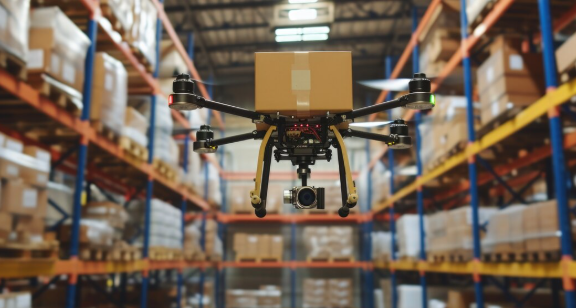
The commercial drones market is witnessing unprecedented growth fueled by rapid technological advancements and expanding business growth across sectors such as agriculture, logistics, and defense. These evolving market trends are reshaping industry share dynamics and driving significant market revenue expansion globally.
Market Size and Overview
The Commercial Drones Market is estimated to be valued at USD 28.87 Bn in 2026 and is expected to reach USD 71.81 Bn by 2033, exhibiting a compound annual growth rate (CAGR) of 13.9% from 2026 to 2033.
This Commercial Drones Market Forecast reflects growing demand across diverse industry segments, bolstered by increasing adoption of drone-enabled solutions for enhanced operational efficiency and cost-effectiveness. Market analysis points to significant market opportunities emerging particularly in precision agriculture and infrastructure monitoring.
Current Event & Its Impact on Market
I. Advancement in AI-Enabled Drone Technology
A. Integration of AI and machine learning algorithms in drones – Accelerates market growth by enabling autonomous operation, enhancing data analytics capabilities and thus expanding the market scope within sectors like agriculture and surveillance.
B. New FAA regulations on drone operations – Potential to ease market restraints by streamlining commercial usage permissions in the US, boosting industry size through increased deployments.
C. Commercial drone delivery pilot projects – Companies like Amazon and Zipline testing drone delivery for logistics; this nano-level event expands market segments focused on last-mile delivery services.
II. Geopolitical Tensions Affecting Supply Chain & Technology Access
A. Export restrictions on drone components due to US-China trade policies – Creates challenges for market players relying on semiconductor imports, impacting market growth strategies and leading to potential supply delays.
B. Rising defense-related drone procurement amid global security concerns – Macro-level military investments increase market demand, enhancing industry share for companies operating in defense-oriented commercial drone applications.
C. Increased government funding for drone research in the EU – Expands market opportunities by fostering innovation and supporting domestic manufacturing capabilities.
Impact of Geopolitical Situation on Supply Chain
The US-China trade dispute in 2024 notably exemplifies the geopolitical influences on the commercial drones market supply chain. Restrictions on critical drone components such as high-precision sensors and AI chips disrupted supply availability for key market companies. This resulted in increased procurement costs and delayed product launches globally. For instance, Northrop Grumman reported a six-month delay in deploying certain long-endurance drones due to parts shortage, which affected their market revenue in Q3 2024. Such geopolitical challenges have fueled diversification efforts in sourcing components from Southeast Asian and European manufacturers to stabilize production and maintain market share.
SWOT Analysis
Strengths
- Technological innovation driving new applications such as AI-powered drones enhancing market segments like agriculture and security.
- Increasing adoption across diversified sectors contributes to sustained market growth and revenue generation.
Weaknesses
- Dependency on semiconductor supply chains vulnerable to geopolitical disruptions creating market challenges.
- Regulatory restrictions in emerging markets restrain immediate scalability potential for commercial drone deployment.
Opportunities
- Expanding drone delivery initiatives and infrastructure inspection projects provide sizable market growth opportunities.
- Government investments in drone R&D, particularly in Europe and North America, open new business growth avenues.
Threats
- Heightened international trade tensions risk supply chain stability and delay technological adoption.
- Privacy and safety concerns could lead to stricter regulations, limiting market dynamics and slowing market growth trajectories.
Key Players
- Lockheed Martin Corporation
- Northrop Grumman
- The Boeing Company
- BAE Systems
- AeroVironment, Inc.
- DJI Innovations
- Parrot SA
- Teledyne FLIR
- General Atomics Aeronautical Systems
- Textron Inc.
- Elbit Systems
- Kespry Inc.
- DroneDeploy
- senseFly
In 2024 and 2025, several market companies engaged in strategic technology partnerships to enhance autonomous drone capabilities. For example, The Boeing Company collaborated with AI startups to integrate enhanced navigation systems, resulting in improved operational efficiency and an estimated 10% increase in market revenue. Lockheed Martin invested heavily in R&D for defense-related drone swarms, reinforcing its industry share in military markets.
FAQs
1. Who are the dominant players in the commercial drones market?
Prominent market players include Lockheed Martin Corporation, Northrop Grumman, The Boeing Company, and BAE Systems, all contributing significantly through technological innovation and market expansion.
2. What will be the size of the commercial drones market in the coming years?
The commercial drones market size is projected to grow from USD 28.87 billion in 2026 to approximately USD 71.81 billion by 2033, reflecting a CAGR of 14%.
3. Which end-user industry has the largest growth opportunity?
The logistics and agriculture sectors hold the largest market opportunities due to increasing adoption of drone technology for delivery services and precision farming.
4. How will commercial drones market development trends evolve over the next five years?
Market trends will focus on integration of AI, expanded regulatory acceptance, and diversification of supply chains, driving broader applications and higher market revenue.
5. What is the nature of the competitive landscape and challenges in the commercial drones market?
The competitive landscape is defined by technological innovation and strategic alliances among market players, while challenges include supply chain vulnerabilities and regulatory hurdles.
6. What go-to-market strategies are commonly adopted in the commercial drones market?
Key strategies involve strategic partnerships, investment in R&D for AI integration, and expansion into emerging geographic markets to capture wider market share and business growth.
➣ Get more insights on: Commercial Drones Market
➣ Get this Report in Japanese Language: 商用ドローン市場
➣ Get this Report in Korean Language: 상업용드론시장
➣ Read More Related Articles: The Impact of Drone Services on Precision Agriculture
About Author:
Money Singh is a seasoned content writer with over four years of experience in the market research sector. Her expertise spans various industries, including food and beverages, biotechnology, chemical and materials, defense and aerospace, consumer goods, etc.

 English
 Arabic
 French
 Spanish
 Portuguese
 Deutsch
 Turkish
 Dutch
Dutch
 Italiano
 Russian
 Romaian
 Portuguese (Brazil)