

How JingnanMould Plastic Chair Mold construction impacts production efficiency
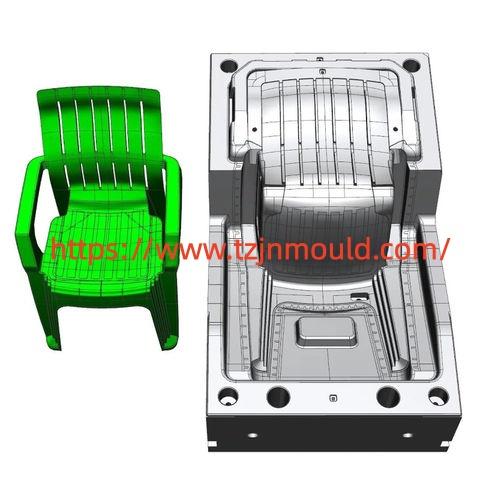
Plastic Chair Mold performance in mass furniture production is influenced by a combination of structural design, material behavior, and controlled manufacturing conditions that work together throughout continuous production cycles.
One of the key factors is how material flows inside the tooling structure. When flow distribution is uneven, small differences in thickness or surface quality can appear between units. Engineers often adjust channel layouts and cavity geometry to guide material movement more evenly. This helps reduce variation and supports stable formation across long production runs.
Another important aspect is cooling behavior. During repeated production cycles, heat must be managed carefully to avoid uneven solidification. If cooling is inconsistent, internal stress may develop, leading to slight deformation over time. Controlled cooling pathways help maintain balance in temperature distribution, which supports consistent shaping results and structural stability.
Structural reinforcement also plays a major role in performance. Furniture components such as seating surfaces and support legs experience repeated load during use. To handle this, stress distribution is carefully analyzed during design stages. Reinforcement ribs and optimized thickness zones help distribute force more evenly, reducing localized wear and improving long term usability.
In large scale production environments, even small variations in process settings can influence final output. Injection speed, pressure levels, and cycle timing must be coordinated carefully. When these parameters remain stable, production becomes more predictable and variation is reduced. Continuous monitoring helps maintain alignment between design expectations and actual output behavior.
Surface quality is another area influenced by tooling design. Proper venting allows trapped air to escape during forming, reducing surface marks and incomplete filling. This contributes to smoother finishes and more uniform appearance across production batches. It also helps reduce rejection rates during quality inspection stages.
JingnanMould applies structured design evaluation methods to refine these factors before full scale production begins. By combining simulation analysis with real production testing, adjustments can be made early in the development process. This helps ensure that design intent aligns with actual manufacturing conditions.
Long term production stability depends not only on initial design but also on ongoing maintenance. Regular inspection of surfaces, alignment checks, and calibration updates help maintain consistent performance over time. Without these steps, gradual changes in behavior may occur, affecting output uniformity.
As furniture manufacturing continues to evolve, demand for stable and repeatable production processes remains steady. Design optimization and process control work together to support this requirement while maintaining practical efficiency across different production environments.
More technical references and product details can be found at https://www.tzjnmould.com/ which provides additional information for manufacturing and design applications.

 Arabic
 French
 Spanish
 Portuguese
 Deutsch
 Turkish
 Dutch
Dutch
 Italiano
 Russian
 Romaian
 Portuguese (Brazil)
 Greek
Greek