

Steel Rebar Price Chart Q1 2026: Price Trend Analysis & Index Insights
Introduction:
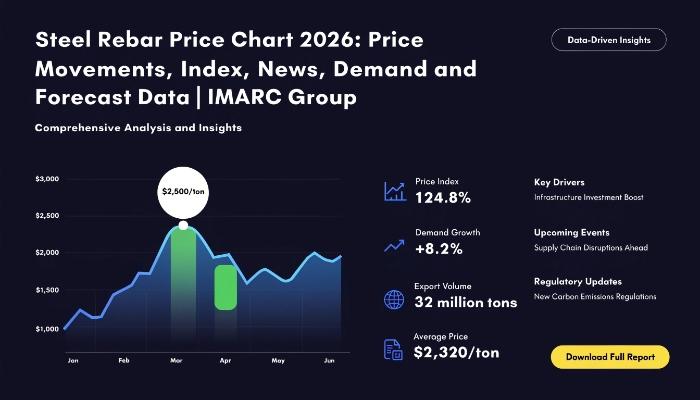
Global steel rebar prices showed mixed movement during Q1 2026 due to fluctuating raw material costs, construction activity, and regional supply conditions. Demand from infrastructure and residential projects remained an important factor supporting pricing levels, while energy expenses and steel production rates continued influencing market dynamics. The steel rebar price chart reflected moderate regional volatility, shaped by changing construction demand, manufacturing output, and supply-demand balance across major economies.
Steel Rebar Price Index Analysis in North America: Q1 2026 Overview
Steel Rebar Prices in USA:
Steel rebar prices in the USA reached USD 1011/MT during Q1 2026. Strong demand from infrastructure development and commercial construction supported price stability across the country. The Steel rebar price chart also reflected the impact of higher energy costs and transportation expenses, while domestic steel production and steady industrial activity maintained balanced supply conditions during the period.
Steel Rebar Price Index Analysis in APAC: Q1 2026 Overview
Steel Rebar Prices in China:
China recorded Steel rebar prices at USD 480/MT in Q1 2026. Softer construction activity and sufficient domestic inventories kept prices comparatively lower than other regions. However, government infrastructure projects and changing steel production rates continued influencing the Steel rebar price trend and overall pricing analysis across the Chinese steel industry.
Steel Rebar Prices in Taiwan:
Taiwan reported Steel rebar prices at USD 737/MT in Q1 2026. Construction demand and stable manufacturing activity contributed to balanced pricing conditions. The Steel rebar pricing analysis indicated that import costs, raw material availability, and regional trade movement played a major role in shaping price fluctuations during the quarter.
Regional Analysis: The price analysis can be extended to provide detailed Steel Rebar price information for the following list of countries.
China, India, Indonesia, Pakistan, Bangladesh, Japan, Philippines, Vietnam, Thailand, South Korea, Malaysia, Nepal, Taiwan, Sri Lanka, Hongkong, Singapore, Australia, and New Zealand, among other Asian countries.
Steel Rebar Price Index Analysis in Europe: Q1 2026 Overview
Steel Rebar Prices in Germany:
In Germany, Steel rebar prices stood at USD 749/MT during Q1 2026. Demand from industrial construction and public infrastructure projects supported moderate price levels throughout the quarter. Rising electricity costs and environmental compliance expenses affected the Steel rebar price index, while cautious procurement activity helped maintain stable supply-demand conditions in the region.
Regional Analysis: The price analysis can be expanded to include detailed Steel Rebar price data for a wide range of European countries, such as:
Germany, France, the United Kingdom, Italy, Spain, Russia, Turkey, the Netherlands, Poland, Sweden, Belgium, Austria, Ireland, Switzerland, Norway, Denmark, Romania, Finland, the Czech Republic, Portugal, and Greece, along with other European nations
Steel Rebar Price Index Analysis in Latin America: Q1 2026 Overview
Steel Rebar Prices in Brazil:
Steel rebar prices in Brazil reached USD 907/MT during Q1 2026. Increased infrastructure spending and ongoing residential construction projects supported stronger industrial demand. The Steel rebar price forecast also reflected the influence of logistics expenses, raw steel costs, and improving economic activity across the country during the period.
Regional Analysis: The price analysis can be extended to provide detailed Steel Rebar price information for the following list of countries.
Brazil, Mexico, Argentina, Columbia, Chile, Ecuador, and Peru, among other Latin American countries.
Get the Real-Time Prices Analysis: https://www.imarcgroup.com/steel-rebar-pricing-report/requestsample
Note: The analysis can be tailored to align with the customer's specific needs.
We Also Provide News and Historical Data of Steel Rebar:
- Historical Steel Rebar price data across major global regions
- Quarterly and annual price trend analysis with regional insights
- Supply-demand evaluation across mining and metal processing industries
- Comparative price analysis across producing and importing countries
- Customizable pricing intelligence reports for procurement strategies
What is Steel Rebar?
Steel rebar, also known as reinforcing bar, is a steel product used to strengthen concrete structures. It improves the tensile strength and durability of buildings, bridges, roads, and other infrastructure projects. Rebar is widely used in construction because concrete alone cannot effectively handle tension and structural stress.
Factors Affecting Steel Rebar Prices – Q1 2026
- Construction and Infrastructure Activity: Construction demand is one of the biggest drivers of Steel rebar prices. Increased infrastructure projects and residential development often lead to higher consumption and stronger pricing trends.
- Raw Material Costs: Steel scrap, iron ore, and coking coal prices directly affect rebar manufacturing expenses. Fluctuations in these materials influence overall production costs and market prices.
- Energy and Utility Expenses: Steel production requires significant energy consumption. Rising electricity and fuel prices can increase manufacturing costs and support higher Steel rebar price movement globally.
- Import and Export Activity: International trade policies, tariffs, and freight expenses affect regional supply availability. Import dependency in some countries also impacts overall pricing analysis and supply balance.
- Industrial Production Levels: Changes in steel mill operations and production capacity influence supply conditions. Reduced output or maintenance shutdowns can tighten availability and affect Steel rebar price trends.
Speak to an Analyst: https://www.imarcgroup.com/request?type=report&id=22416&flag=C
Supply and Prices Overview – Q1 2026
Steel rebar supply remained moderately balanced during Q1 2026, supported by stable steel production in major economies. Construction demand continued driving consumption across infrastructure and residential sectors. However, fluctuations in raw material prices, energy costs, and regional trade activity created moderate price volatility across global markets.
Steel Rebar Price Index
The Steel rebar price index during Q1 2026 reflected varied regional pricing conditions. North America maintained stronger price levels due to construction demand and higher production costs, while Asian markets observed comparatively lower prices because of adequate supply availability and balanced industrial consumption.
Recent News – Latest
Recent developments in the steel industry included investments in low-carbon steel production and modernization of manufacturing facilities. Several countries also announced new infrastructure spending plans, supporting future steel demand. Trade policy changes and fluctuating raw material costs continued influencing global steel pricing conditions during the quarter.
Steel Rebar Price Trend – Q1 2026
The Steel rebar price trend during Q1 2026 remained mixed across regions. The USA and Brazil experienced stronger pricing supported by infrastructure activity, while China maintained lower prices due to sufficient supply levels. Energy costs, industrial demand, and raw material availability remained the key factors affecting overall pricing movement.
Future Outlook for Steel Rebar
Steel rebar prices are expected to remain moderately stable in the coming months, supported by infrastructure development and construction demand. However, raw material costs, environmental regulations, and energy expenses may continue influencing future price fluctuations. Expanding public construction projects are also likely to support steady industrial consumption globally.
Current Demand for Steel Rebar
Current demand for Steel rebar remains strong across residential construction, commercial projects, bridges, highways, and industrial infrastructure. Government investments in transportation and urban development continue supporting global consumption. Growing construction activity in developing economies is also contributing to stable demand levels for reinforcing steel products.
Uses of Steel Rebar:
- Residential Construction: Steel rebar is widely used in homes and apartment buildings to strengthen concrete foundations, columns, and slabs.
- Bridges and Highways: Infrastructure projects use rebar to improve structural durability and load-bearing capacity in bridges and road systems.
- Commercial Buildings: Office complexes, shopping centers, and industrial buildings use steel reinforcement for enhanced structural stability.
- Dams and Water Projects: Rebar is commonly used in dams, tunnels, and water treatment facilities to handle heavy pressure and long-term stress.
- Industrial Infrastructure: Factories, warehouses, and power plants use steel rebar for reinforced flooring, foundations, and heavy structural support.
Key Coverage:
- Market Analysis
- Market Breakup by Region
- Demand Supply Analysis by Type
- Demand Supply Analysis by Application
- Price Analysis
- Price Trends by Region
- Factors influencing the Price Trends
- Competitive Landscape
- Recent Developments
FAQs Based on Steel Rebar Price Trend, Chart, and Forecast:
Q. What factors are influencing Steel rebar prices in 2026?
A. Steel rebar prices in 2026 are mainly influenced by raw material costs, construction activity, energy expenses, and steel production levels. Infrastructure investments and transportation costs are also playing an important role in global pricing trends.
Q. Why are Steel rebar prices higher in the USA than China?
A. The USA recorded higher Steel rebar prices due to stronger construction demand, higher labor and energy costs, and transportation expenses. China maintained lower prices because of sufficient domestic supply and balanced industrial consumption.
Q. How does construction demand affect Steel rebar pricing trends?
A. Construction activity directly impacts Steel rebar consumption. Increased residential, commercial, and infrastructure projects usually strengthen demand, which can support higher prices and tighter supply conditions.
Q. What industries use Steel rebar the most?
A. The construction and infrastructure sectors are the largest users of Steel rebar. It is commonly used in residential buildings, bridges, highways, dams, industrial facilities, and commercial construction projects worldwide.
Q. What is the future outlook for Steel rebar prices?
A. The future Steel rebar price forecast suggests moderate fluctuations depending on construction activity, raw material costs, and energy prices. Government infrastructure spending and steel production capacity will continue influencing future pricing conditions globally.
How IMARC Pricing Database Can Help
The latest IMARC Group study, Steel Rebar Prices, Trend, Chart, Demand, Market Analysis, News, Historical and Forecast Data 2026 Edition, presents a detailed analysis of Steel Rebar price trend, offering key insights into global Steel Rebar market dynamics. This report includes comprehensive price charts, which trace historical data and highlights major shifts in the market.
The analysis delves into the factors driving these trends, including raw material costs, production fluctuations, and geopolitical influences. Moreover, the report examines Steel Rebar demand, illustrating how consumer behaviour and industrial needs affect overall market dynamics. By exploring the intricate relationship between supply and demand, the prices report uncovers critical factors influencing current and future prices.
About Us:
IMARC Group is a global management consulting firm that provides a comprehensive suite of services to support market entry and expansion efforts. The company offers detailed market assessments, feasibility studies, regulatory approvals and licensing support, and pricing analysis, including spot pricing and regional price trends. Its expertise spans demand-supply analysis alongside regional insights covering Asia-Pacific, Europe, North America, Latin America, and the Middle East and Africa. IMARC also specializes in competitive landscape evaluations, profiling key market players, and conducting research into market drivers, restraints, and opportunities. IMARC’s data-driven approach helps businesses navigate complex markets with precision and confidence.
Contact Us:
IMARC Group
134 N 4th St. Brooklyn, NY 11249, USA
Email: sales[@]imarcgroup.com
Tel No:(D) +91 120 433 0800
United States: +1-201971-6302

 English
 Arabic
 French
 Portuguese
 Deutsch
 Turkish
 Dutch
Dutch
 Italiano
 Russian
 Romaian
 Portuguese (Brazil)
 Greek
Greek