

Fall Protection vs Working at Heights: Understanding the Difference for Safer Worksites
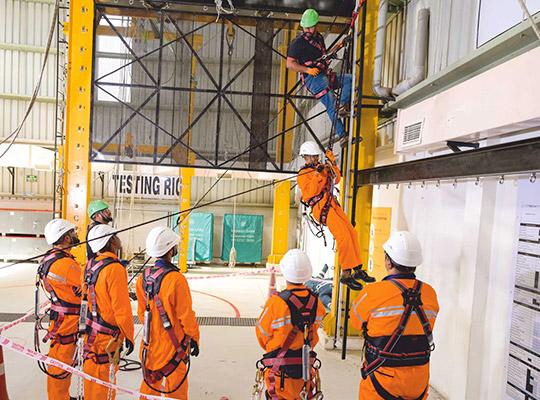
In high-risk industries such as construction, manufacturing, warehousing, and maintenance, safety at elevation is a critical concern. Many professionals often use the terms fall protection vs working at heights interchangeably, but they represent two different concepts within workplace safety management. Understanding the distinction is essential for improving compliance, reducing incidents, and creating safer operational environments.
At Trainability, we believe that a clear understanding of height safety principles helps organizations build stronger safety cultures while ensuring workers remain protected in hazardous environments.
What Does Working at Heights Mean?
Working at heights refers to any task performed in a location where a worker could fall and sustain injury. This includes activities on ladders, scaffolding, rooftops, elevated platforms, confined spaces, and even near open edges or floor openings.
The term focuses on the overall activity and environment rather than the specific equipment being used. A proper working at heights program includes:
- Hazard identification and risk assessment
- Safe access and egress procedures
- Worker competency and certification
- Equipment inspection and maintenance
- Emergency rescue planning
- Compliance with occupational safety regulations
Organizations must ensure employees receive proper working at heights training before performing elevated tasks. Without adequate preparation, even routine jobs can quickly become dangerous.
What Is Fall Protection?
Fall protection is a specific set of systems, equipment, and procedures designed to prevent falls or minimize injury if a fall occurs. It forms one part of a broader working at heights safety strategy.
Common fall protection systems include:
- Full-body harnesses
- Guardrails and safety barriers
- Anchor points and lifelines
- Safety nets
- Personal fall arrest systems
- Travel restraint systems
The main purpose of fall protection equipment is to either stop a worker from falling altogether or safely arrest the fall before serious injury occurs.
While working at heights defines the situation, fall protection defines the controls implemented to reduce risk.
Key Differences Between Working at Heights and Fall Protection
Understanding fall protection vs working at heights becomes easier when comparing their roles in workplace safety.
Working at heights refers to the overall task, environment, and safety procedures associated with elevated work. Fall protection, on the other hand, specifically addresses the systems and equipment used to control fall hazards.
For example, a technician repairing rooftop equipment is performing work at heights. The harness, anchor point, and lifeline used during the task are part of the fall protection system.
This distinction is important because organizations often focus heavily on equipment while overlooking critical elements such as hazard assessments, worker behavior, rescue planning, and ongoing competency development.
Why Proper Training Matters
Even advanced safety equipment cannot fully eliminate risk if workers are not properly trained. Effective working at heights certification programs teach employees how to identify hazards, inspect equipment, use fall arrest systems correctly, and respond during emergencies.
At Trainability, our safety training solutions are designed to combine technical compliance with practical workplace application. We focus on helping teams understand not only how to use equipment, but also why specific safety procedures are necessary in real-world conditions.
Well-structured height safety training also helps organizations:
- Reduce workplace incidents and downtime
- Improve regulatory compliance
- Strengthen operational efficiency
- Build employee confidence and accountability
- Lower long-term safety costs
Conclusion
Understanding the difference between fall protection vs working at heights is essential for maintaining a safe and compliant workplace. Working at heights refers to the broader activity and associated risks, while fall protection involves the equipment and systems used to prevent injuries.
Organizations that invest in comprehensive training, hazard awareness, and proper safety procedures create safer environments for everyone involved. With expert-led programs from Trainability, businesses can improve workforce competency while ensuring employees remain protected during elevated work activities.

 English
 Arabic
 French
 Spanish
 Portuguese
 Deutsch
 Turkish
 Dutch
Dutch
 Italiano
 Russian
 Romaian
 Portuguese (Brazil)